On This Page
Description
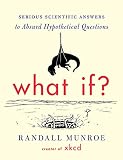
"Millions of people visit xkcd.com each week to read Randall Munroe's iconic webcomic. His stick-figure drawings about science, technology, language, and love have a large and passionate following. Fans of xkcd ask Munroe a lot of strange questions. What if you tried to hit a baseball pitched at 90 percent the speed of light? How fast can you hit a speed bump while driving and live? If there was a robot apocalypse, how long would humanity last? In pursuit of answers, Munroe runs computer show more simulations, pores over stacks of declassified military research memos, solves differential equations, and consults with nuclear reactor operators. His responses are masterpieces of clarity and hilarity, complemented by signature xkcd comics. They often predict the complete annihilation of humankind, or at least a really big explosion. The book features new and never-before-answered questions, along with updated and expanded versions of the most popular answers from the xkcd website. What If? will be required reading for xkcd fans and anyone who loves to ponder the hypothetical. "-- show lessTags
Recommendations



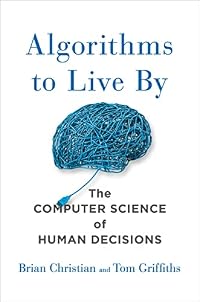
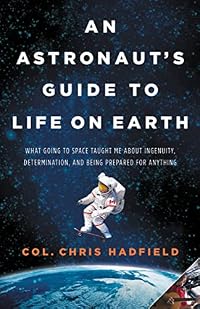
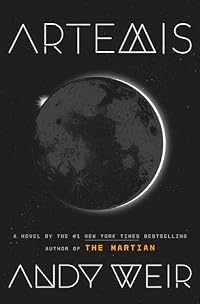
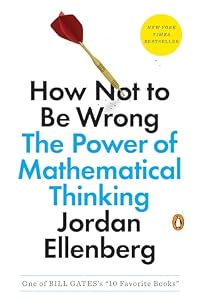

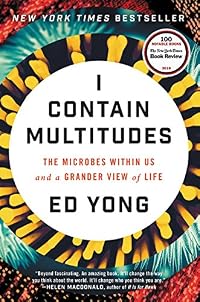
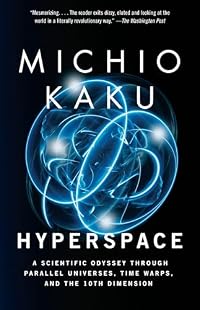
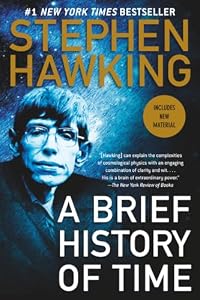

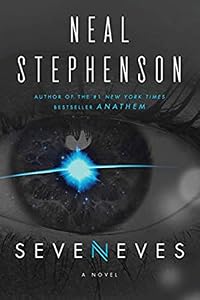


Member Recommendations
dClauzel Discussions amusantes sur la science. Des questions hypothétiques, des expérimentations qui n’auraient jamais eu lieu d’être, et surtout l’envie de partager.
Physics of the Impossible: A Scientific Exploration Into the World of Phasers, Force Fields, Teleportation, and Time Travel by Michio Kaku
CGlanovsky Rigorous scientific descriptions of ridiculous things
Member Reviews
Ask a silly question -- especially a silly, hypothetical, science-based question -- and if you're lucky, the answer will be as informative and funny as the ones in this book. The title is a bit misleading, as Munroe's responses aren't just serious (though he does consult experts and use explanations that sometimes are a little beyond me technically). Instead he draws upon a lot of geeky snark, both in his text and his accompanying stick drawings (I just love his depiction of Yoda powering a SmartCar), and takes particular glee in imagining the details of various catastrophes. Recommended for anyone with a sense of humor who doesn't mind learning a bit in the process.
I can't help feeling that the real question to be posed here is "How long could civilisation last on a planet where a scientist can make a better living drawing stick-figures on the web than by doing actual science?" — Randall Munroe is of course the creator of xkcd, and this book is a compilation of entries from his "What if...?" blog, where people pose silly questions and Munroe does his best to research scientifically coherent answers to them (contrary to what they teach you in training seminars, there are silly questions, and this book contains more than enough evidence to show that...).
This is fun, if you're the sort of person who can enjoy a coffee-break conversation between scientists and engineers. Possibly not if you aren't, show more though: you need a certain amount of capacity to suspend disbelief. Munroe looks at how a baseball would behave if it could be thrown at relativistic velocity, what would happen if the earth started growing or if someone pulled the plug out of the oceans, how a bullet-sized piece of neutron-star material would behave on the surface of the earth, how much of the periodic table you could stack up as bricks, on which other bodies in the solar system you could fly a Cessna, whether it makes sense to extract energy from thunderstorms, etc.
Usually the answer is some variant on "NO", "very bad things", or "a small nuclear explosion", but he has fun getting there, explains a few interesting scientific principles, and includes a few of his always-funny drawings. In between the chapters there are selections of the questions he's not even going to start answering, which provide very disturbing insights into the darker side of the (presumably mostly male-adolescent) human mind... show less
This is fun, if you're the sort of person who can enjoy a coffee-break conversation between scientists and engineers. Possibly not if you aren't, show more though: you need a certain amount of capacity to suspend disbelief. Munroe looks at how a baseball would behave if it could be thrown at relativistic velocity, what would happen if the earth started growing or if someone pulled the plug out of the oceans, how a bullet-sized piece of neutron-star material would behave on the surface of the earth, how much of the periodic table you could stack up as bricks, on which other bodies in the solar system you could fly a Cessna, whether it makes sense to extract energy from thunderstorms, etc.
Usually the answer is some variant on "NO", "very bad things", or "a small nuclear explosion", but he has fun getting there, explains a few interesting scientific principles, and includes a few of his always-funny drawings. In between the chapters there are selections of the questions he's not even going to start answering, which provide very disturbing insights into the darker side of the (presumably mostly male-adolescent) human mind... show less
Obra maestra de la divulgación. A Randall Munroe, que en sus propias palabras de dedica a hacer "muñequitos de palotes en internet", le hacen preguntas que oscilan entre lo hipotético y lo absurdo. Él responde usando toda la potencia científica que tiene al alcance de la mano, que es mucha, y da respuestas científicamente plausibles a preguntas como "¿Qué pasaría si hubiera un terremoto de 15 en la escala de Richter?", "¿Qué pasaría si todo el mundo se juntara y diera un salto a la vez?", "¿Qué pasaría si en un partido de béisbol el pitcher lanzara la bola a la velocidad de la luz?" y un montón mas, a cada cual más divertida, tocando también la genética, la geología y unas cuantas ramas más del saber. Es un libro show more fantástico. Tanto las cuentas como los dibujos y los textos son geniales, todo el libro es una gran obra. Absolutamente recomendable para cualquiera con interés en la ciencia y su divulgación. show less
Using questions and answers from his popular webcomic xkcd, former NASA roboticist Randall Munroe takes some of the outlandish questions he's received, including several that hadn't been answered on the website, and answers them with science & math, aplomb and some fairly humorous references to pop (or nerd) culture.
The answers are entertaining, often including stick figure cartoon drawings illustrating what he's talking about. The questions themselves are entertaining, anything from "How fast do you have to drop steak to cook it?" to "Could you make a Lego bridge from New York to London?" (And in that one he definitely has fun with the spelling of LEGO). Some of it was way over my head, but I could enjoy the premise if not entirely show more follow his reasoning and equations. His answers sometimes tend to the ridiculous, but, well, that's kind of what you sign up for with the entire book! If you listen to the audio, Wil Wheaton gives an excellent performance but you do miss a little something of the visuals, so I found myself going back and forth between formats a lot. show less
The answers are entertaining, often including stick figure cartoon drawings illustrating what he's talking about. The questions themselves are entertaining, anything from "How fast do you have to drop steak to cook it?" to "Could you make a Lego bridge from New York to London?" (And in that one he definitely has fun with the spelling of LEGO). Some of it was way over my head, but I could enjoy the premise if not entirely show more follow his reasoning and equations. His answers sometimes tend to the ridiculous, but, well, that's kind of what you sign up for with the entire book! If you listen to the audio, Wil Wheaton gives an excellent performance but you do miss a little something of the visuals, so I found myself going back and forth between formats a lot. show less
Munroe takes absurd questions and researches and treats them with dead seriousness. The result is pure gold. Despite the absurd questions, this book demonstrates much about thinking an reasoning, while actually having the goal - and succeeding - in being quite funny. If you are a fan of Munroe's comic, xkcd, then you will automatically love this book.
Randall Munroe is best known for the webcomic xkcd, which may be one of the best things on the internet. But he also has a blog called What If?, where, as the title of this book says, he provides "serious scientific answers to absurd hypothetical questions." The book version collects many questions and answers that have previously appeared on the blog, along with some brand new ones. A few examples: "What would happen if you tried to hit a baseball pitched at 90 percent of the speed of light?", "Is it possible to build a jet pack out of downward-firing machine guns?", and "What if a rainstorm dropped all its water in a single giant drop?"
OK, a few of the questions are a bit more, uh, normal-sounding than that (like, "How high can a show more human throw something?"), but most of them are wonderfully bizarre or even downright insane. (And that's not even counting the "Weird (and Worrying) Questions from the What If? Inbox" sections, which mostly feature questions he doesn't even attempt to answer, and which are disturbingly hilarious.) No matter how odd the question may be, though, the answers are carefully thought out and based in real math and science. They're also very, very funny, and illustrated with Munroe's distinctive stick-figure drawings. (Seeing those pictures on the printed page was a weird experience for me, though. I kept wanting to tap them to bring up the hovertext.) Munroe's also a bit like the Mythbusters, in that if the answer he gets isn't terribly interesting, he'll usually keep poking at it and adding new wrinkles until it results in something nifty and absurd. A surprising number of these scenarios end in global cataclysm, but it's all good, clean, nerdy fun.
Rating: 4.5/5, although I admit that's probably me rating the website as much as it is the book. Still, it's a fun and very well-put-together book. Be sure to look inside the dust jacket for an illustration of what would happen if Earth's oceans were allowed to drain out through an inter-dimensional plughole! show less
OK, a few of the questions are a bit more, uh, normal-sounding than that (like, "How high can a show more human throw something?"), but most of them are wonderfully bizarre or even downright insane. (And that's not even counting the "Weird (and Worrying) Questions from the What If? Inbox" sections, which mostly feature questions he doesn't even attempt to answer, and which are disturbingly hilarious.) No matter how odd the question may be, though, the answers are carefully thought out and based in real math and science. They're also very, very funny, and illustrated with Munroe's distinctive stick-figure drawings. (Seeing those pictures on the printed page was a weird experience for me, though. I kept wanting to tap them to bring up the hovertext.) Munroe's also a bit like the Mythbusters, in that if the answer he gets isn't terribly interesting, he'll usually keep poking at it and adding new wrinkles until it results in something nifty and absurd. A surprising number of these scenarios end in global cataclysm, but it's all good, clean, nerdy fun.
Rating: 4.5/5, although I admit that's probably me rating the website as much as it is the book. Still, it's a fun and very well-put-together book. Be sure to look inside the dust jacket for an illustration of what would happen if Earth's oceans were allowed to drain out through an inter-dimensional plughole! show less
The creator of xkcd.com provides “Serious scientific answers to absurd hypothetical questions.” Yes, serious in intelligence -- Munroe is an incredibly smart guy with an incredibly smart group of math/science collaborators -- but playful in execution as they think waaay outside the box and ramp up nerdy questions to full-on exaggeration. It’s surprising, very fun and quite informative, e.g. with reminders that, above a certain altitude, “your blood oxygen content would plummet {because} there’s so little oxygen in the air that your veins lose oxygen to the air instead of gaining it.” And that, with cable/etc. now instead of huge broadcast antennas, we’re no longer releasing all of our TV/radio signals out into the universe show more (to be stumbled upon by intelligent life).
It’s hard to choose favorites from the ~50 Q&As but here are three:
• “If every human somehow simply disappeared from the face of the Earth, how long would it be before the last artificial light source would go out?” -- turns into an overview of all of our power-generating technologies and ends up centuries into the future, with the light from nuclear waste.
• “What is the farthest one human being has ever been from every other living person? Were they lonely?” -- puts early explorers in the running, but then settles on “the six Apollo command module pilots who stayed in lunar orbit {...alone while the} other astronauts landed on the moon” -- about 3585 km apart. And no, since the pilots tended to be introverts, they felt solitude not loneliness.
• “What if a Richter magnitude 15 earthquake were to hit America at, let’s say, New York City? What about a Richter 20? 25?” After answering that a 15 would blow up the planet, Munroe turns instead to low-magnitude events, from Magnitude -1 (“A single football player running into a tree in your yard”) and moving entertainingly downward to Magnitude -15 (“A drifting mote of dust coming to rest on a table”). show less
It’s hard to choose favorites from the ~50 Q&As but here are three:
• “If every human somehow simply disappeared from the face of the Earth, how long would it be before the last artificial light source would go out?” -- turns into an overview of all of our power-generating technologies and ends up centuries into the future, with the light from nuclear waste.
• “What is the farthest one human being has ever been from every other living person? Were they lonely?” -- puts early explorers in the running, but then settles on “the six Apollo command module pilots who stayed in lunar orbit {...alone while the} other astronauts landed on the moon” -- about 3585 km apart. And no, since the pilots tended to be introverts, they felt solitude not loneliness.
• “What if a Richter magnitude 15 earthquake were to hit America at, let’s say, New York City? What about a Richter 20? 25?” After answering that a 15 would blow up the planet, Munroe turns instead to low-magnitude events, from Magnitude -1 (“A single football player running into a tree in your yard”) and moving entertainingly downward to Magnitude -15 (“A drifting mote of dust coming to rest on a table”). show less
Members
- Recently Added By
Lists

Best Laugh Out Loud Books
143 works; 48 members

Recommend the 20 best books you've read in the last five years
2,168 works; 606 members

Top Five Books of 2014
1,064 works; 398 members

Non-Fiction Worth Reading
1,015 works; 261 members

Top Five Books of 2020
982 works; 348 members

Top Five Books of 2022
736 works; 272 members

Phi Beta Kappa reading list
260 works; 8 members

Top Five Books of 2015
811 works; 241 members

Books Read in 2016
110 works; 1 member

Non-Fiction
68 works; 1 member

Most Frequently Tagged "Read in 2015"
70 works; 1 member

Best Audiobooks
240 works; 114 members

Audio Books
29 works; 3 members

Books Read in 2014
2,343 works; 86 members

Five star books
1,755 works; 108 members
To Read
617 works; 7 members

Books Read in 2020
4,379 works; 124 members

Books Read in 2015
3,299 works; 129 members

2016 Book Club Choices
52 works; 7 members

Books Read in 2019
4,052 works; 108 members

Houghton Mifflin Harcourt
45 works; 1 member
Books Read in 2016
4,666 works; 197 members

Research/Inquiry - questions and wondering
43 works; 3 members

Vlogbrothers Book Recommendations
307 works; 4 members
Talk Discussions
Past Discussions
What if?-type thought experiments, physics, NF in Name that Book (August 2015)
Author Information

11+ Works 15,851 Members
Randall Munroe was born in Easton, Pennsylvania on October 17, 1984. He received a degree in physics from Christopher Newport University. He got a job building robots at NASA Langley Research Center. In 2006, he left NASA to draw comics on the internet full-time. He is the author of the popular webcomic xkcd, the science question-and-answer blog show more What If, and the New York Times bestseller What If?: Serious Scientific Answers to Absurd Hypothetical Questions. (Bowker Author Biography) show less
Some Editions
Awards and Honors
Awards
Distinctions
Notable Lists
Series

Belongs to Publisher Series
Work Relationships
Common Knowledge
- Canonical title
- What If? Serious Scientific Answers to Absurd Hypothetical Questions
- Original title
- What If? Serious Scientific Answers to Absurd Hypothetical Questions
- Alternate titles
- What If?
- Original publication date
- 2014-09-02
- Epigraph
- DISCLAIMER
Do not try any of this at home. The author of this book is an Internet cartoonist, not a health or safety expert. He likes it when things catch fire or explode, which means he does not have your best interests i... (show all)n mind. The publisher and the author disclaim responsibility for any adverse effects resulting, directly or indirectly, from information contained in this book. - First words
- This book is a collection of answers to hypothetical questions. -Introduction
Global Windstorm
What would happen if the Earth and all terrestrial objects suddenly stopped spinning but the atmosphere retained its velocity? - Quotations
- They say there are no stupid questions. That's obviously wrong. [...] But it turns out that trying to thoroughly answer a stupid question can take you to some pretty interesting places.
- Last words
- (Click to show. Warning: May contain spoilers.)Sometimes it's nice not to destroy the world for a change.
- Publisher's editor
- Young, Courtney
- Blurbers
- Goldacre, Ben; Harford, Tim; le Saux, Graeme
- Original language
- English
- Canonical DDC/MDS
- 502.07
- Canonical LCC
- Q173 .M965
Classifications
- Genres
- Science & Nature, General Nonfiction, Nonfiction
- DDC/MDS
- 502.07 — Natural sciences & mathematics Science Miscellany
- LCC
- Q173 .M965 — Science Science (General) General
- BISAC
Statistics
- Members
- 8,365
- Popularity
- 1,320
- Reviews
- 235
- Rating
- (4.15)
- Languages
- 21 — Czech, Danish, Dutch, English, Estonian, Finnish, French, German, Greek, Hungarian, Italian, Japanese, Korean, Norwegian (Bokmål), Polish, Portuguese, Spanish, Swedish, Turkish, Chinese, traditional, Chinese, simplified
- Media
- Paper, Audiobook, Ebook
- ISBNs
- 77
- ASINs
- 18