
Mary Roach
Author of Stiff: The Curious Lives of Human Cadavers
About the Author
Mary Roach was born and raised in Etna, New Hampshire. She has a BA degree in psychology from Wesleyan University. She spent a few years as a free-lance copy editor before she landed a job at the San Francisco Zoological Society turning out press releases. She then moved on to write humor pieces show more for such periodicals as The New York Times Magazine, The San Francisco Chronicle and Sports Illustrated. Her article "How to Win at Germ Warfare" was a National Magazine Award Finalist, in 1995. In 1996, her article on earthquake-proof bamboo houses took the Engineering Journalism Award. She published several books such as Stiff: The Curious Lives of Human Cadavers (2003) and Packing for Mars (2010). Mary's title Grunt: The Curious Science of Humans at War, made the New York Times Bestseller list in 2016. (Bowker Author Biography) show less
Works by Mary Roach
Replaceable You: Adventures in Human Anatomy (2025) — Narrator, some editions — 381 copies, 18 reviews
Two-Minute Revelation 2 copies
Grunt and Gulp Mary Roach Collection 2 Books Bundle - The Curious Science of Humans at War, Travels Around the Gut (2016) 2 copies
Bamboo Solution 1 copy
New World Pompeii 1 copy
1996 Sex: No Shortage Yet 1 copy
The Prince and the Pauper 1 copy
Secrets of the Shamans 1 copy
Hollywood Hills 1 copy
Meteorite Hunters 1 copy
Associated Works
There's No Toilet Paper on the Road Less Traveled: The Best of Travel Humor and Misadventure (1998) — Contributor — 217 copies, 5 reviews
Tagged
Common Knowledge
- Canonical name
- Roach, Mary
- Birthdate
- 1959-03-20
- Gender
- female
- Education
- Wesleyan University (BA ∙ psychology ∙ 1981)
Hanover High School - Occupations
- columnist
copywriter
non-fiction writer - Organizations
- Salon.com
Reader's Digest
San Francisco Zoological Society - Agent
- Erin Lovett (publicist)
Jay Mandel (agent) - Relationships
- Rachles, Ed (husband)
- Short biography
- Mary Roach grew up in a small house in Etna, New Hampshire. She graduated from Wesleyan in 1981, and then moved out to San Francisco s. She spent a few years working as a freelance copy editor before landing a half-time PR job at the SF Zoo. During that time she wrote freelance articles for the local newspaper's Sunday magazine.
Though she mostly focuses on writing books, she writes the occasional magazine piece. These have run in Outside, National Geographic, New Scientist, Wired, and The New York Times Magazine, as well as many others. A 1995 article of herse called "How to Win at Germ Warfare" was a National Magazine Award Finalist, and in 1996, her article on earthquake-proof bamboo houses took the Engineering Journalism Award in the general interest magazine category. Mary Roach also reviews books for The New York Times.
Her first book, Stiff, was an offshoot of a column she wrote for Salon.com. Her other books include Spook: Science Tackles the Afterlife, Bonk: The Curious Coupling of Science and Sex, and Packing for Mars: The Curious Science of Life in the Void.
http://www.bookbrowse.com/biographies... - Nationality
- USA
- Birthplace
- Hanover, New Hampshire, USA
- Places of residence
- Etna, New Hampshire, USA
San Francisco, California, USA
Alameda, California, USA
Oakland, California, USA - Associated Place (for map)
- California, USA
Members
Reviews
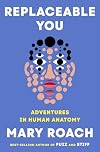
I always enjoy Mary Roach's books. I love the sardonic humour, and her self-effacing demeanour through the proceedings. I do occasionally find myself wishing she'd dive a bit deeper into the various subjects she investigates, but then again, that's what other books are for, right? Find a topic, then dig deeper.
This one though? Damn. On one hand, it absolute shows what a shockingly intricate machine the body is and how very hard it is to come in later and try and fix or replace bits of it.
On show more the other hand, it's also a nightmare fuel-soaked ride through the many things that can go wrong, either through maturation or misadventure, and the things we've done to try and get around those. I was squirming through both the penis replacement section, as well as the cataract removal section.
Both an eye opening and an eye watering book. show less
This one though? Damn. On one hand, it absolute shows what a shockingly intricate machine the body is and how very hard it is to come in later and try and fix or replace bits of it.
On show more the other hand, it's also a nightmare fuel-soaked ride through the many things that can go wrong, either through maturation or misadventure, and the things we've done to try and get around those. I was squirming through both the penis replacement section, as well as the cataract removal section.
Both an eye opening and an eye watering book. show less
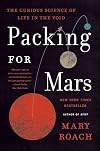
Fascinating, vastly entertaining book about those parts of the space program NASA doesn't like to talk about--how do you poop in space? Has anyone ever had sex in space? How is it that America's first two astronauts were chimps? How bad is space food, and why exactly? Mary Roach writes about this and more with quick wit and inexhaustible curiosity, in many cases tracking down the actual people who did the actual stuff. Anyone who is interested enough in space exploration to read about it show more needs to read this book. Seriously, it's that good. Loses a half point for being a little dated, which is hardly avoidable. Also I'd suggest a different title, as the book really isn't about Mars. show less
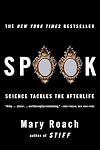
I enjoyed this one, but I suppose I have to say, with some regret, that I didn't enjoy it quite as much as her breakthrough, "Stiff", which traced the possible paths that our bodies, not our souls might take after we depart this mortal coil. One of the reasons why is that Stiff's slant-rhyme twin, "Spook", isn't quite as good as its predecessor is that it lacks the delightful element of surprise that made "Stiff" so entertaining: Roach seemed to have started writing "Stiff" with the show more intention of publishing a fairly standard, if fun, book about what happens to people's bodies after they died and then plunged into the deep end of weird without any idea of where she might have been headed. About three hundred pages later, we ended up in plastic surgery practice rooms, disreputable Chinese crematoriums, and early-modern Scottish graveyards, all while reviewing the most unfathomably odd bits of history imaginable. That book wasn't just a revelation to many of its readers; it also seemed to be a revelation of sorts to Mary Roach herself.
But the author's a few books past that one now, and her style's a bit more burnished: she's still funny, but the jokes don't really shock you when they arrive. She seems to know the kind of book she's expected to write, which is, in a sense, okay. There is a lot of interesting stuff in "Spook," from a short history of attempts to weigh the soul to courtroom squabbles over ghosts who might have have changed their wills. Roach takes a trip to India to talk things over with a man who tries to track reincarnations from one village to another, and while she highlights the social utility of this belief, she mostly comes away with the impression that India is both incredibly strange and highly dangerous. It's a shame, then, that Roach, for all of her trouble, only seems to have found two scientists doing real research on what happens to the soul after death. The first, who teaches at the University of North Carolina, is a brilliant polymath attempting to weigh the soul — or at least consciousness — in the same way that other scientists weigh information. The other is a scientist who studies near-death experiences and believes that similarities among them suggest that the brain might go into a sort of "full reboot" mode in the long moments before the body expires. Neither scientist can say what comes after that, of course, which may annoy some of Roach's more scientific-minded readers. (Of course, it must be admitted that the afterlife isn't a particularly scientific subject, which is, of course, part of the fun of "Spook.") But I still found this one highly interesting and thoroughly enjoyable. And that, come to think of it, is exactly what I expect from a book written by Mary Roach. show less
But the author's a few books past that one now, and her style's a bit more burnished: she's still funny, but the jokes don't really shock you when they arrive. She seems to know the kind of book she's expected to write, which is, in a sense, okay. There is a lot of interesting stuff in "Spook," from a short history of attempts to weigh the soul to courtroom squabbles over ghosts who might have have changed their wills. Roach takes a trip to India to talk things over with a man who tries to track reincarnations from one village to another, and while she highlights the social utility of this belief, she mostly comes away with the impression that India is both incredibly strange and highly dangerous. It's a shame, then, that Roach, for all of her trouble, only seems to have found two scientists doing real research on what happens to the soul after death. The first, who teaches at the University of North Carolina, is a brilliant polymath attempting to weigh the soul — or at least consciousness — in the same way that other scientists weigh information. The other is a scientist who studies near-death experiences and believes that similarities among them suggest that the brain might go into a sort of "full reboot" mode in the long moments before the body expires. Neither scientist can say what comes after that, of course, which may annoy some of Roach's more scientific-minded readers. (Of course, it must be admitted that the afterlife isn't a particularly scientific subject, which is, of course, part of the fun of "Spook.") But I still found this one highly interesting and thoroughly enjoyable. And that, come to think of it, is exactly what I expect from a book written by Mary Roach. show less
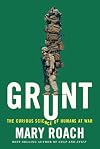
This may be my favourite Mary Roach book. In this one, she tackles a wide variety of topics covered by military science: fatigue, hearing loss, reconstructive surgery, heatstroke, and even diarrhea. Many of the topics discussed are ones you might not think of in the context of the military, but when Roach explains the work being done and how soldiers' lives are affected when these factors are not taken into consideration, the rationale is obvious. For example, if you're a sniper, you don't show more want to be caught short on a mission after eating bad food. And the hearing protection measures currently in use, while well intended, don't actually work well for the combat scenarios in which they're being used, as the training scenario performed with a group of audiologists in attendance demonstrates. Roach tests some of the gadgets on offer (such as the new auditory protection systems), participates in a combat medic training simulation, endures the indignities of a rectal probe for heat-related research, and visits a submarine to observe just how non-conducive to sleep such an environment is.
While there are plenty of amusing asides (including Roach's perennial fascination with apropos names for scientists in a given field), the scientists' work and the soldiers' situations are always treated with respect. This is particularly important in the chapters on reconstructive surgery, when Roach talks about such surgery performed on the genitals. This type of surgery is an area that does not receive much attention or is considered more of a "frill" than a prosthetic limb might be. However, for the soldiers who sustain this sort of injury and get a chance to undergo the surgery, their quality of life, as measured in self-esteem, is improved, and that is an important part of the rehabilitation process.
The chapters on reconstructive surgery also made me immeasurably grateful for the calcaneal fat pad, which protects the shin bone from abrading the skin on the underside of the heel. This type of fat can withstand a tremendous amount of weight and pressure, and if you're injured in what's called an "underbody blast" (e.g. a ship being torpedoed and the deck beneath you being blown suddenly into the air), the fat pad is at risk of being damaged to the extent of needing to be removed. And without that padding, walking is hell. So give your calcaneal fat pads (and the rest of your long-suffering feet) some TLC sometime. They will thank you!
I would highly recommend this book to those who enjoyed Roach's book Packing for Mars, because it also deals with the science relating to a particular occupation, and anyone who likes to read about those whose work supports the front-line troops. show less
While there are plenty of amusing asides (including Roach's perennial fascination with apropos names for scientists in a given field), the scientists' work and the soldiers' situations are always treated with respect. This is particularly important in the chapters on reconstructive surgery, when Roach talks about such surgery performed on the genitals. This type of surgery is an area that does not receive much attention or is considered more of a "frill" than a prosthetic limb might be. However, for the soldiers who sustain this sort of injury and get a chance to undergo the surgery, their quality of life, as measured in self-esteem, is improved, and that is an important part of the rehabilitation process.
The chapters on reconstructive surgery also made me immeasurably grateful for the calcaneal fat pad, which protects the shin bone from abrading the skin on the underside of the heel. This type of fat can withstand a tremendous amount of weight and pressure, and if you're injured in what's called an "underbody blast" (e.g. a ship being torpedoed and the deck beneath you being blown suddenly into the air), the fat pad is at risk of being damaged to the extent of needing to be removed. And without that padding, walking is hell. So give your calcaneal fat pads (and the rest of your long-suffering feet) some TLC sometime. They will thank you!
I would highly recommend this book to those who enjoyed Roach's book Packing for Mars, because it also deals with the science relating to a particular occupation, and anyone who likes to read about those whose work supports the front-line troops. show less
Lists
Awards


You May Also Like


Associated Authors
Statistics
- Works
- 24
- Also by
- 5
- Members
- 33,453
- Popularity
- #577
- Rating
- 3.9
- Reviews
- 1,537
- ISBNs
- 204
- Languages
- 14
- Favorited
- 121


