
Ten years ago, four Blackfeet men killed a number of elk in a place where they were not supposed to be hunting, including a young doe carrying an out-of-season calf who just did not seem inclined to die. Now, ten years later, the spirit of that elk is back, and she's out for revenge.
I have interestingly mixed feelings about this one. I do like the way Stephen Graham Jones writes, but I'm less sure how I feel about his pacing. I like the way this novel captures the tension in its protagonists between wanting to cling to and uphold their traditional ways and finding the memory of those traditions and the sense of their value slipping away. But, although I can intellectually appreciate the ways in which it plays into those themes, something in my brain just had trouble ever quite taking the elk spirit as seriously as I should have. "They're prey animals," my mind kept whispering. "If they were ever capable of seeking revenge, we'd never see the end of them!" Which I suspect is probably just me being entirely too white to have the right cultural resonances, and not the book's fault at all. But it probably did play into me never quite finding it as creepy or shocking or unsettling as horror ideally is for me, even when it was doing creepy, shocking, or unsettling things. I do, however, rather appreciate the way the spirit doesn't so much harm its victims directly as induce them to turn on themselves and each other, which gives the horror an additional psychological show more dimension.
But while ultimately it's not quite as scary and satisfying as I'd hoped for, for reasons that may not be its fault, I still found it worth reading, and it's definitely left me still interested in reading more of Jones' stuff. (This is the first novel of his that I've read, but I have read and been impressed by some of his shorter work.) show less
I have interestingly mixed feelings about this one. I do like the way Stephen Graham Jones writes, but I'm less sure how I feel about his pacing. I like the way this novel captures the tension in its protagonists between wanting to cling to and uphold their traditional ways and finding the memory of those traditions and the sense of their value slipping away. But, although I can intellectually appreciate the ways in which it plays into those themes, something in my brain just had trouble ever quite taking the elk spirit as seriously as I should have. "They're prey animals," my mind kept whispering. "If they were ever capable of seeking revenge, we'd never see the end of them!" Which I suspect is probably just me being entirely too white to have the right cultural resonances, and not the book's fault at all. But it probably did play into me never quite finding it as creepy or shocking or unsettling as horror ideally is for me, even when it was doing creepy, shocking, or unsettling things. I do, however, rather appreciate the way the spirit doesn't so much harm its victims directly as induce them to turn on themselves and each other, which gives the horror an additional psychological show more dimension.
But while ultimately it's not quite as scary and satisfying as I'd hoped for, for reasons that may not be its fault, I still found it worth reading, and it's definitely left me still interested in reading more of Jones' stuff. (This is the first novel of his that I've read, but I have read and been impressed by some of his shorter work.) show less
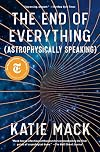
This look into the various possible ways in which our universe could end features, along the way, a lot of discussion about how it began, what we know out the physics of it all, how we know it, and how much we don't know. And there is an awful lot we still don't know, which is why there are various possibilities and not just one set-in-stone answer. Likely the end will just be everything drifting apart, getting darker and colder and lonelier forever, but it's still possible that it could all end in fire. Or just suddenly be over before anybody has the time to notice it, but it's probably better not to stay awake too long thinking about that one.
It's all very heady, wild stuff, and very hard to wrap your brain around unless you happen to be an expert who knows a lot of very advanced math. Or possibly even if you are. But cosmologist Katie Mack writes about it all in a fun, lively, engaging style, with great enthusiasm, entertaining pop cultural references, a few jokes, and some interesting forays into philosophizing about what it all means for us humans. And, hey, if you're going to contemplate cosmic annihilation, you might as well at least have some fun doing it, right?
It's all very heady, wild stuff, and very hard to wrap your brain around unless you happen to be an expert who knows a lot of very advanced math. Or possibly even if you are. But cosmologist Katie Mack writes about it all in a fun, lively, engaging style, with great enthusiasm, entertaining pop cultural references, a few jokes, and some interesting forays into philosophizing about what it all means for us humans. And, hey, if you're going to contemplate cosmic annihilation, you might as well at least have some fun doing it, right?
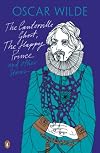
This Penguin volume includes stories from three of Oscar Wilde's collections: The Happy Prince and Other Tales, A House of Pomegranates, and Lord Arthur Savile's Crime and Other Stories.
The first two of these are collections of little fables and fairy tales, perhaps reminiscent of Hans Christian Andersen, but often with a dark or subversive twist to them, subtle or otherwise. These reflect repeatedly on themes of self-sacrifice (usually unappreciated by anybody but, if you're lucky, God), the exploitation and neglect of the poor by the rich, and the hypocrisy of Christians who care more for fancy possessions than for their fellow man. They're odd little tales, some of which work better than others, but overall I liked them.
The third collection is more the sort of thing you might think of when you think of Oscar Wilde: fun, frothy, witty, somewhat satirical stories about high-society folks. "The Canterville Ghost," about a traditional and rather horrifying English ghost who has a very hard time haunting a family of unflappable practical Americans, is a delight, but I found "Lord Arthur Savile's Crime," about a man who reacts in what he thinks is a perfectly sensible way to a palm-reader's prophecy, even more so. Honestly, I can't believe I'd never even heard of that one, because it's hilarious.
The first two of these are collections of little fables and fairy tales, perhaps reminiscent of Hans Christian Andersen, but often with a dark or subversive twist to them, subtle or otherwise. These reflect repeatedly on themes of self-sacrifice (usually unappreciated by anybody but, if you're lucky, God), the exploitation and neglect of the poor by the rich, and the hypocrisy of Christians who care more for fancy possessions than for their fellow man. They're odd little tales, some of which work better than others, but overall I liked them.
The third collection is more the sort of thing you might think of when you think of Oscar Wilde: fun, frothy, witty, somewhat satirical stories about high-society folks. "The Canterville Ghost," about a traditional and rather horrifying English ghost who has a very hard time haunting a family of unflappable practical Americans, is a delight, but I found "Lord Arthur Savile's Crime," about a man who reacts in what he thinks is a perfectly sensible way to a palm-reader's prophecy, even more so. Honestly, I can't believe I'd never even heard of that one, because it's hilarious.

A guy sets off on a little walk through the woods and ends up trapped on a surreal path he can't leave, encountering all kinds of monsters and weirdness as he keeps desperately hoping to be able to get home to his family.
It's a quick and not exactly unpleasant read, but also one that I found deeply unsatisfying. It's just one very mildly interesting random event after another after another, and never feels like it actually adds up to much of anything, even though it seems to want us to think that it will. There's one kind of interesting twist at the very end, but overall it mostly just felt sort of pointless. It probably doesn't help, either, that the main character doesn't ever really come alive. He's going through hell here, and we're repeatedly told all about how much of a physical toll his experiences are taking on him, and how angry he is and how much he misses his family, and so on, but I never really felt any of it.
I remember enjoying Magary's The Postmortal, but this one was... Well, not bad, exactly, but like there simply wasn't very much there.
It's a quick and not exactly unpleasant read, but also one that I found deeply unsatisfying. It's just one very mildly interesting random event after another after another, and never feels like it actually adds up to much of anything, even though it seems to want us to think that it will. There's one kind of interesting twist at the very end, but overall it mostly just felt sort of pointless. It probably doesn't help, either, that the main character doesn't ever really come alive. He's going through hell here, and we're repeatedly told all about how much of a physical toll his experiences are taking on him, and how angry he is and how much he misses his family, and so on, but I never really felt any of it.
I remember enjoying Magary's The Postmortal, but this one was... Well, not bad, exactly, but like there simply wasn't very much there.
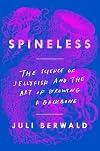
The author takes us along as she pursues her passionate interest in jellyfish by traveling the world speaking to scientists, fishermen and other experts, searching for jellies in the wild, and doing everything from cooking them to attempting to keep them as pets. In the process, she talks about the biology of these animals, their interactions with humans, and their place, for good and ill, in the ocean's ecosystem, although it turns out that a lot of questions about all of these topics are still lacking answers.
The ecological message here is important, and the jellyfish themselves are very interesting. I did find that this book was a bit of a slow read for me in places, though, perhaps partly because some of the information could have been better organized and partly because the author's discussions about her own life were often much less interesting than the jellyfish facts, even if she does manage a fairly stirring few paragraphs tying environmental themes and her personal journey together at the end.
The ecological message here is important, and the jellyfish themselves are very interesting. I did find that this book was a bit of a slow read for me in places, though, perhaps partly because some of the information could have been better organized and partly because the author's discussions about her own life were often much less interesting than the jellyfish facts, even if she does manage a fairly stirring few paragraphs tying environmental themes and her personal journey together at the end.
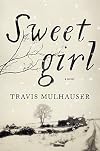
16-year-old Percy is out looking for her mother, who's gone missing (again). Having been told by a friend that she'd been seen at the house of her meth dealer, Percy heads out into a snow storm to check. She doesn't find her mom, but she does find two passed-out addicts and a very neglected six-month-old baby. So she takes the baby and heads out, on foot, into a lot of snow and violence.
I admit, it took me a little while to get a handle on this novel, probably because I didn't quite understand what I was going to get when I jumped into it. It wasn't really the kind of "literary" novel I thought it was when I grabbed it off the shelf, but it wasn't entirely working as the kind of emotional, immersive thriller I then figured it was trying to be, either. The dialog, which was amusing but not exactly realistic, kept kind of throwing me out. I was able to relax and appreciate it more, though, once I finally realized what it was actually trying to do, which was something more along the violent-but-quirky lines of Elmore Leonard or perhaps the Coen brothers. I don't know that it manages that entirely smoothly, but it was a quick, darkly entertaining read, and even if it didn't move me strongly, there was still a bit of heart to it.
I admit, it took me a little while to get a handle on this novel, probably because I didn't quite understand what I was going to get when I jumped into it. It wasn't really the kind of "literary" novel I thought it was when I grabbed it off the shelf, but it wasn't entirely working as the kind of emotional, immersive thriller I then figured it was trying to be, either. The dialog, which was amusing but not exactly realistic, kept kind of throwing me out. I was able to relax and appreciate it more, though, once I finally realized what it was actually trying to do, which was something more along the violent-but-quirky lines of Elmore Leonard or perhaps the Coen brothers. I don't know that it manages that entirely smoothly, but it was a quick, darkly entertaining read, and even if it didn't move me strongly, there was still a bit of heart to it.

A collection of Doctor Who comics, mostly featuring the Fourth Doctor, but with a couple of outings for the Sixth Doctor and one brief appearance for the Seventh. We've got adventures here featuring Greek gods, Roman robots, hungry cannibals, and warrior monks, among other things. It also features "The Star Beast," which was later adapted (with, of course, a fair number of changes) as the Fourteenth Doctor story of the same name.
A few of these are going for something sort of science-fictionally weird and abstract. Mostly, though, I can only describe them as "very comic book-y." And, for the most part, kind of silly in a very comic book sort of way, which is perhaps slightly different from the ways in which the TV show could be silly. To the extent that I can take them seriously enough to quibble, there are a few plot points I look askance at. Like, did we need yet another origin story for the Cybermen? And, wow, but aging up a teenager physically does not actually turn them into a full adult, WTF? For the most part, though, these are at least somewhat entertaining. The vibrant, colorful, imaginative art definitely helps with the appeal, even if the Doctor's face (and those of his companions, if he happens to have any) always looks kind of distractingly odd in a way I can't quite put my finger on.
A few of these are going for something sort of science-fictionally weird and abstract. Mostly, though, I can only describe them as "very comic book-y." And, for the most part, kind of silly in a very comic book sort of way, which is perhaps slightly different from the ways in which the TV show could be silly. To the extent that I can take them seriously enough to quibble, there are a few plot points I look askance at. Like, did we need yet another origin story for the Cybermen? And, wow, but aging up a teenager physically does not actually turn them into a full adult, WTF? For the most part, though, these are at least somewhat entertaining. The vibrant, colorful, imaginative art definitely helps with the appeal, even if the Doctor's face (and those of his companions, if he happens to have any) always looks kind of distractingly odd in a way I can't quite put my finger on.
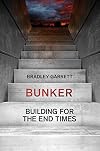
A look into the world of people who are actively preparing themselves for the collapse of civilization, in whatever form it may come, and the various kinds of places where they intend to hunker down when it all goes south.
Despite the fact that he goes to a lot of places and talks to a lot of people, I do sort of feel like the author is only sort of scratching the surface of this topic. Although given how reluctant some of these folks are to talk to journalists (or anybody else), perhaps that's to be expected. It is certainly interesting, anyway. The bunkers we're introduced to vary from a possibly not very useful model meant to be buried in your yard to a genuinely impressive mini-village of luxury accommodations in an old missile silo. And the people are just as varied. There are those who look forward to using their stockpiles of supplies to help others in a global disaster (and who, indeed, are often already doing so in smaller-scale disasters), there's the guy who's apparently already planning on who he's going to murder and rob just as soon as there are no laws to tell him not to, and a whole host of folks in between. There are, of course, people -- Garrett calls them the "dread merchants" -- making money from selling everything from crappy (but still not exactly cheap) backyard shelters to fancy apocalypse accommodations for the ultra-rich. Perhaps unsurprisingly, it turns out some of them are flat-out scam artists. And, lurking in the background, are those -- often show more people with a frightening amount of social influence -- who seem to believe that a global collapse is a good and inevitable development, one that will usher in a new and better society, where they, of course, intend to come out on top. Most interesting to me, though, is the way that so many of the people he talks to seem like reasonable, ordinary, likable enough folks taking what may be perfectly sensible precautions... but then when you jump into the middle of a slightly different conversation with them, suddenly unambiguously come across as xenophobic conspiracy nuts. All of which, I suppose, just goes to demonstrate the inherent complexity of humanity.
It happens, by the way, that the research for the book was done before, and the writing finished during, the covid pandemic, which lends a certain unsettling aptness to the whole thing. Certainly it informs the author's musings on doomsday prepping as a symbol and symptom of a world increasingly subject to uncertainty and anxiety, misinformation and mistrust in institutions. In my mind, those musings perhaps raise more questions than answers, but they're questions worth thinking about. show less
Despite the fact that he goes to a lot of places and talks to a lot of people, I do sort of feel like the author is only sort of scratching the surface of this topic. Although given how reluctant some of these folks are to talk to journalists (or anybody else), perhaps that's to be expected. It is certainly interesting, anyway. The bunkers we're introduced to vary from a possibly not very useful model meant to be buried in your yard to a genuinely impressive mini-village of luxury accommodations in an old missile silo. And the people are just as varied. There are those who look forward to using their stockpiles of supplies to help others in a global disaster (and who, indeed, are often already doing so in smaller-scale disasters), there's the guy who's apparently already planning on who he's going to murder and rob just as soon as there are no laws to tell him not to, and a whole host of folks in between. There are, of course, people -- Garrett calls them the "dread merchants" -- making money from selling everything from crappy (but still not exactly cheap) backyard shelters to fancy apocalypse accommodations for the ultra-rich. Perhaps unsurprisingly, it turns out some of them are flat-out scam artists. And, lurking in the background, are those -- often show more people with a frightening amount of social influence -- who seem to believe that a global collapse is a good and inevitable development, one that will usher in a new and better society, where they, of course, intend to come out on top. Most interesting to me, though, is the way that so many of the people he talks to seem like reasonable, ordinary, likable enough folks taking what may be perfectly sensible precautions... but then when you jump into the middle of a slightly different conversation with them, suddenly unambiguously come across as xenophobic conspiracy nuts. All of which, I suppose, just goes to demonstrate the inherent complexity of humanity.
It happens, by the way, that the research for the book was done before, and the writing finished during, the covid pandemic, which lends a certain unsettling aptness to the whole thing. Certainly it informs the author's musings on doomsday prepping as a symbol and symptom of a world increasingly subject to uncertainty and anxiety, misinformation and mistrust in institutions. In my mind, those musings perhaps raise more questions than answers, but they're questions worth thinking about. show less
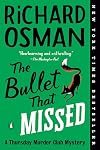
The third book in the Thursday Murder Club series. This time, our gang of geriatric murder enthusiasts are investigating the cold case of a TV reporter whose car was driven off a cliff, apparently with her in it, although her body was never found. Also, someone is threatening Elizabeth to force her to kill an old frenemy of hers.
I was all set to call this one my favorite of the three books in the series I've read so far, but that's maybe tempered a little bit by the fact that I'm not 100% sure how I feel about the ending and the way all the threads of the mystery are wrapped up. Still, I enjoyed it a lot. The plot kept me engaged, every page was full of humor and warmth, and I was actually quite surprised by just how much seeing these characters again felt like coming home to a bunch of old friends.
I was all set to call this one my favorite of the three books in the series I've read so far, but that's maybe tempered a little bit by the fact that I'm not 100% sure how I feel about the ending and the way all the threads of the mystery are wrapped up. Still, I enjoyed it a lot. The plot kept me engaged, every page was full of humor and warmth, and I was actually quite surprised by just how much seeing these characters again felt like coming home to a bunch of old friends.
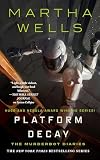
Hot off the presses, it's the new Murderbot book! This time, our cybernetic friend is on a rescue mission that becomes a rescue-even-more-people mission, that becomes a sort of road trip across an annoying giant space doughnut.
I will admit, it took me a little while to get into this one. It starts, not unusually, in media res, and then takes a good 50 pages to actually tell us why Murderbot cares about this mission, and thus why we should, too. And apparently I needed that to actually feel invested in it. Also, there is a lamentable near-lack of ART. Still, I was happy enough with it by the end. There's some fun action, and a development that I think might have some interesting consequences for the future. And it's interesting and sometimes entertaining to watch our hero's technology-assisted attempts to get in touch with its emotions, some of which, of course, are easier for it to articulate than others. There were definitely a few moments that made me go "aww," and in the end, that's really all I ask for from one of these books, anyway.
I will admit, it took me a little while to get into this one. It starts, not unusually, in media res, and then takes a good 50 pages to actually tell us why Murderbot cares about this mission, and thus why we should, too. And apparently I needed that to actually feel invested in it. Also, there is a lamentable near-lack of ART. Still, I was happy enough with it by the end. There's some fun action, and a development that I think might have some interesting consequences for the future. And it's interesting and sometimes entertaining to watch our hero's technology-assisted attempts to get in touch with its emotions, some of which, of course, are easier for it to articulate than others. There were definitely a few moments that made me go "aww," and in the end, that's really all I ask for from one of these books, anyway.
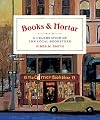
This small book showcases a variety of bookstores, mostly in the US and almost all indie. For each, there's either a quote of some sort or a brief description of the store. Sometimes there's a little bit about the history of the place or its role in the community. Often this reads a little bit like ad copy, but, hey, bookstores are probably the one thing I'm actually okay having advertised to me. And for each one, there is a painting done by the author of the outside of the shop. My art-ignorant self might describe these as seeming a bit unpolished, but they are colorful and definitely have some charm. It did all make me want to visit the bookstores, but given that wanting to be in a bookstore is kind of my default state, it's admittedly debatable how much of an accomplishment that is.
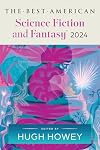
Look at me, being almost caught up on this series, finally! Only one year behind, now.
Anyway, this is a good, solid installment of a generally good yearly collection. I feel that in some sense this is maybe a more "traditional" batch of stories than we get most years, being mostly devoid of unusual formats or strongly experimental storytelling, although they're certainly diverse and creative in other ways. This volume is also rather less heavy on the social commentary than many of its predecessors, and completely lacking in any of those kinds of pieces that are basically all commentary with very little story. I imagine that may be a selling point for some and a disappointment for others. For myself, I just rather like the variety that having a different guest editor with different sensibilities every year brings.
Anyway, this is a good, solid installment of a generally good yearly collection. I feel that in some sense this is maybe a more "traditional" batch of stories than we get most years, being mostly devoid of unusual formats or strongly experimental storytelling, although they're certainly diverse and creative in other ways. This volume is also rather less heavy on the social commentary than many of its predecessors, and completely lacking in any of those kinds of pieces that are basically all commentary with very little story. I imagine that may be a selling point for some and a disappointment for others. For myself, I just rather like the variety that having a different guest editor with different sensibilities every year brings.

Andre Norton (real name Alice North) was a writer I loved as a kid, and this book in particular -- which I think was one of the first, and very likely the first thing of hers I read -- absolutely enthralled me. I think it was one of the books that really cemented my love of science fiction, well before I even understood the concept of a genre at all. And just seeing the title and the cover hit me with an instant and powerful wash of nostalgia when I encountered it at a library sale last year. So of course I had to pick it up and revisit it, although I have to say, I was a bit nervous about doing so. I have reread some of Norton's books as an adult, and they were okay, but not all of them hold up super well. It's always a little bit depressing to return to a childhood favorite and discover that it has somehow been "visited by the suck fairy" since the last time you encountered it, to use Jo Walton's evocative phrase. But it's a real delight to do so and find yourself thinking that, hey, child you actually had pretty good taste!
Well, I am very happy to report that this book definitely fell into the latter category. It features a space-going apprentice gem merchant who's inherited a ring with a strange alien stone from his dad, which leads him inadvertently into adventures that include fleeing people who want to make him a human sacrifice, crashlanding on an alien jungle world, encountering the relics of long-dead civilizations, and getting captured by a space cop who's show more accusing him of things he didn't do, among lots of other stuff. And of course I have to mention the weird telepathic alien mutant cat, which is actually way less cheesy and way more interesting than you'd think. I didn't remember any of the details of the story at all, just some of the very general elements like the ring and the cat, and I found myself surprisingly invested in seeing what would happen next. I sort of expected that, if it ended up still being worth reading at all, I'd feel some pleasant nostalgia as aspects of it started vaguely coming back to me, and that would be the main appeal. Instead, I felt nostalgia of a different, broader, and I think more satisfying kind: nostalgia for the days of my childhood when I could just sink thoroughly into a good old-fashioned adventure yarn. show less
Well, I am very happy to report that this book definitely fell into the latter category. It features a space-going apprentice gem merchant who's inherited a ring with a strange alien stone from his dad, which leads him inadvertently into adventures that include fleeing people who want to make him a human sacrifice, crashlanding on an alien jungle world, encountering the relics of long-dead civilizations, and getting captured by a space cop who's show more accusing him of things he didn't do, among lots of other stuff. And of course I have to mention the weird telepathic alien mutant cat, which is actually way less cheesy and way more interesting than you'd think. I didn't remember any of the details of the story at all, just some of the very general elements like the ring and the cat, and I found myself surprisingly invested in seeing what would happen next. I sort of expected that, if it ended up still being worth reading at all, I'd feel some pleasant nostalgia as aspects of it started vaguely coming back to me, and that would be the main appeal. Instead, I felt nostalgia of a different, broader, and I think more satisfying kind: nostalgia for the days of my childhood when I could just sink thoroughly into a good old-fashioned adventure yarn. show less

A collection of essays by the late evolutionary biologist and science popularizer, Stephen Jay Gould. Well, I say essays. Theoretically these are book reviews, and all of them appeared originally in the New York Review of Books (between 1963 and 1987, judging by the info on the copyright page). But most of them are probably more accurately described as responses to the books in question, rather than traditional reviews, as Gould often discusses the broader context of the books as much or more as the books themselves, and adds a lot of his own commentary on the subjects they address. He often finds things to be critical of, perhaps praising aspects of the work while pointing out areas where he thinks the authors have gone wrong. A few of his responses are purely appreciative, though, while several are full-bore takedowns. Throughout, Gould repeatedly comes back to certain themes and ideas that will be familiar to those who've read him before, most particularly his firm belief that too many people's views of evolution are far too reductionist in the way they attempt to apply simplistic ideas of genetics to things (up to and including human cultural practices) that are better understood as complex epiphenomena.
It's not at all necessary to be familiar with any of the books in question, by the way. I certainly haven't read all of them, and probably most of them I hadn't even heard of. I wouldn't recommend this as a first introduction to Gould, though. I think for many of these show more pieces it helps to have at least some understanding of the ideas and vocabulary of evolutionary biology in general, and Gould's approach to it in particular. And the pieces here might vary a bit more in how interesting, readable, and engaging they are than most of his essay collections. The best of them, though, I really enjoyed. Especially, it must be said, some of the negative ones, where he's explaining politely and devastatingly why the author of some book or other has no idea what they're talking about and is actively hurting whatever cause they're arguing for. show less
It's not at all necessary to be familiar with any of the books in question, by the way. I certainly haven't read all of them, and probably most of them I hadn't even heard of. I wouldn't recommend this as a first introduction to Gould, though. I think for many of these show more pieces it helps to have at least some understanding of the ideas and vocabulary of evolutionary biology in general, and Gould's approach to it in particular. And the pieces here might vary a bit more in how interesting, readable, and engaging they are than most of his essay collections. The best of them, though, I really enjoyed. Especially, it must be said, some of the negative ones, where he's explaining politely and devastatingly why the author of some book or other has no idea what they're talking about and is actively hurting whatever cause they're arguing for. show less
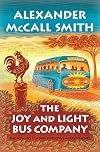
Book #22 in the No. 1 Ladies' Detective Agency series. It is constantly a marvel to me that I've never grown tired of these books, but I absolutely haven't. In fact, this one might be one of my favorite installments. It certainly does very well what the series does best: it's fantastic comfort reading, something I find myself more and more in need of these days. How lovely, just to spend time with kind, wise, good-hearted people, people who certainly have imperfections and (often amusing) foibles, but who are nevertheless fundamentally decent, despite living in a world that can often be cruel and sad. How pleasant, to see things mostly working out for them in the end, one way or another, as they continue to love each other, and their fellow human beings, and the world around them. I think Alexander McCall Smith's particular genius is that he pulls all of that off, somehow, without it feeling shallow, sappy, or patronizing, without denying or oversimplifying the uglier parts of the world, and while somehow bypassing all my years of accumulated cynicism. That's no small feat, especially not over the course of dozens of books.
And while the characters and the gentle philosophizing and the comfort-reading qualities are always much, much more the point of these books than anything resembling a plot, this one does feel like it has a bit more of a coherent story or throughline than most of them, and that works very nicely, too. Mma Ramotswe, head of the No. 1 Ladies' Detective show more Agency, investigates a matter involving an inheritance and stumbles into a discovery that some rich people are forcing children into domestic servitude. But most of the story revolves around her husband deciding to pursue a risky business investment she thinks is a very, very bad idea. And I was genuinely interested in seeing how all of that stuff turned out. show less
And while the characters and the gentle philosophizing and the comfort-reading qualities are always much, much more the point of these books than anything resembling a plot, this one does feel like it has a bit more of a coherent story or throughline than most of them, and that works very nicely, too. Mma Ramotswe, head of the No. 1 Ladies' Detective show more Agency, investigates a matter involving an inheritance and stumbles into a discovery that some rich people are forcing children into domestic servitude. But most of the story revolves around her husband deciding to pursue a risky business investment she thinks is a very, very bad idea. And I was genuinely interested in seeing how all of that stuff turned out. show less
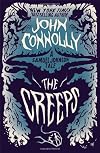
The third book in the Samuel Johnson trilogy, a YA comedy-horror series about a boy named Samuel Johnson who, with his faithful dog Boswell, repeatedly finds himself facing down the forces of Hell. This volume features an entity seeking horrible cosmic vengeance on Samuel. Also killer Christmas elves and a host of other creepy sillinesses. It is, I suppose, very much in the same style as the previous volumes, full of word play and humorously educational footnotes. I don't think I got nearly as much of a kick out of it as I did of the previous book, though. Admittedly, that may be my fault for leaving such a big gap between volumes, even with the help of snarky expository footnotes aimed at catching up people who have the audacity to start with the third volume. Well, it's still fairly amusing, in any case, even if it did feel as if it lacked something compared to my memory of the previous installments.

The late, great Rush drummer Neil Peart's account of his experiences during the band's thirtieth anniversary ("R30") tour in 2004, during which he traveled between venues by motorcycle, racking up more than 20,000 miles over the course of the tour. (This is the fourth book he wrote about music and motorcycles, but the first one I've read.)
It's full of little details of the trip (including very mundane ones), passing thoughts, stories about various people he knew (although less about his bandmates than you might expect), facts and histories about some of the more interesting places he visited, etc. Also an awful lot of him looking back on the journal he kept and seeing that, at the end of the day, he'd written something along the lines of, "This was such a full day while it was happening, but it's all slipping from my mind and I'm frustrated that I can't get it down in words." (Which, y'know, relatable, even if it's not exactly literarily gripping.)
Most of this stuff isn't especially compelling in itself, but I tend to find that there's something about this kind of real-life day-by-day accounting of someone's experiences that holds my attention unexpectedly well even when the things they're talking about aren't necessarily all that exciting, and that was mostly true of this one, too. Plus, it was really interesting to get a look at the perspective from the other side of the stage, so to speak, to get a feeling of what it's like for a touring musician for whom playing is show more simply his job. A rewarding and interesting job, to be sure, but a very different experience from the one we're having in the audience.
Plus, Neil was just an interesting and thoughtful guy... and one who very much defied the stereotypes of the rock star. How often do we get to hear what that life is like for someone who's a shy, intellectual, slightly socially awkward introvert? Also, ye gods, if the man who had a truly viable claim to the title of "world's best drummer" -- no matter how much he disputed that -- a man so unquestionably at the pinnacle of his profession, if this guy could feel inadequate, self-critical, and perhaps even subject to imposter syndrome, what does that say about the rest of us? Maybe that we should all be a little easier on ourselves, I don't know. What I do know is that his honesty on this stuff provides some worthwhile food for thought on the question of how any of us looks to ourselves on the inside vs. to others on the outside.
And, of course, there is a bittersweet poignancy to reading this now, as the band prepares to kick off its new reunion tour, knowing that he's gone and we'll never get to see him doing his virtuoso thing on the drums live, ever again. RIP, Neil. You are missed. show less
It's full of little details of the trip (including very mundane ones), passing thoughts, stories about various people he knew (although less about his bandmates than you might expect), facts and histories about some of the more interesting places he visited, etc. Also an awful lot of him looking back on the journal he kept and seeing that, at the end of the day, he'd written something along the lines of, "This was such a full day while it was happening, but it's all slipping from my mind and I'm frustrated that I can't get it down in words." (Which, y'know, relatable, even if it's not exactly literarily gripping.)
Most of this stuff isn't especially compelling in itself, but I tend to find that there's something about this kind of real-life day-by-day accounting of someone's experiences that holds my attention unexpectedly well even when the things they're talking about aren't necessarily all that exciting, and that was mostly true of this one, too. Plus, it was really interesting to get a look at the perspective from the other side of the stage, so to speak, to get a feeling of what it's like for a touring musician for whom playing is show more simply his job. A rewarding and interesting job, to be sure, but a very different experience from the one we're having in the audience.
Plus, Neil was just an interesting and thoughtful guy... and one who very much defied the stereotypes of the rock star. How often do we get to hear what that life is like for someone who's a shy, intellectual, slightly socially awkward introvert? Also, ye gods, if the man who had a truly viable claim to the title of "world's best drummer" -- no matter how much he disputed that -- a man so unquestionably at the pinnacle of his profession, if this guy could feel inadequate, self-critical, and perhaps even subject to imposter syndrome, what does that say about the rest of us? Maybe that we should all be a little easier on ourselves, I don't know. What I do know is that his honesty on this stuff provides some worthwhile food for thought on the question of how any of us looks to ourselves on the inside vs. to others on the outside.
And, of course, there is a bittersweet poignancy to reading this now, as the band prepares to kick off its new reunion tour, knowing that he's gone and we'll never get to see him doing his virtuoso thing on the drums live, ever again. RIP, Neil. You are missed. show less

A 1979 Stephen King novel, one of the ones he originally published under the name Richard Bachman. We're in what seems to be a dystopian police state version of the then-present (although the background is very lightly sketched out), and one hundred teenage boys, volunteers all, have been selected to participate in The Long Walk. They will walk until 99 of them drop, and anyone who stops, or even slows too much, for more than a few short minutes is summarily and dispassionately shot. And the one left at the end gets a prize: a fantastic sum of money and anything else in the world they might ask for.
It's a fascinating premise, especially when you consider the fact that this long predates works like Squid Game or The Hunger Games. It's one that comes with a lot of potentially interesting themes: the way the government sacrifices young men in war and in other ways, the love of the public for a cruel spectacle, the way society dangles the possibility of success "if you just try hard enough" in front of the poor and desperate when the reality is that 99% of them will never see it. King touches on all of these, perhaps, although the most obvious themes are the desire for death vs. the will to keep living, and the way in which their own mortality simply isn't a real thing for the young, until suddenly it is. I do feel that for the most part, though, I just notice those themes intellectually, rather than feeling them deeply or in a way that strongly resonates.
Honestly, I can't show more say this is necessarily a good book. But, like a lot of King's stuff, especially his early stuff, it somehow ends up working better than it has any right to. I don't think I've ever met an author like him for striving diligently to write casual, naturalistic dialog that somehow ends up sounding nothing like any human being has talked, ever. But, again, it kind of works. And a little ways in, I was thinking, OK, but how you you possibly do 370 pages of this, when it's literally nothing but walking and listening to a bunch of often obnoxious teenagers talking, when they can find the breath? But it does just pull you along somehow, so that it doesn't end up feeling like 370 pages at all. And it ends fairly strong, I think, or at least I found the final pages to be the most affecting part of the book. show less
It's a fascinating premise, especially when you consider the fact that this long predates works like Squid Game or The Hunger Games. It's one that comes with a lot of potentially interesting themes: the way the government sacrifices young men in war and in other ways, the love of the public for a cruel spectacle, the way society dangles the possibility of success "if you just try hard enough" in front of the poor and desperate when the reality is that 99% of them will never see it. King touches on all of these, perhaps, although the most obvious themes are the desire for death vs. the will to keep living, and the way in which their own mortality simply isn't a real thing for the young, until suddenly it is. I do feel that for the most part, though, I just notice those themes intellectually, rather than feeling them deeply or in a way that strongly resonates.
Honestly, I can't show more say this is necessarily a good book. But, like a lot of King's stuff, especially his early stuff, it somehow ends up working better than it has any right to. I don't think I've ever met an author like him for striving diligently to write casual, naturalistic dialog that somehow ends up sounding nothing like any human being has talked, ever. But, again, it kind of works. And a little ways in, I was thinking, OK, but how you you possibly do 370 pages of this, when it's literally nothing but walking and listening to a bunch of often obnoxious teenagers talking, when they can find the breath? But it does just pull you along somehow, so that it doesn't end up feeling like 370 pages at all. And it ends fairly strong, I think, or at least I found the final pages to be the most affecting part of the book. show less
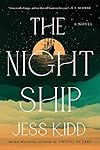
This novel alternates between the stories of two children: a 17th century Dutch girl on a sea voyage aboard the Batavia to live with her father after her mother's death, and a boy in 1989 who, after the death of his own mother, has been sent to live with his grandfather in a tiny fishing settlement on a remote island... an island that also hosts divers and scientists investigating the wreck of the Batavia and the terrible events that happened afterward.
The two youngsters, despite their shared tragedies, are very different people in different situations, but their stories parallel, echo, and reflect each other in all kinds of ways, large and small, as they face supernatural monsters that may be imaginary and human monsters who are entirely too real. In the hands of a lesser writer, this could feel artificial and contrived, but Jess Kidd weaves them together in a deft and magical way that grabbed me in ways I don't even entirely understand but that were beautiful and a bit heartbreaking.
The two youngsters, despite their shared tragedies, are very different people in different situations, but their stories parallel, echo, and reflect each other in all kinds of ways, large and small, as they face supernatural monsters that may be imaginary and human monsters who are entirely too real. In the hands of a lesser writer, this could feel artificial and contrived, but Jess Kidd weaves them together in a deft and magical way that grabbed me in ways I don't even entirely understand but that were beautiful and a bit heartbreaking.
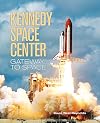
The book was published in 2011, at the tail end of the Shuttle era, although parts of the text appear to have been written at least a few years earlier, based on the fact that it talks in the final chapter about things that may happen in 2008 or 2009.
It offers up a bit of the history of Kennedy Space Center and its precursors, but mostly covers specific missions launched from KSC, with a focus on things like the technologies used on the launchpad and how the missions were enabled and supported by KSC facilities.
The writing is okay. There are lots of facts and figures and technical details, and I imagine most people picking up a book like this will know going in whether that's the sort of thing that will excite them or make their eyes glaze over. But the author also sometimes takes a very rah-rah, "Go, USA!" kind of tone about it all that in places seems just a little bit much to me -- and I'm someone who once described seeing a Saturn V rocket in person at the KSC visitors' center as one of the closest things I've ever had to a religious experience. Well, except when he gets to the space shuttle, and then he has some savagely critical things to say. Which aren't exactly unreasonable, but were such an abrupt change of tone that I couldn't help laughing a little. Still, mostly it's full of facts and information, and I certainly did learn some things. If nothing else, reading much of it just before watching the Artemis II launch genuinely gave me a better appreciation for show more what I was seeing on the pad.
It's also an oversized book with lots of full-color pictures which are very nice, although there are one or two places where I might also have wished for a labeled diagram or two. show less
It offers up a bit of the history of Kennedy Space Center and its precursors, but mostly covers specific missions launched from KSC, with a focus on things like the technologies used on the launchpad and how the missions were enabled and supported by KSC facilities.
The writing is okay. There are lots of facts and figures and technical details, and I imagine most people picking up a book like this will know going in whether that's the sort of thing that will excite them or make their eyes glaze over. But the author also sometimes takes a very rah-rah, "Go, USA!" kind of tone about it all that in places seems just a little bit much to me -- and I'm someone who once described seeing a Saturn V rocket in person at the KSC visitors' center as one of the closest things I've ever had to a religious experience. Well, except when he gets to the space shuttle, and then he has some savagely critical things to say. Which aren't exactly unreasonable, but were such an abrupt change of tone that I couldn't help laughing a little. Still, mostly it's full of facts and information, and I certainly did learn some things. If nothing else, reading much of it just before watching the Artemis II launch genuinely gave me a better appreciation for show more what I was seeing on the pad.
It's also an oversized book with lots of full-color pictures which are very nice, although there are one or two places where I might also have wished for a labeled diagram or two. show less
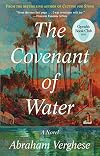
A sprawling novel that follows various members of a family in India from 1900 to 1977, beginning with a child bride leaving home for the first time little knowing she will become the beloved matriarch on whom generations will rely, and ending with a young doctor who discovers they key to a generational mystery often thought of as a curse: why so many in the family become strange and helpless in the water and far too often die by drowning.
It's a lovely, absorbing book about family, medicine, compassion, tragedy, faith, moments of courage and weakness, and the restraints and injustices of caste and class, gender and race. At well over 700 pages, it took me longer than I would have preferred to finish it, but, unlike many novels of this size, it never felt like it wore out its welcome.
It's a lovely, absorbing book about family, medicine, compassion, tragedy, faith, moments of courage and weakness, and the restraints and injustices of caste and class, gender and race. At well over 700 pages, it took me longer than I would have preferred to finish it, but, unlike many novels of this size, it never felt like it wore out its welcome.
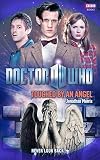
A Doctor Who novel featuring the Eleventh Doctor, Amy, and Rory. Also the Weeping Angels, who have sent some guy named Mark back in time a couple of decades, where he has to make sure his past self's life goes as it's supposed to, but in the process is also working towards changing a tragic bit of his past that really needs to not be changed.
It's definitely one of the better New Who novels I've read. It's decently written, with great character voices, especially the Doctor's. The Angels aren't as creepy as they are in the show, but that's probably pretty much inevitable, as their whole thing inherently works better in a visual medium. I do like what the story does with them, though. Unlike on the show, where their lore seems to change in increasingly weird ways every time they appear, there's only one small additional tweak to them here, and it's one that makes perfect sense. The plot's pretty good, too, and full of interesting timey-wimeyness. It's not nearly as tightly constructed as "Blink," and there are a few aspects of the time travel stuff where you just sort of have to accept the Doctor waving his hands around and telling you not to think about it too hard, but none of it is any harder to swallow than anything on the show ever is. I suppose the story as a whole might not exactly be fully compatible with "The Angels Take Manhattan," as you'd think they really ought to mention the events of this one in that episode, but this came out a year or so before that, so you show more can't hold that against it.
If there's one real weakness, it's just that Mark is an incredibly generic character. We spend a fair bit of time on his life story, and none of it is super interesting. But it at least never actually becomes tedious, and in the end the fact that Mark really is Just Some Guy feels fairly important to the story.
So, yeah. Quite enjoyed this one, overall. show less
It's definitely one of the better New Who novels I've read. It's decently written, with great character voices, especially the Doctor's. The Angels aren't as creepy as they are in the show, but that's probably pretty much inevitable, as their whole thing inherently works better in a visual medium. I do like what the story does with them, though. Unlike on the show, where their lore seems to change in increasingly weird ways every time they appear, there's only one small additional tweak to them here, and it's one that makes perfect sense. The plot's pretty good, too, and full of interesting timey-wimeyness. It's not nearly as tightly constructed as "Blink," and there are a few aspects of the time travel stuff where you just sort of have to accept the Doctor waving his hands around and telling you not to think about it too hard, but none of it is any harder to swallow than anything on the show ever is. I suppose the story as a whole might not exactly be fully compatible with "The Angels Take Manhattan," as you'd think they really ought to mention the events of this one in that episode, but this came out a year or so before that, so you show more can't hold that against it.
If there's one real weakness, it's just that Mark is an incredibly generic character. We spend a fair bit of time on his life story, and none of it is super interesting. But it at least never actually becomes tedious, and in the end the fact that Mark really is Just Some Guy feels fairly important to the story.
So, yeah. Quite enjoyed this one, overall. show less
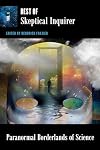
My first encounter with Skeptical Inquirer magazine was in a college library in the 1990s, and I initially assumed it was some kind of delightfully nerdy parody of the notoriously non-skeptical National Enquirer. It's not, though. It's a perfectly serious publication (although not one without an occasional sense of humor) dedicated to fringe and paranormal subjects from a skeptical, scientific point of view.
This first of their "best of" collections features articles on a number of such subjects, some talking in general about pseudoscience and pseudoscientific beliefs, some addressing scientific flaws in pseudoscientists' arguments, others featuring authors who've run small experiments or crunched some statistics to test whether, say, dowsers can detect running water in properly controlled trials, or if there are more births during a full moon, or more professional athletes born under a particular astrological sun sign. (Spoiler: no.) Some of the articles are pretty dry, some a bit livelier. A few of them I've got some issues with. But in general it's always nice to see people out there trying to approach this stuff in a sensible and scientific fashion.
Which is something Skeptical Inquirer has been doing for quite a long time. This particular volume was published in 1981, so the pieces in it are mostly from the 1970s. As such, they reflect the pseudoscientific topics that were in fashion at the time: biorhythms, the Bermuda Triangle, a deep mainstream fascination with ESP, show more a whole section on Immanuel Velikovsky. Of course, other topics represented here, such as astrology and UFOs, are just as culturally relevant as ever. Still, I wouldn't exactly recommend this volume as a first foray into works of scientific skepticism, unless you have a very specific fascination with paranormal culture and beliefs in the 70s. I do think everyone should have at least some exposure to this kind of thinking, though. show less
This first of their "best of" collections features articles on a number of such subjects, some talking in general about pseudoscience and pseudoscientific beliefs, some addressing scientific flaws in pseudoscientists' arguments, others featuring authors who've run small experiments or crunched some statistics to test whether, say, dowsers can detect running water in properly controlled trials, or if there are more births during a full moon, or more professional athletes born under a particular astrological sun sign. (Spoiler: no.) Some of the articles are pretty dry, some a bit livelier. A few of them I've got some issues with. But in general it's always nice to see people out there trying to approach this stuff in a sensible and scientific fashion.
Which is something Skeptical Inquirer has been doing for quite a long time. This particular volume was published in 1981, so the pieces in it are mostly from the 1970s. As such, they reflect the pseudoscientific topics that were in fashion at the time: biorhythms, the Bermuda Triangle, a deep mainstream fascination with ESP, show more a whole section on Immanuel Velikovsky. Of course, other topics represented here, such as astrology and UFOs, are just as culturally relevant as ever. Still, I wouldn't exactly recommend this volume as a first foray into works of scientific skepticism, unless you have a very specific fascination with paranormal culture and beliefs in the 70s. I do think everyone should have at least some exposure to this kind of thinking, though. show less

The Aardvark Book Club is one of those Book-of-the-Month-style enterprises, where they offer members a selection of books to choose from each month. I joined up not long after they got started a bit over three years ago, and while I've had somewhat mixed feelings about the books I've gotten from them -- or at least, the ones I've read so far, since, me being me, a lot of them are still sitting on the TBR shelves -- their selections have generally at least been interesting. Among other things, they offer a fair amount of horror... which brings us to this anthology. It was put out by the book club itself and includes eight horror stories, of roughly 30 pages each, by eight authors whose books were previously featured as selections.
Overall, I'd say these stories are on the milder end of the horror spectrum, and most of them aren't really breaking much in the way of new ground or anything. But they're very readable and basically solid, decent Halloweeny reading that managed to hit just right for my current mood, even if I am coming to them a few months late.
Two exceptions stand out, though: Kylie Lee Baker's "Lady Jawbone," which was fascinating, a bit unsettling, and weird in a good way. And the title story, Stephen Graham Jones' "One Bad Night," which really snuck up on me and did some impressively painful things to my heart.
Overall, I'd say these stories are on the milder end of the horror spectrum, and most of them aren't really breaking much in the way of new ground or anything. But they're very readable and basically solid, decent Halloweeny reading that managed to hit just right for my current mood, even if I am coming to them a few months late.
Two exceptions stand out, though: Kylie Lee Baker's "Lady Jawbone," which was fascinating, a bit unsettling, and weird in a good way. And the title story, Stephen Graham Jones' "One Bad Night," which really snuck up on me and did some impressively painful things to my heart.

This is a follow-up of sorts to Egan's earlier novel A Visit from the Goon Squad, and like that one it has an oddly kaleidoscopic structure. We slip in and out of the life stories of people with varying degrees of connection to each other, meander backwards and forwards in time, dip our toes briefly into alternative genres, and occasionally experiment with unusual formats. It's a cool and interesting approach, when it works, and I do remember it working well in Goon Squad. Sadly, though, I don't feel like it succeeded anywhere near as well here, with the result that the entire novel was just a bit disappointing. Probably in large part this is due to the fact that I found none of the characters to be especially worth spending time with here, even for the short time we usually did so. Well, that and the fact that the interesting central idea -- a technology that allows people to record the memories of everything they've ever experienced and upload them for others to share -- just never feels very well-explored, fleshed-out, or believable.
There is some good writing, and I feel like the novel has some interesting things it wants to say about social media, authenticity, and human connection, themes that the fragmented structure of interwoven stories ought to work really well with. But ultimately it all feels sort of weak and watery and doesn't really add up to a whole lot.
There is some good writing, and I feel like the novel has some interesting things it wants to say about social media, authenticity, and human connection, themes that the fragmented structure of interwoven stories ought to work really well with. But ultimately it all feels sort of weak and watery and doesn't really add up to a whole lot.
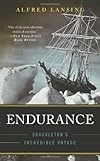
In 1914, an expedition led by Sir Ernest Shackleton set out on the ship Endurance with the aim of crossing Antarctica. But before ever reaching the continent, the ship became immobilized by ice, and months later it was finally crushed by the pressure and sank. Its crew then set out across ice, across some of the worst seas on Earth in open boats in horrifying weather, and overland across an island whose interior no one had ever successfully navigated before. All told, it was nearly two years before they made it back.
It is an absolutely incredible story. Almost literally incredible: if it were a work of fiction, you'd never believe it. It doesn't seem like something human beings ought to be capable of. And what do you mean, every single one of them survived? Seriously?
And yet, it's all true, and extremely well-documented, to boot, as a number of these mean kept careful diaries of their experiences.
This book covers it all in considerable detail. Lansing's prose, for the most part, isn't fancy, but it does precisely what it needs to do. He describes the moment-by-moment, wave-by-wave progress of those open boat voyages in a way that brought my heart repeatedly into my throat, making the frustration and weariness and uncertain hope of it all thrillingly palpable. And when, instead, the narrative is one of endless days of waiting and monitoring the winds and trying hard just to get some rest in miserably sodden sleeping bags, he captures all of that faithfully, too.
It's a hell show more of a story, told in a way that brings it vividly to life without any (utterly unnecessary) sensationalizing, and I'm very, very glad to have read it. It really is the sort of thing that helps you recalibrate your sense of what humans are capable of.
One can only admire these men's, well, endurance. But, I must say, while I imagine some might find it inspirational, it mostly sort of leaves me wondering why anyone with an ounce of sanity would ever leave home at all to go wandering through places that seem like they so desperately want to kill you. It also makes me stop for a moment to really, truly appreciate being warm and dry and fed, which is a very worthwhile thing to do once in a while. show less
It is an absolutely incredible story. Almost literally incredible: if it were a work of fiction, you'd never believe it. It doesn't seem like something human beings ought to be capable of. And what do you mean, every single one of them survived? Seriously?
And yet, it's all true, and extremely well-documented, to boot, as a number of these mean kept careful diaries of their experiences.
This book covers it all in considerable detail. Lansing's prose, for the most part, isn't fancy, but it does precisely what it needs to do. He describes the moment-by-moment, wave-by-wave progress of those open boat voyages in a way that brought my heart repeatedly into my throat, making the frustration and weariness and uncertain hope of it all thrillingly palpable. And when, instead, the narrative is one of endless days of waiting and monitoring the winds and trying hard just to get some rest in miserably sodden sleeping bags, he captures all of that faithfully, too.
It's a hell show more of a story, told in a way that brings it vividly to life without any (utterly unnecessary) sensationalizing, and I'm very, very glad to have read it. It really is the sort of thing that helps you recalibrate your sense of what humans are capable of.
One can only admire these men's, well, endurance. But, I must say, while I imagine some might find it inspirational, it mostly sort of leaves me wondering why anyone with an ounce of sanity would ever leave home at all to go wandering through places that seem like they so desperately want to kill you. It also makes me stop for a moment to really, truly appreciate being warm and dry and fed, which is a very worthwhile thing to do once in a while. show less
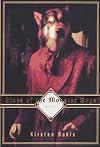
A 19th-century Prussian mad scientist dreams of creating a conquering army of intelligent dogs with prosthetic hands. He and his cult of followers relocate to a small and hidden town in Canada, where eventually one of his successors does in fact manage to create these dogs, who the humans in the town then keep as slaves, until eventually they rise up and massacre them all. They then live in the Canadian wilderness somewhere for eight years, before finally coming to New York City, where they live rich and famous lives. One of them -- a scholar attempting to write a history of the dogs and the man who envisioned their creation -- latches onto a college student, apparently because he thinks she looks like the mad scientist's mother, and she becomes the one tasked with bringing their story to the world.
It's a very odd book, and not just due to its strange science-fictional premise. Early on, I found myself thinking, OK, I don't know what to make of this, but I'm interested to see where it goes. Having finished it, I still don't know what to make of it, nor am I entirely certain where it went. The concept, for all its weirdness, is certainly interesting. There are some nicely well-written passages, and perhaps a slightly poignant moment or two. But it never felt especially compelling to me, and it just never felt like any of it really added up to much of anything. Also, it features a bizarre kind of mysticism that never particularly worked for me.
It's a very odd book, and not just due to its strange science-fictional premise. Early on, I found myself thinking, OK, I don't know what to make of this, but I'm interested to see where it goes. Having finished it, I still don't know what to make of it, nor am I entirely certain where it went. The concept, for all its weirdness, is certainly interesting. There are some nicely well-written passages, and perhaps a slightly poignant moment or two. But it never felt especially compelling to me, and it just never felt like any of it really added up to much of anything. Also, it features a bizarre kind of mysticism that never particularly worked for me.

This is exactly what it says it is: a collection of art about NASA and space travel (sometimes from as well as about NASA). There's art featuring space missions both real and imagined, and a nice collection of retro-style poster art, featuring things like mock tourist posters for various destinations in the universe and posters in the style of old monster movies describing astronomical discoveries. The book is rather slim, but the large size shows off the art very nicely. I might have liked a bit more text about the artists and the subject matter of the works, as opposed to the index with very brief descriptions in the back. But with or without that, it's definitely worth a look-through for space travel enthusiasts.
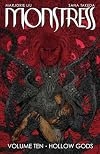
Volume ten in the rich, artistically beautiful, and disturbingly violent dark fantasy series Monstress. I have to admit, my main reaction to this installment is to note that it very much reinforces my belief that I'm going to have to re-read this series all in a lump once it's finished in order to fully appreciate it. It's all so intricate and complicated that I tend to lose the thread of things in the wait between installments every time and have a difficult time finding my footing. That's especially true here, and I'm also left wondering just how many more installments there will be, since it very much feels like we're in the middle of something climactic.
My second thought is that one of the things I find fascinating and kind of cool about this series is how it takes its terrifying eldritch gods and eventually develops them as people, people who are less impossible to understand than you might think, while still letting them be alien and scary.
My second thought is that one of the things I find fascinating and kind of cool about this series is how it takes its terrifying eldritch gods and eventually develops them as people, people who are less impossible to understand than you might think, while still letting them be alien and scary.
The story of a man who, when he was thirteen years old, was the only survivor of a mine collapse in the coal country of Pennsylvania, an early experience of darkness and death that was to stay with him for the rest of his life until, as an old man, the children of the other miners came to him to learn at last how their fathers died and what they had to say before the end.
It's a moving little novel full of poignant emotion, quiet philosophical reflection, and truthful-feeling psychology. But I do wish the writing style had been a little different. It is, I suppose, a stream-of-consciousness sort of thing, with each chapter one long run-on sentence. But while that can sometimes be used to excellent effect in a story like this, in this case I think it actually worked against it, as it often felt like the prose was trying to pull me along at a breakneck pace when it really needed to be read slowly and properly absorbed, or as if what should have been beautifully simple feelings sometimes got lost in a rush of hard-to-parse torrent of words.
In the end, it's still a lovely and affecting book, but I can't help feeling that, for me personally, it would have been more lovely and affecting if it had featured a period every few pages.
It's a moving little novel full of poignant emotion, quiet philosophical reflection, and truthful-feeling psychology. But I do wish the writing style had been a little different. It is, I suppose, a stream-of-consciousness sort of thing, with each chapter one long run-on sentence. But while that can sometimes be used to excellent effect in a story like this, in this case I think it actually worked against it, as it often felt like the prose was trying to pull me along at a breakneck pace when it really needed to be read slowly and properly absorbed, or as if what should have been beautifully simple feelings sometimes got lost in a rush of hard-to-parse torrent of words.
In the end, it's still a lovely and affecting book, but I can't help feeling that, for me personally, it would have been more lovely and affecting if it had featured a period every few pages.
 This review was written for LibraryThing Early Reviewers.