
Katie Mack
Author of The End of Everything: (Astrophysically Speaking)
About the Author
Dr. Katie Mack is a theoretical astrophysicist exploring a range of questions in cosmology, the study of the universe from beginning to end. She is currently an assistant professor of physics at North Carolina State University, where she is also a member of the Leadership in Public Science Cluster. show more She has written for a number of popular publications, such as Scientific American, State, Sky Telescope, Time, and Cosmos magazine, where she is a columnist. She can be found on Twitter as @AstroKatie. show less
Image credit: Katie Mack in 2019.
Works by Katie Mack
Koniec wszystkiego 1 copy
Tagged
Common Knowledge
- Other names
- Mack, Katherine J. (birth)
- Birthdate
- 1981-05-01
- Gender
- female
- Education
- California Institute of Technology (physics|2003)
Princeton University (PhD|astrophysics|2009) - Occupations
- theoretical cosmologist
science communicator - Organizations
- University of Cambridge (Kalvi Institute for Cosmology Science and Technology Facilities Council postdoctoral research fellow)
University of Melbourne (Discovery Early Career Researcher Award Fellow)
North Carolina State University (assistant professor) - Agent
- Mollie Glick (CAA)
- Nationality
- USA
- Associated Place (for map)
- USA
Members
Reviews
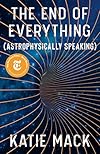
In a little over 200 pages, Katie Mack walked me through time from the Big Bang to the Heat Death of the universe. She also walks readers through much of physics as presently known. That's incredible, frankly, but there's more: Mack writes snappy prose and leavens her lessons with humor that is sometimes mordant and sometimes whimsical. I laughed a lot reading this book, and how often can one say they laughed reading a book about possible ways the universe will end? or a book about the show more general theory of relativity? or a book about the second law of thermodynamics? (Well, that last one could become a fairly humorous book.) Mack explains these and other topics without resorting to even the simple mathematics most popular science books include. This is simply a great read and a great way to gain a basic understanding of physics and how it works. I especially appreciated her explanations of the cosmological constant, which I had been fuzzy on before reading her book, dark matter and dark energy. Physics-it's fun! show less
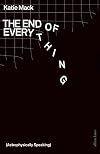
Who would have guessed that contemplating the big crunch, heat death, the big rip, vacuum decay, and bounce could be so entertaining? Astrophysicist Katie Mack has devoted her life to thinking about the end of everything (that is, the universe) and has somehow maintained her humor and sense of awe. These help the reader confront that, as sure as our universe began, it will end. There’s nothing we can do to stop that happening, and the certainty that all but one of these scenarios will show more happen long after there are humans to be aware of it is a small comfort. (The exception, the big rip, could happen any moment but will happen faster than our nerves can pass the sensation to our brains, so no worries).
But if we can’t prevent it, why think about it? In the final chapter, Mack poses this question to several colleagues. Most admit it makes them sad, but one said: “I’m delighted that we get to live at a time in the universe when we can see dark energy and not be ripped apart by it. But that means the whole point is that you understand it, and then you enjoy it, and then . . . ‘So long and thanks for all the fish.’ Cool.”
That’s the sense this book left me with as well. The remaining disconnect between the Concordance Model in cosmology and the Standard Model in particle physics, along with the fact that weak gravity doesn’t fit well with either, isn’t disturbing but fascinating. There’s more out there to explore. And the tools we use for that, from the Large Hadron Collider deep under the Alps to the James Webb Space Telescope, are exciting, even for an interested layman who forgot the little calculus he once learned, so he takes the math on faith.
Ah yes, that troublesome word, faith. We live in a time when it’s fashionable to bash religion, contrasting it with “science,” understood as the realm of facts based on observation. Yet when Mack asks “how to make advances in areas of theory in which experimental evidence may never appear,” I wonder if these two modes of inquiry, science and theology, are as incompatible as many think. Mack concedes that arguments rage about “whether or not untestable theories should even be called science.”
Whether science or not, I’m a fan. As Carl Sagan said (quoted here by Mack): “We are a way for the cosmos to know itself.” I’m happy to be along for the ride. Although I totally get it when Mack admits the possibility that spacetime isn’t real makes her queasy. show less
But if we can’t prevent it, why think about it? In the final chapter, Mack poses this question to several colleagues. Most admit it makes them sad, but one said: “I’m delighted that we get to live at a time in the universe when we can see dark energy and not be ripped apart by it. But that means the whole point is that you understand it, and then you enjoy it, and then . . . ‘So long and thanks for all the fish.’ Cool.”
That’s the sense this book left me with as well. The remaining disconnect between the Concordance Model in cosmology and the Standard Model in particle physics, along with the fact that weak gravity doesn’t fit well with either, isn’t disturbing but fascinating. There’s more out there to explore. And the tools we use for that, from the Large Hadron Collider deep under the Alps to the James Webb Space Telescope, are exciting, even for an interested layman who forgot the little calculus he once learned, so he takes the math on faith.
Ah yes, that troublesome word, faith. We live in a time when it’s fashionable to bash religion, contrasting it with “science,” understood as the realm of facts based on observation. Yet when Mack asks “how to make advances in areas of theory in which experimental evidence may never appear,” I wonder if these two modes of inquiry, science and theology, are as incompatible as many think. Mack concedes that arguments rage about “whether or not untestable theories should even be called science.”
Whether science or not, I’m a fan. As Carl Sagan said (quoted here by Mack): “We are a way for the cosmos to know itself.” I’m happy to be along for the ride. Although I totally get it when Mack admits the possibility that spacetime isn’t real makes her queasy. show less
Katie Mack's review of the state of cosmology (the Concordance Model) and physics (the Standard Model) is an apologia for scientific curiosity before the brutal 'fact' (or presumed fact) of total universal extinction. It is also an excellent if not always easy guide to the state of current knowledge.
I write 'current knowledge' (as of 2020 in this case) but if there is one thing the book makes clear it is that there is an awful lot we do not know about either the universe or the fundamental show more structure of matter and that both experimentation and theory constantly tweak what we do know.
There are thus some interesting existential questions arising out of this book - why do we want to know when all things are apparently eventually doomed to the nothing, is mathematically based theory actually any use in explaining reality and is what we observe actually what there is?
Mack is firmly in the camp of curiosity as a value in itself, based on reason and experimental observation with a respect for the wilder shores of theoretical speculation. It is, however, made very clear that this arises from 'personality'. It could be no other way.
Indeed, it is not only the relative (there are necessarily going to be obscurities for the general reader) clarity of her writing but an awareness of the many different and reasonable human responses to ultimate extinction that makes this book one of high value and integrity.
She is, of course, particularly concerned to defend the particle physicists from the fears of those who think their search for ultimate knowledge through energetic collisions is the most immediate threat to the existence of everything (the initiation of so-called vacuum decay).
But she would, wouldn't she? This is the nature of the high scientific mind - the radical pursuit of knowledge. Such a mind 'must know' regardless of consequences and no doubt similar minds across the universe could trigger (in theory) vacuum decay and our own extinction from such a motive.
In fact, she is probably (though can we honestly say 'certainly'?) right that the proposed Future Circular Collider [FCC] presents no such risk but can we ordinary folk wholly trust a caste as driven by 'knowing' as politicians by power and artists by creativity?
If she is wrong, we will just blink out of existence without warning perhaps. No one will know. Perhaps universes are blinking in and out of existence because sentience evolves out of complexity in attempted defiance of the iron law of entropy and can never resist knowing too much.
But vacuum decay or similar abstruse nightmares are the only probable threats to Being, as we believe we understand it 'scioentifically', that are theoretically possible in our now-time. Our own being of course is at threat from all sorts, from asteroids to nearby supernovae, regardless.
Universal ending (though perhaps never the ending of Being in itself - see below) is theorised as Big Crunch, Heat Death, Big Rip and Bounce. I refer you to her lucid chapters on these as well as an excellent introductory chapter on Big Bang and the creation of the universe as we know it.
The very fact of having four main viable theories of an ending in the very far future suggests lack of knowing for certain of anything. The existential issue is not immediate threat but the extinction of whatever we have evolved into if we survive more immediate threats and of all other things as well.
This means that our personal extinction (which many cope with by referring to a legacy of some sort) is simply capped by ultimate extinction which can have some interesting psychological effects on people who have evaded the first only to be faced with the second.
The problem for the hopeful is that, whichever extinction process finally fits the facts (assuming we have the capacity for acquiring the necessary facts), extinction is what the scientists tell us to expect although this is not actually incompatible with the infinity and eternity of Being.
The truth is that we are (however) in unknown territory. Ignorance of the fundamentals of existence are still serious enough to permit space (and time) for completely new ways of understanding reality that may eventyually make current science as redundant as Aristotelian.
We just do not know. We are hobbled but our own limited human perceptual and cognitive capacity and any limits to our ability to build instrumentation to capture ever more data and analyse it (assuming such efforts do not extinguish us in the trying).
Of course, the rise of artificial intelligence (especially in analysing vast amounts of data from new assets such as space telescopes and ever-faster colliders as well as conditions in space itself) could extend understanding considerable. Already the JWST will probably require revisions in the book.
In the end, science continues to be a moving feast much as it was in the world of Thales of Miletus or Galileo and Newton. The book on cosmology and physics written in 2120 is likely to be very different. Mack appears to have the good grace to recognise this possibility.
In other words, her book is an excellent snapshot and guide to cosmology and its relationship to particle physics at the start of the third decade of the twenty-first century as Frank Close's remains in my library as a snapshot of those same sciences as they were in the late-1980s.
My own view is that we have to split our minds into a strong acceptance of science as a reasonable description of what we can see before us and as block to the fantastic inventions of those who refuse the facts as they are uncovered but also into a degree of scepticism that this is the 'truth of things'.
The scepticism is not about the scientific method per se and certainly not verified evidence but about the meaning we place on it and any attempt at excessive certainty as to its meaning. Mack, though totally committed to science, seems to recognise this existential doubt as reasonable.
There are a number of major questions here. How is reality to be understood only through human capacity (or indeed the perspective of any form of sentience including AI)? Is mathematical theory beyond certain testable limits any more 'real' than medieval theological assumptions beyond nature?
A third is whether the scientific mind's valuation procedures are not as distorting of human reality (its relationship to Being as the Heideggerians might have us emphasise) as the artist's or politician's or businessman's distortions of reality derived from what amounts to a class or interest position?
In other words, an ultimate scepticism as to absolute knowledge can sit alongside acceptance of relative knowledge. In the end a degree of belief and intuition can sit on top of the theory and the evidence because there remains a vast hole available for them.
In my case, I am relaxed about the ultimate extinction of my universe (just as I accept the unavoidability of ultimate personal extinction). However, I tend to see my universe as just a blink in something that just is - persistent, eternal, infinite, without beginning or end.
It is not sentient (pan-psychism is hog wash) but sentience emerges out of it and is extinguished to emerge again, not always and never exactly the same, despite the equal cosmological hogwash of Nietzsche's excellent existential thought experiment, always fated to its own eventual demise.
As some closing words of Mack suggest, the point is thus not the end but the journey - Heidegger's Path perhaps philosophically, although I am told reliably by a Heideggerian that I do not understand Heidegger (but then does anyone? did Heidegger understand Heidegger?).
Having said all that, this is an excellent, fair-minded, well-written, exceptionally intelligent and measured guide and is highly recommended. It is not easy in places but do not let that deter you. Mack does the best she can with very difficult ideas and the whole is sufficient to enlighten. show less
I write 'current knowledge' (as of 2020 in this case) but if there is one thing the book makes clear it is that there is an awful lot we do not know about either the universe or the fundamental show more structure of matter and that both experimentation and theory constantly tweak what we do know.
There are thus some interesting existential questions arising out of this book - why do we want to know when all things are apparently eventually doomed to the nothing, is mathematically based theory actually any use in explaining reality and is what we observe actually what there is?
Mack is firmly in the camp of curiosity as a value in itself, based on reason and experimental observation with a respect for the wilder shores of theoretical speculation. It is, however, made very clear that this arises from 'personality'. It could be no other way.
Indeed, it is not only the relative (there are necessarily going to be obscurities for the general reader) clarity of her writing but an awareness of the many different and reasonable human responses to ultimate extinction that makes this book one of high value and integrity.
She is, of course, particularly concerned to defend the particle physicists from the fears of those who think their search for ultimate knowledge through energetic collisions is the most immediate threat to the existence of everything (the initiation of so-called vacuum decay).
But she would, wouldn't she? This is the nature of the high scientific mind - the radical pursuit of knowledge. Such a mind 'must know' regardless of consequences and no doubt similar minds across the universe could trigger (in theory) vacuum decay and our own extinction from such a motive.
In fact, she is probably (though can we honestly say 'certainly'?) right that the proposed Future Circular Collider [FCC] presents no such risk but can we ordinary folk wholly trust a caste as driven by 'knowing' as politicians by power and artists by creativity?
If she is wrong, we will just blink out of existence without warning perhaps. No one will know. Perhaps universes are blinking in and out of existence because sentience evolves out of complexity in attempted defiance of the iron law of entropy and can never resist knowing too much.
But vacuum decay or similar abstruse nightmares are the only probable threats to Being, as we believe we understand it 'scioentifically', that are theoretically possible in our now-time. Our own being of course is at threat from all sorts, from asteroids to nearby supernovae, regardless.
Universal ending (though perhaps never the ending of Being in itself - see below) is theorised as Big Crunch, Heat Death, Big Rip and Bounce. I refer you to her lucid chapters on these as well as an excellent introductory chapter on Big Bang and the creation of the universe as we know it.
The very fact of having four main viable theories of an ending in the very far future suggests lack of knowing for certain of anything. The existential issue is not immediate threat but the extinction of whatever we have evolved into if we survive more immediate threats and of all other things as well.
This means that our personal extinction (which many cope with by referring to a legacy of some sort) is simply capped by ultimate extinction which can have some interesting psychological effects on people who have evaded the first only to be faced with the second.
The problem for the hopeful is that, whichever extinction process finally fits the facts (assuming we have the capacity for acquiring the necessary facts), extinction is what the scientists tell us to expect although this is not actually incompatible with the infinity and eternity of Being.
The truth is that we are (however) in unknown territory. Ignorance of the fundamentals of existence are still serious enough to permit space (and time) for completely new ways of understanding reality that may eventyually make current science as redundant as Aristotelian.
We just do not know. We are hobbled but our own limited human perceptual and cognitive capacity and any limits to our ability to build instrumentation to capture ever more data and analyse it (assuming such efforts do not extinguish us in the trying).
Of course, the rise of artificial intelligence (especially in analysing vast amounts of data from new assets such as space telescopes and ever-faster colliders as well as conditions in space itself) could extend understanding considerable. Already the JWST will probably require revisions in the book.
In the end, science continues to be a moving feast much as it was in the world of Thales of Miletus or Galileo and Newton. The book on cosmology and physics written in 2120 is likely to be very different. Mack appears to have the good grace to recognise this possibility.
In other words, her book is an excellent snapshot and guide to cosmology and its relationship to particle physics at the start of the third decade of the twenty-first century as Frank Close's remains in my library as a snapshot of those same sciences as they were in the late-1980s.
My own view is that we have to split our minds into a strong acceptance of science as a reasonable description of what we can see before us and as block to the fantastic inventions of those who refuse the facts as they are uncovered but also into a degree of scepticism that this is the 'truth of things'.
The scepticism is not about the scientific method per se and certainly not verified evidence but about the meaning we place on it and any attempt at excessive certainty as to its meaning. Mack, though totally committed to science, seems to recognise this existential doubt as reasonable.
There are a number of major questions here. How is reality to be understood only through human capacity (or indeed the perspective of any form of sentience including AI)? Is mathematical theory beyond certain testable limits any more 'real' than medieval theological assumptions beyond nature?
A third is whether the scientific mind's valuation procedures are not as distorting of human reality (its relationship to Being as the Heideggerians might have us emphasise) as the artist's or politician's or businessman's distortions of reality derived from what amounts to a class or interest position?
In other words, an ultimate scepticism as to absolute knowledge can sit alongside acceptance of relative knowledge. In the end a degree of belief and intuition can sit on top of the theory and the evidence because there remains a vast hole available for them.
In my case, I am relaxed about the ultimate extinction of my universe (just as I accept the unavoidability of ultimate personal extinction). However, I tend to see my universe as just a blink in something that just is - persistent, eternal, infinite, without beginning or end.
It is not sentient (pan-psychism is hog wash) but sentience emerges out of it and is extinguished to emerge again, not always and never exactly the same, despite the equal cosmological hogwash of Nietzsche's excellent existential thought experiment, always fated to its own eventual demise.
As some closing words of Mack suggest, the point is thus not the end but the journey - Heidegger's Path perhaps philosophically, although I am told reliably by a Heideggerian that I do not understand Heidegger (but then does anyone? did Heidegger understand Heidegger?).
Having said all that, this is an excellent, fair-minded, well-written, exceptionally intelligent and measured guide and is highly recommended. It is not easy in places but do not let that deter you. Mack does the best she can with very difficult ideas and the whole is sufficient to enlighten. show less
If you’ve ever wondered how the universe might end, let Dr. Katie Mack guide you through the various scenarios. Pick your poison: heat death, vacuum decay, the Big Crunch, the Big Rip (in the fabric of spacetime), and the Bounce. All of these are explained in as simple a manner as one can get when it comes to theoretical astrophysics. Mack uses a lot of analogies and metaphors, as well as a few charts and diagrams, to help get her points across. And the whole discussion is buoyed along by show more Mack’s obvious enthusiasm for the subject matter and her knack for getting other physicists to explain why they get excited about working in this field. It makes the book surprisingly cheerful for one that talks about the destruction of the universe as we know it.
This is a short book with a lot of information packed into it, much like a neutron star. So if you’re interested in the very latest theories about how the universe will end, and how the research into this topic informs other areas of science, pick this up. show less
This is a short book with a lot of information packed into it, much like a neutron star. So if you’re interested in the very latest theories about how the universe will end, and how the research into this topic informs other areas of science, pick this up. show less
Lists
Awards


You May Also Like


Associated Authors
Statistics
- Works
- 2
- Members
- 897
- Popularity
- #28,560
- Rating
- 4.2
- Reviews
- 31
- ISBNs
- 23
- Languages
- 10