Randy Olson spent half of his career as a Harvard-PhD scientist and the other half as a Hollywood screenwriter. His love for theory combined with his love for narrative, and he built an "ABT Framework" to describe the fundamentals of narrative.
ABT stands for "and... but... therefore..." It contends of an assertion AND perhaps another, BUT then a contradiction and conflict to that perspective. THEREFORE, there comes a resolution. In this book, he explores this framework in detail and then extends its application to a long list of domains, including business, entertainment, politics, religion, and science.
As someone who almost became a religion scholar, his analysis of religion should have been cut from the book. It's not very good or very keen. The ABT framework can be seen all the way back to Jesus' statements and Bible stories (αλλα, δε, και, ανα), but he discusses none of that. Listening to him opine about religion is like listening to a pastor rant on ignorantly about science. Just leave it to the professionals. Yes, the ABT applies to religion very well, too, but it's not well explained here.
I'll also admit that he goes on about contemporary politics a bit much for my tastes. The book will become (has become?) dated very quickly. He's clearly on the left, which is fine, but he loses some objectivity in applying it only to his causes. He does acknowledge that Richard Nixon and Donald Trump demonstrate the techniques well, but he's quick to realign himself show more as their critic in the next sentence. If his analysis is to become lasting, he needs to be less partisan in his telling.
I now work in science and deeply appreciate his contributions to scientific communications. However, because he covered that domain of knowledge in other books, he shortened his treatment on science in this book. His contribution to the ABT will be felt most deeply there over the long term, I suspect. It's nice to see it applied to other fields and should be applied there. Nonetheless, because of his erudition in one field, his message just doesn't resonate as fundamentally as it does in science. show less
ABT stands for "and... but... therefore..." It contends of an assertion AND perhaps another, BUT then a contradiction and conflict to that perspective. THEREFORE, there comes a resolution. In this book, he explores this framework in detail and then extends its application to a long list of domains, including business, entertainment, politics, religion, and science.
As someone who almost became a religion scholar, his analysis of religion should have been cut from the book. It's not very good or very keen. The ABT framework can be seen all the way back to Jesus' statements and Bible stories (αλλα, δε, και, ανα), but he discusses none of that. Listening to him opine about religion is like listening to a pastor rant on ignorantly about science. Just leave it to the professionals. Yes, the ABT applies to religion very well, too, but it's not well explained here.
I'll also admit that he goes on about contemporary politics a bit much for my tastes. The book will become (has become?) dated very quickly. He's clearly on the left, which is fine, but he loses some objectivity in applying it only to his causes. He does acknowledge that Richard Nixon and Donald Trump demonstrate the techniques well, but he's quick to realign himself show more as their critic in the next sentence. If his analysis is to become lasting, he needs to be less partisan in his telling.
I now work in science and deeply appreciate his contributions to scientific communications. However, because he covered that domain of knowledge in other books, he shortened his treatment on science in this book. His contribution to the ABT will be felt most deeply there over the long term, I suspect. It's nice to see it applied to other fields and should be applied there. Nonetheless, because of his erudition in one field, his message just doesn't resonate as fundamentally as it does in science. show less
Software Measurement and Estimation: A Practical Approach (Quantitative Software Engineering Series) by Linda M. Laird
Metrics around software can be a difficult to attain. Some (Agile) suggest making up estimates and then making metrics based off of those estimates. Others (function points) build entire abstract schemes based on difficult-to-attain calculations. Either way, predicting and measuring progress are complex tasks, but they are necessary to communicate to management and to provide appropriate managerial oversight. In this book, the authors seek to provide practical methods to assure that projects are on track and as advertised.
The collection of metrics span everything from estimated schedules and benchmarking to understanding financials and measuring complexity. Math equations, graphics, and tables to reason from fill the text. It's more of a reference book than a how-to manual and offers plenty of options for a software manager to think through.
This book is suitable for advanced engineers and managers who want to master all aspects of a project. Though it's a bit dated by not mentioning Agile techniques, it's not overly simplistic - a failure, I contend, of many Agile texts. I doubt anyone would use all the material in one project, but it helps to see the many measurement options available in one place.
The collection of metrics span everything from estimated schedules and benchmarking to understanding financials and measuring complexity. Math equations, graphics, and tables to reason from fill the text. It's more of a reference book than a how-to manual and offers plenty of options for a software manager to think through.
This book is suitable for advanced engineers and managers who want to master all aspects of a project. Though it's a bit dated by not mentioning Agile techniques, it's not overly simplistic - a failure, I contend, of many Agile texts. I doubt anyone would use all the material in one project, but it helps to see the many measurement options available in one place.
Religion and science are often portrayed as antagonistic fields. Most religious leaders do not pursue a science-heavy education, and most prominent scientists see too many ways that religion inhibits scientific exploration and healthcare. Public health and religion, however, have similar goals; they both seek to promote healthy living among their devotees. Why the fighting then? Generally, there exists walls of mutual ignorance and even stigma about the other side. The authors seek to address this problem by focusing on the overlap and how faith communities and public health officials can work together.
This book is heavy on public health but light on religion. They approach issues from their experiences in healthcare in Memphis, Tennessee, and Cape Town, South Africa. They highlight areas where faith is not antagonistic but helpful to the goals of public health. They address "boundaries" and "boundary leadership" between the two areas - that is, areas where leaders can work together to solve community problems.
We live in an era where social determinants of health is a topic commonly addressed and explored. We also live in an era where it's widely acknowledged that scientific practitioners must engage communities to push science forward in helpful ways. This book certainly fits within both of those conversations. It's highly academic and dissects the issues in finite detail. It's for highly educated readers. However, the overall gestalt presents a unifying vision of show more faith/health overlap.
I, for one, tire of fighting between the camps of science and religion. I wish for more points of light where we collaborate to address common needs, beyond occasional mission trips and blood drives. This book lights a vision towards that collaboration. After finishing it, I don't have all the answers or even a set of next steps, but I do believe it's possible if done in the right way. I will keep exploring how to find healthy models to address public health problems in religion and to address religious communities' health. This book has certainly kindled that interest. show less
This book is heavy on public health but light on religion. They approach issues from their experiences in healthcare in Memphis, Tennessee, and Cape Town, South Africa. They highlight areas where faith is not antagonistic but helpful to the goals of public health. They address "boundaries" and "boundary leadership" between the two areas - that is, areas where leaders can work together to solve community problems.
We live in an era where social determinants of health is a topic commonly addressed and explored. We also live in an era where it's widely acknowledged that scientific practitioners must engage communities to push science forward in helpful ways. This book certainly fits within both of those conversations. It's highly academic and dissects the issues in finite detail. It's for highly educated readers. However, the overall gestalt presents a unifying vision of show more faith/health overlap.
I, for one, tire of fighting between the camps of science and religion. I wish for more points of light where we collaborate to address common needs, beyond occasional mission trips and blood drives. This book lights a vision towards that collaboration. After finishing it, I don't have all the answers or even a set of next steps, but I do believe it's possible if done in the right way. I will keep exploring how to find healthy models to address public health problems in religion and to address religious communities' health. This book has certainly kindled that interest. show less
Steve McConnell is one of the best writers about software practices in our generation. Over decades, each of his books pushes the field forward, and each new book updates his thought with oodles of new data. This book, an evidence-based look at Agile, is no exception. Agile has become a catch-all term for a lot of software practices, but McConnell recenters his study about Agile on what's most important in a business - getting results.
His book addresses many layers of an organization: teams, work, and organization-wide dynamics. Again, he's grounded not in the latest fads but in a historical approach to software development. In previous books, he's looked a bit wary of Agile methodologies, but this book represents a full embrace. He's no purist, though, in search of a universally applicable perfect form of Agile. He's focused on getting practical results for any business. That combination makes this book excellent.
I especially appreciate the bibliography at the end of each chapter and have found a few new books to add onto my reading list. Agile techniques have transformed the software industry, yet many elements remain incompletely adopted. McConnell seeks to complete the system so that the business can benefit fully from Agile's innovations. He wants to bring adoption rates even higher so that businesses will move from partial adoption to fuller implementation of Agile's benefits.
I recommend this book to anyone involved in leading software efforts or ambitious to lead show more such efforts in the future. Like the rest of McConnell's literary corpus, this book represents one of the key works that leaders should read in order to lead their businesses effectively. It should stand as a seminal work in the field for a generation and thus deserves attention by software leaders. show less
His book addresses many layers of an organization: teams, work, and organization-wide dynamics. Again, he's grounded not in the latest fads but in a historical approach to software development. In previous books, he's looked a bit wary of Agile methodologies, but this book represents a full embrace. He's no purist, though, in search of a universally applicable perfect form of Agile. He's focused on getting practical results for any business. That combination makes this book excellent.
I especially appreciate the bibliography at the end of each chapter and have found a few new books to add onto my reading list. Agile techniques have transformed the software industry, yet many elements remain incompletely adopted. McConnell seeks to complete the system so that the business can benefit fully from Agile's innovations. He wants to bring adoption rates even higher so that businesses will move from partial adoption to fuller implementation of Agile's benefits.
I recommend this book to anyone involved in leading software efforts or ambitious to lead show more such efforts in the future. Like the rest of McConnell's literary corpus, this book represents one of the key works that leaders should read in order to lead their businesses effectively. It should stand as a seminal work in the field for a generation and thus deserves attention by software leaders. show less
Don't Be Such a Scientist, Second Edition: Talking Substance in an Age of Style by Dr. Randy Olson PhD
Family members of STEM types will relate deeply to this book. Their STEM-working family member can live in a different world that's distinct from the world everyone else lives in, and they must learn to relate back to the "real world." The problem, however, penetrates deeper than that. The public admires those in STEM fields for the braininess required for entry, but the public's communication styles do not relate to theirs. Memes, movies, and social media posts run on different dynamics than scientific presentations. To those interested in broadening their approaches and able to do so, Randy Olson offers an opportunity to become more bilingual. This book guides its readers on how to connect with the general public better.
Olson himself led an unusual career journey. After earning a PhD from Harvard, he gained tenure at the University of New Hampshire before dropping out of academe by pursuing a Masters of Fine Arts from the University of Southern California. He spent several decades making films popularizing scientific knowledge before teaching scientists (and other professionals) how to communicate better. This book is but one of his efforts.
Accurate or not, a stereotypical scientist's persona is well known - pontificating, arrogant, and demeaning to those not engaged in its work. This book guides through six chapters on topics like how to listen better, how to be less literal, and how to be more likeable. These simple practices can help raise science's position in the show more global community at a time when many question whether science is needed at all. Works like Olson's push history's needle forward so that science can retain - or restore - a respected place in society.
This book is simultaneously deep, enlightening, fun, and engaging. It succeeds in escaping the dynamic of "watering science down" by enhancing the dynamic of effective, narrative-based communication. It introduces the ABT (and, but, therefore) framework as a replacement, a subject of Olson's many other books. I'm glad a colleague helped me stumble upon this book and hope to read others in Olson's canon. To flourish, or even to survive, science must engage with the public better, and communication skills, such as those taught by Olson, must shine the way forward. show less
Olson himself led an unusual career journey. After earning a PhD from Harvard, he gained tenure at the University of New Hampshire before dropping out of academe by pursuing a Masters of Fine Arts from the University of Southern California. He spent several decades making films popularizing scientific knowledge before teaching scientists (and other professionals) how to communicate better. This book is but one of his efforts.
Accurate or not, a stereotypical scientist's persona is well known - pontificating, arrogant, and demeaning to those not engaged in its work. This book guides through six chapters on topics like how to listen better, how to be less literal, and how to be more likeable. These simple practices can help raise science's position in the show more global community at a time when many question whether science is needed at all. Works like Olson's push history's needle forward so that science can retain - or restore - a respected place in society.
This book is simultaneously deep, enlightening, fun, and engaging. It succeeds in escaping the dynamic of "watering science down" by enhancing the dynamic of effective, narrative-based communication. It introduces the ABT (and, but, therefore) framework as a replacement, a subject of Olson's many other books. I'm glad a colleague helped me stumble upon this book and hope to read others in Olson's canon. To flourish, or even to survive, science must engage with the public better, and communication skills, such as those taught by Olson, must shine the way forward. show less
To Harlem residents, Ray Carney seems to be an upstanding furniture owner and salesman. He aspires to sell reasonably priced items to furnish people's houses and apartments and live a middle-class life by providing for his family. However, he descends from a family involved in crime, and he's never fully escaped those roots. To those crooks who know his dark side, he represents an opportunity.
His cousins and connections allow him to live a double life, hidden even from his wife. He has all the means and economic privileges of an upstanding life, but he can't shake the need to "shuffle" stolen merchandise from the streets into customer's hands. Eventually, these propensities spiral out of his control, to the detriment of his personal business, his crime-ridden family, and his individual integrity. Will he survive? Only those who finish the book will find out for sure.
Author Colson Whitehead guides us through through the dark side of our personal journeys and the compromises we make to survive in life. He does so in a crime story that accelerates as the pages turn. In the meantime, he teaches us about race and power and the inevitable double standards of modern life. This page-turner is well worth reading to pass the time while educating one's self on reality's hidden underside.
His cousins and connections allow him to live a double life, hidden even from his wife. He has all the means and economic privileges of an upstanding life, but he can't shake the need to "shuffle" stolen merchandise from the streets into customer's hands. Eventually, these propensities spiral out of his control, to the detriment of his personal business, his crime-ridden family, and his individual integrity. Will he survive? Only those who finish the book will find out for sure.
Author Colson Whitehead guides us through through the dark side of our personal journeys and the compromises we make to survive in life. He does so in a crime story that accelerates as the pages turn. In the meantime, he teaches us about race and power and the inevitable double standards of modern life. This page-turner is well worth reading to pass the time while educating one's self on reality's hidden underside.
Agile methods are just different than traditional approaches, kind of like Einsteinian physics is just different from Newtonian physics. They both have the same aims; they only have wildly different ways of getting there. Instead of estimating software schedules by reality-based values, agile creates abstractions like user stories, story points, and velocities to measure progress. Burndown charts project how quickly a feature set can be released. Maybe I'm an old fogey in the world of computer programming, but I still prefer reality-based metrics to predict our progress. Nevertheless, I'm not enough of an old fogey to be unwilling to learn new techniques that pervade all the software tools I use to manage my projects. In this book, Mike Cohn gives me an in-depth look at how these methods and tools function together.
The weirdest thing remains to me how abstract and detached from reality these tools are. They seem helpful in predicting teamwork on large projects, but I still question whether they are a panacea that requires their use everywhere. I can certainly see many situations where they can help estimations, but in a world which bills by the hour, such as my coders do, these abstractions don't help as much. They can predict a launch date quickly without much effort, but they don't provide a framework to break down the work so that a programmer can predict the amount of time that'll be spent on a project. By enlightening me on the whole system, Cohn has given me more of show more a light to see how agile project-management methods can indeed bring about results better.
Agile techniques are here to stay in the software domain, and this book will continue to enlighten advanced practitioners and project managers how to measure progress going forward. They certainly reduce the amount of torque businesses can place on their developers and replace them with more creative fun that produces better results. Though twenty years old, Cohn's book conveys these techniques in a way still relevant to today's world. It's worth reading to those involved in getting things done by creating software. show less
The weirdest thing remains to me how abstract and detached from reality these tools are. They seem helpful in predicting teamwork on large projects, but I still question whether they are a panacea that requires their use everywhere. I can certainly see many situations where they can help estimations, but in a world which bills by the hour, such as my coders do, these abstractions don't help as much. They can predict a launch date quickly without much effort, but they don't provide a framework to break down the work so that a programmer can predict the amount of time that'll be spent on a project. By enlightening me on the whole system, Cohn has given me more of show more a light to see how agile project-management methods can indeed bring about results better.
Agile techniques are here to stay in the software domain, and this book will continue to enlighten advanced practitioners and project managers how to measure progress going forward. They certainly reduce the amount of torque businesses can place on their developers and replace them with more creative fun that produces better results. Though twenty years old, Cohn's book conveys these techniques in a way still relevant to today's world. It's worth reading to those involved in getting things done by creating software. show less
Developing a leadership strategy is tough for any organization. Leaders have to function at various levels and lead in different ways, depending on the task at hand. Many leaders become stuck by doing their previous job instead of embracing the new charter of their new responsibilities. Leaders must simultaneously be kept happy doing their present work while being ready to accept different responsibilities when needed. Leadership must no longer be viewed as an ascent but rather as a skill to be used to achieve results.
My biggest takeaway is that at every level, the biggest trap is that leaders resist growing into their new roles. Instead, they do not let go of prior responsibilities by handing them off to others. At every stage, this book talked about leaders doing their old jobs instead of their new ones too much. As I embrace a new role at work, this book has reinforced that I need to view that tendency as a temptation, not a virtue.
This book's subtitle talks about developing leaders in the digital age. I'm not sure there's a whole lot in this book specific to the "digital age," but it does borrow logic from IT organizations, where leaders can ascend or descend freely and where young twenty-somethings can sometime serve as CEOs. Maybe I'm just used to that organizational prism since I work in IT, but their point is well-taken that almost every company needs to be adept in such practices these days.
This book reinforces how to organize a company's leadership so that show more senior leaders don't focus too much on details and productivity and shift their focus to competitive strategy. Although I found it helpful as someone well below C-suite responsibilities, this book's intended audience lays in more senior leaders who can adjust their company's leadership strategy. It's for leaders who are interested in developing people rather than merely counting dollars. It's for leaders who don't mind handing off and letting go of previous successful roles to embrace tomorrow's challenges. show less
My biggest takeaway is that at every level, the biggest trap is that leaders resist growing into their new roles. Instead, they do not let go of prior responsibilities by handing them off to others. At every stage, this book talked about leaders doing their old jobs instead of their new ones too much. As I embrace a new role at work, this book has reinforced that I need to view that tendency as a temptation, not a virtue.
This book's subtitle talks about developing leaders in the digital age. I'm not sure there's a whole lot in this book specific to the "digital age," but it does borrow logic from IT organizations, where leaders can ascend or descend freely and where young twenty-somethings can sometime serve as CEOs. Maybe I'm just used to that organizational prism since I work in IT, but their point is well-taken that almost every company needs to be adept in such practices these days.
This book reinforces how to organize a company's leadership so that show more senior leaders don't focus too much on details and productivity and shift their focus to competitive strategy. Although I found it helpful as someone well below C-suite responsibilities, this book's intended audience lays in more senior leaders who can adjust their company's leadership strategy. It's for leaders who are interested in developing people rather than merely counting dollars. It's for leaders who don't mind handing off and letting go of previous successful roles to embrace tomorrow's challenges. show less

Software estimation is a somewhat undefined craft. Most coders simply "go with their gut" in estimating a project, and that gut is often wildly off. Alternative techniques involve intense calculations that take a lot of time, but rarely yield enough accuracy to help, especially for smaller projects. Unlike, say, construction or mechanical tasks, software builds represent a creative process where new territory is tread with each project. There's a learning curve involved, and it's hard to determine what that learning curve might be for each individual coder. Steve McConnell, an award-winning author about software development, throws out a series of ideas that might help.
Although the book is twenty years old, the human practices are eerily familiar. It references more agile techniques, which at the book's writing would have been cutting edge, but it makes a strong case that traditional practices might better estimate each agile sprint's time than newer techniques (like powers-of-two estimation or Fibonacci estimation) that aren't bound to any reality-based measure.
My takeaways are that estimation should always involve a confidence interval, and that confidence interval will tighten over time as shown by the "cone of uncertainty." Programmers should always be heavily consulted when making estimates, but their estimates tend to be overly optimistic. Estimates should never be viewed as commitments by the software business community. Going with one's gut should first be show more supplemented by counting tasks and historical analyses of past results. That is, count, then compute, then judge. Finally, hitting the bull's eye of +/- 10% is a noteworthy accomplishment.
Anyone studying software estimation should also consult more recent books on the topic, but Steve McConnell's thoroughness should not be avoided. Obviously, some of what he reports here has gone the way of history, but the human practice of software estimation has not evolved that much in twenty years to make his erudite treatment irrelevant. This book should still be consulted on a software development manager's reading list. I, for one, am glad I consulted it as I educate myself about my personal weaknesses of estimating software times for my team. show less
Although the book is twenty years old, the human practices are eerily familiar. It references more agile techniques, which at the book's writing would have been cutting edge, but it makes a strong case that traditional practices might better estimate each agile sprint's time than newer techniques (like powers-of-two estimation or Fibonacci estimation) that aren't bound to any reality-based measure.
My takeaways are that estimation should always involve a confidence interval, and that confidence interval will tighten over time as shown by the "cone of uncertainty." Programmers should always be heavily consulted when making estimates, but their estimates tend to be overly optimistic. Estimates should never be viewed as commitments by the software business community. Going with one's gut should first be show more supplemented by counting tasks and historical analyses of past results. That is, count, then compute, then judge. Finally, hitting the bull's eye of +/- 10% is a noteworthy accomplishment.
Anyone studying software estimation should also consult more recent books on the topic, but Steve McConnell's thoroughness should not be avoided. Obviously, some of what he reports here has gone the way of history, but the human practice of software estimation has not evolved that much in twenty years to make his erudite treatment irrelevant. This book should still be consulted on a software development manager's reading list. I, for one, am glad I consulted it as I educate myself about my personal weaknesses of estimating software times for my team. show less
Among computer programmers, Bill Gates is still a controversial figure for his business practices. Many coders love writing code and despise how business folk interfere with our products. Of course, some of that view neglects how business folk pay our bills, too. Bill Gates, more than anyone else, deserves credit for turning writing code into a profession with a paycheck. This memoir unlocks his personality which guided the founding of Microsoft.
Well-known to us programmers is his intense, autism-like focus on coding. That neurodivergent personality trait comes through clearly in the book through honesty about all-night coding sessions. Also conveyed is his not picking up on social queues well, something not as well understood in the 1970s as they are today. He is equally honest and candid about such shortcomings, too.
The support of his parents' household shines through most strongly. Despite not having a formal diagnosis, they guided him in a gentle yet engaged way that didn't force their ways upon him. His dad, a partner in a law firm who was suggested for a judgeship, and his socially engaged mom can serve as models for those with neurodivergent children.
As one involved in coding, I'm still wary of Microsoft - specifically Bill Gates' - penchant for taking over smaller companies' coding projects and inhibiting the products' full creative expression. However, those stories are not covered in this book. This book instead focuses on earlier years and demonstrates deeper show more humanity. I appreciate how Gates' reflective voice comes through in a way that does not hide his intelligence yet appreciates the role of human compassion in his journey. This book is well worth reading not only for those interested in the computer industry but also for those interested in nurturing the human contributions of those of us who are labeled "a tad different." show less
Well-known to us programmers is his intense, autism-like focus on coding. That neurodivergent personality trait comes through clearly in the book through honesty about all-night coding sessions. Also conveyed is his not picking up on social queues well, something not as well understood in the 1970s as they are today. He is equally honest and candid about such shortcomings, too.
The support of his parents' household shines through most strongly. Despite not having a formal diagnosis, they guided him in a gentle yet engaged way that didn't force their ways upon him. His dad, a partner in a law firm who was suggested for a judgeship, and his socially engaged mom can serve as models for those with neurodivergent children.
As one involved in coding, I'm still wary of Microsoft - specifically Bill Gates' - penchant for taking over smaller companies' coding projects and inhibiting the products' full creative expression. However, those stories are not covered in this book. This book instead focuses on earlier years and demonstrates deeper show more humanity. I appreciate how Gates' reflective voice comes through in a way that does not hide his intelligence yet appreciates the role of human compassion in his journey. This book is well worth reading not only for those interested in the computer industry but also for those interested in nurturing the human contributions of those of us who are labeled "a tad different." show less
In over two decades of its existence, Amazon has changed the business landscape. After its founding, many investors made fun of the company for reinvesting its profits - or even running at a loss - so that it could position itself better in the future workplace. Once the home of just bookselling, it has become a powerhouse of logistics, web development, eBooks, and digital devices. The authors, former senior leaders at the company, team together to tell that story.
I found the first half of the book entrancing as they gave us an insider's look into "Amazonian" values at work. The company consistently chose the long game over the short game - an unusual trait in American business. Though they almost never won on day one, week one, quarter one, or even year one, they eventually established dominance in a domain against the biggest of hitters of Big Tech. Certainly, such an approach is as enlightening as it is inspiring.
Therefore, I garnered insight by seeing how they applied their values to real business problems. Phrases like "customer obsession" became real. However, the second half of the book tended to drone on in success stories instead of insights. Perhaps it was me being distracted, but the story of Amazon Web Services' launch did not provide nearly as much insight as the earlier stories did. It seemed more hemming and hawing about how Amazon dominating yet another market sector instead of providing strategic insight that could be reapplied.
Nonetheless, for those of show more us in companies of any size, inspiring wisdom of how to achieve market dominance is always welcomed. It's interesting how much determination and perseverance play a central role in this story. In my field of academic research, those factors are still dominant in my team's efforts, too. Many companies simply seek to borrow research's long efforts, but the authors demonstrate how companies, with the right leadership, can achieve such innovation themselves, too. The authors demonstrate how we can all be "Amazonian" in our own ways, and I think the world's business climate could be better for it. show less
I found the first half of the book entrancing as they gave us an insider's look into "Amazonian" values at work. The company consistently chose the long game over the short game - an unusual trait in American business. Though they almost never won on day one, week one, quarter one, or even year one, they eventually established dominance in a domain against the biggest of hitters of Big Tech. Certainly, such an approach is as enlightening as it is inspiring.
Therefore, I garnered insight by seeing how they applied their values to real business problems. Phrases like "customer obsession" became real. However, the second half of the book tended to drone on in success stories instead of insights. Perhaps it was me being distracted, but the story of Amazon Web Services' launch did not provide nearly as much insight as the earlier stories did. It seemed more hemming and hawing about how Amazon dominating yet another market sector instead of providing strategic insight that could be reapplied.
Nonetheless, for those of show more us in companies of any size, inspiring wisdom of how to achieve market dominance is always welcomed. It's interesting how much determination and perseverance play a central role in this story. In my field of academic research, those factors are still dominant in my team's efforts, too. Many companies simply seek to borrow research's long efforts, but the authors demonstrate how companies, with the right leadership, can achieve such innovation themselves, too. The authors demonstrate how we can all be "Amazonian" in our own ways, and I think the world's business climate could be better for it. show less
Artificial Intelligence (AI) has immense, obvious power inside, but to many business leaders, the disruptive potentialities scare them. Will they lose their jobs? Will their company lose its place? Is this just another technical fad that will sunset sometime soon? Author Geoff Woods wants readers to say a resounding "no" to all three questions and instead to learn how to harness AI's power to add strategic value to their leadership.
He views AI as a great consulting add-on to anyone's strategic leadership, but as a terrible replacement for such human leadership. He demonstrates how simple queries can bring leaders out of their own personal box into creative, non-obvious solutions to complex problems. The can accomplish insights all with a few prompts such as those he demonstrates.
His greatest contribution to my AI use was teaching me how to get AI to interview you so that it can better contextualize your situation. That's a game-changer to me. I knew to add context and to get AI to perform a role. Customizing those inputs further through an interview seems thoroughly brilliant! It give AI a chance to enhance its generative powers to fit your situation better.
This book seems aimed at the highest of corporate leaders - which is unfortunate. Leadership is not limited to the top rungs of large corporations. Many leaders in the middle or in smaller organizations can likewise benefit. Most of the author's message is not wedded to organizational management even though some of his show more follow-up activities might be. AI is a topic that will continue to creatively disrupt industries, but it need not be scary. This book erases some of those fears and replaces them with skills to add strategic value to any leader's endeavors. show less
He views AI as a great consulting add-on to anyone's strategic leadership, but as a terrible replacement for such human leadership. He demonstrates how simple queries can bring leaders out of their own personal box into creative, non-obvious solutions to complex problems. The can accomplish insights all with a few prompts such as those he demonstrates.
His greatest contribution to my AI use was teaching me how to get AI to interview you so that it can better contextualize your situation. That's a game-changer to me. I knew to add context and to get AI to perform a role. Customizing those inputs further through an interview seems thoroughly brilliant! It give AI a chance to enhance its generative powers to fit your situation better.
This book seems aimed at the highest of corporate leaders - which is unfortunate. Leadership is not limited to the top rungs of large corporations. Many leaders in the middle or in smaller organizations can likewise benefit. Most of the author's message is not wedded to organizational management even though some of his show more follow-up activities might be. AI is a topic that will continue to creatively disrupt industries, but it need not be scary. This book erases some of those fears and replaces them with skills to add strategic value to any leader's endeavors. show less
Predicting the Unpredictable: Pragmatic Approaches to Estimating Cost or Schedule by Johanna Rothman
Software projects are notoriously difficult to estimate a time-to-completion, especially in the earliest days of a proposal. Sometimes, simple projects can prove time- and resource-consuming, and seemingly hard projects can complete quickly. Because learning is involved in every project, even good project managers struggle with wildly varying possibilities at first. Author Johanna Rothman offers her advice about what to do with this situation.
A few pieces of her advice stand out. First, when estimating, always provide a window of confidence (e.g., 3-6 months) instead of a definitive date. Second, iterate your estimation as time goes on; your accuracy will improve dramatically each week. Third, always consult the people doing the work to get their best guesses. Fourth, remember each project's constraints and each project's unique goal to optimize (features, cost, or schedule).
Unfortunately, this book represents a compilation of 26 blog posts, which need to be edited together into a coherent thesis instead of lightly stitched together more like an anthology, as here. I don't mind reading short-form blogs, but a book needs to be developed as a long-form project with some central themes. Those primary principles are altogether lacking here, and the reader is left for them to emerge from the shorter blog posts. That's unfortunate because the offered advice has a solid foundation in experience and reflection.
A few pieces of her advice stand out. First, when estimating, always provide a window of confidence (e.g., 3-6 months) instead of a definitive date. Second, iterate your estimation as time goes on; your accuracy will improve dramatically each week. Third, always consult the people doing the work to get their best guesses. Fourth, remember each project's constraints and each project's unique goal to optimize (features, cost, or schedule).
Unfortunately, this book represents a compilation of 26 blog posts, which need to be edited together into a coherent thesis instead of lightly stitched together more like an anthology, as here. I don't mind reading short-form blogs, but a book needs to be developed as a long-form project with some central themes. Those primary principles are altogether lacking here, and the reader is left for them to emerge from the shorter blog posts. That's unfortunate because the offered advice has a solid foundation in experience and reflection.
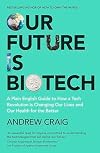
From the title, this book seems like a social pitch to get on the biotech bandwagon. However, its central point doesn't address social policy or health policy. Rather, it's a pitch for investors - particularly in Europe - to invest to create a biotech industry on that side of the Atlantic. Andrew Craig points out that the scientific infrastructure is strong, particularly with England's Oxbridge, but the ability to translate insights and knowledge into companies and products is weak.
Most of the book consists of an overly optimistic and highly uncritical spin on the products of the biotech industry. It is exciting to think about all of the potentialities in the marketplace, but he avoids much of the critical thinking, either scientifically or financially. Instead, he appeals to the heart alone and not investors' heads to build this industry in Europe. That critical mistake hampers the book's central thesis tremendously.
I enjoyed listening about all that science hopes for and spins to financiers. However, realistically, only a certain percentage of those dreams will come true in the nearer term - an outcome which itself is great, but never voiced by the author. As such, the book seems overly utopian without ascertaining the socially disruptive costs and the inevitably high number of failed products from startups.
Again, this book does provide a strong overview of the biotech industry and explains the investment rationale to succeed in investment. However, the author needs to show more take off his rose-colored glasses a tad. The biotech industry was not built overnight in the USA after its founding with Genentech around 1980, and it will take perhaps a decade to work out financial challenges in international markets, too. I'm supportive of the cause, hopeful for its global impact, and believe investment will help society and succeed financially. I'm just not willing to imbibe the proverbial Kool Aid as much as the author is. show less
Most of the book consists of an overly optimistic and highly uncritical spin on the products of the biotech industry. It is exciting to think about all of the potentialities in the marketplace, but he avoids much of the critical thinking, either scientifically or financially. Instead, he appeals to the heart alone and not investors' heads to build this industry in Europe. That critical mistake hampers the book's central thesis tremendously.
I enjoyed listening about all that science hopes for and spins to financiers. However, realistically, only a certain percentage of those dreams will come true in the nearer term - an outcome which itself is great, but never voiced by the author. As such, the book seems overly utopian without ascertaining the socially disruptive costs and the inevitably high number of failed products from startups.
Again, this book does provide a strong overview of the biotech industry and explains the investment rationale to succeed in investment. However, the author needs to show more take off his rose-colored glasses a tad. The biotech industry was not built overnight in the USA after its founding with Genentech around 1980, and it will take perhaps a decade to work out financial challenges in international markets, too. I'm supportive of the cause, hopeful for its global impact, and believe investment will help society and succeed financially. I'm just not willing to imbibe the proverbial Kool Aid as much as the author is. show less
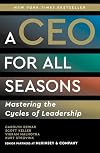
Leadership as a CEO is among the most demanding roles in a business environment. Everyone hangs on your every word, for better or for worse, and people are reticent to criticize the leading leader, even when the leader needs desperately to hear critical feedback. The promises of making an impact are great, but so are the opportunities to make a mistake. The authors, senior partners at the McKinsey & Company business research firm, seek to demystify the CEO's leadership lifestyle through qualitative surveys of leading CEOs in American industry.
Although I like the topic, I don't like this book's title. Placing an emphasis on the word "CEO" tends to cut out other organizational leaders and other industries that might not run on a traditional business model. I work in academic medicine, and the organization chart is much different in practice than traditional companies. However, the challenges of leaders, often in decentralized groups, remains the same. The word "CEO" seems to attract ambitious people attracted to elite positions instead of natural leaders at any rung.
With that weakness stated, this book does offer good coaching on how to flourish in a high leadership position. Starting with necessary preparation, it offers actionable advice to prepare for a career leap. It also coaches leaders through the important - and often neglected - art of passing the baton to the next generation of leaders, whose leadership skills a senior leader should be cultivating for years in show more advance.
Of course, leadership is ultimately more of an art than a science, but trends exist that can enhance any leaders' effectiveness. Studying other leaders successful traits, such as this book offers readers, can help immensely. These authors offer aspiring leaders, especially at earlier stages, an opportunity to grow. I like their data-driven approach that relies on quotes from other senior leaders instead of just offering a one-size-fits-all approach. Leadership requires wisdom and skill, and books like this offer leaders the chance to enhance those immensely. show less
Although I like the topic, I don't like this book's title. Placing an emphasis on the word "CEO" tends to cut out other organizational leaders and other industries that might not run on a traditional business model. I work in academic medicine, and the organization chart is much different in practice than traditional companies. However, the challenges of leaders, often in decentralized groups, remains the same. The word "CEO" seems to attract ambitious people attracted to elite positions instead of natural leaders at any rung.
With that weakness stated, this book does offer good coaching on how to flourish in a high leadership position. Starting with necessary preparation, it offers actionable advice to prepare for a career leap. It also coaches leaders through the important - and often neglected - art of passing the baton to the next generation of leaders, whose leadership skills a senior leader should be cultivating for years in show more advance.
Of course, leadership is ultimately more of an art than a science, but trends exist that can enhance any leaders' effectiveness. Studying other leaders successful traits, such as this book offers readers, can help immensely. These authors offer aspiring leaders, especially at earlier stages, an opportunity to grow. I like their data-driven approach that relies on quotes from other senior leaders instead of just offering a one-size-fits-all approach. Leadership requires wisdom and skill, and books like this offer leaders the chance to enhance those immensely. show less
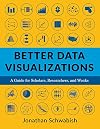
"A picture is worth a thousand words," or so the old saying goes. When portraying data, its visualization is often worth more than a thousand words. Indeed, in some contexts, it's the only way that the data are accessible. In this book, Jonathan Schwabish provides a comprehensive look at visual options available to portray data.
True to his background as an economist, He provides examples mainly from governmental concerns and social-science fields. As a scientist, I wish he had more examples from the basic sciences. He is beyond expert at communicating infographics, but limited at portraying data for more exploratory purposes.
I appreciate the wide variety of images this book contains. The insightfulness of image types far surpass the text. For beginners, the text might be more valuable, but for experienced practitioners, the variety of crisp images will resonate much longer. Indeed, I found myself browsing and critiquing the images on my own more than reading every word of text. I'd read only certain texts when I found myself confused or ignorant about an image.
This book will be most useful to beginners in the field of information visualization. Its comprehensiveness will also be useful to those with intermediate progression through the field. Visualization books are helpful for data communicators to have on their bookshelves so as to point out what they want their graphic to look like, as a template. This book certainly offers a lot of options for that end. The appendices show more also help to point to tools that can make these inspiring images turn into a reality with a little work. show less
True to his background as an economist, He provides examples mainly from governmental concerns and social-science fields. As a scientist, I wish he had more examples from the basic sciences. He is beyond expert at communicating infographics, but limited at portraying data for more exploratory purposes.
I appreciate the wide variety of images this book contains. The insightfulness of image types far surpass the text. For beginners, the text might be more valuable, but for experienced practitioners, the variety of crisp images will resonate much longer. Indeed, I found myself browsing and critiquing the images on my own more than reading every word of text. I'd read only certain texts when I found myself confused or ignorant about an image.
This book will be most useful to beginners in the field of information visualization. Its comprehensiveness will also be useful to those with intermediate progression through the field. Visualization books are helpful for data communicators to have on their bookshelves so as to point out what they want their graphic to look like, as a template. This book certainly offers a lot of options for that end. The appendices show more also help to point to tools that can make these inspiring images turn into a reality with a little work. show less

As a Protestant Christian, I share much theology in common with Eastern Orthodoxy; however, Protestantism's emphasis lies more with justification than with Trinitarianism and Christology. Eastern Orthodox theology and spirituality tend to ground themselves in the nature of God. In this book, Kallistos Ware shows how the Orthodox maintained the emphasis of the early church's creeds all the way to the present day.
This book is simultaneously faithful to the Eastern Orthodox tradition and open to dialogue with the West and Western culture. It, thankfully, does not fall into the trap of being militant towards other Christian groups while still maintaining its clear integrity and center. Ware's scholarship of the church fathers and of Western Christians taught me a few thoughts and references that I hadn't thought through before.
It's hard to evaluate religious books in a way that's deeper than just, "I agree with it" or "I don't." Ware presents the tradition well - so well that even thoughtful Protestants can gain from his presentation. He is clear in the doctrine but open to critique. He's not condemning but thoroughly positive. For anyone interested in Eastern Orthodoxy or just for religious practices built upon Trinitarianism and Christology, just like the early church did, I'd recommend this book wholeheartedly. It can deepen your own faith; it certainly did mine.
This book is simultaneously faithful to the Eastern Orthodox tradition and open to dialogue with the West and Western culture. It, thankfully, does not fall into the trap of being militant towards other Christian groups while still maintaining its clear integrity and center. Ware's scholarship of the church fathers and of Western Christians taught me a few thoughts and references that I hadn't thought through before.
It's hard to evaluate religious books in a way that's deeper than just, "I agree with it" or "I don't." Ware presents the tradition well - so well that even thoughtful Protestants can gain from his presentation. He is clear in the doctrine but open to critique. He's not condemning but thoroughly positive. For anyone interested in Eastern Orthodoxy or just for religious practices built upon Trinitarianism and Christology, just like the early church did, I'd recommend this book wholeheartedly. It can deepen your own faith; it certainly did mine.
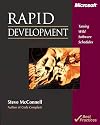
For decades, the classic project-management challenge has been to produce software quicker with more features and less bugs. Software, however, has its revenge because scheduling it accurately and precisely is a highly inexact science. Even the best, seasoned estimators struggle at first attempt. This book by Steve McConnell, though written 30 years ago, gives communal sympathy towards development teams who can seemingly never meet a deadline. Further, he actually provides some answers on how to mitigate those human problems distracting from developing code quickly.
This book is not nearly as paradigm-shifting as McConnell's Code Complete, but it does provide an overview of management scenarios that a tech lead or manager will encounter in their professional lifetime. Though the technologies change, the human side shifts more slowly. Many managers still don't understand many details of what it takes to develop software, and this book provides strategies to engage in that dialogue.
In the past 30 years, some of the problems have been subsumed by other paradigm shifts, like agile development. The problems remain, but the language is different. In fact, I struggled to find his entire section on Best Practices relevant today since modern strategies use different terminologies to address the same problems. But for the most part, the identified problems present similarly today. It's helpful to think through these classical situations - and the classical missteps attempting to show more address those situations.
Readers who always want "the latest and the greatest" out of a technology book will be disappointed, but those seeking relatively timeless wisdom out of a classic book will benefit. McConnell was one of the greatest software writers of his era, and this book hits home on the perpetual need for rapid software development. At over 600 pages, it's more comprehensive, especially on the human side, than even more recent books addressing similar themes. It's well worth a technological leader's time to understand how to avoid pitfalls ahead of time in a software project. show less
This book is not nearly as paradigm-shifting as McConnell's Code Complete, but it does provide an overview of management scenarios that a tech lead or manager will encounter in their professional lifetime. Though the technologies change, the human side shifts more slowly. Many managers still don't understand many details of what it takes to develop software, and this book provides strategies to engage in that dialogue.
In the past 30 years, some of the problems have been subsumed by other paradigm shifts, like agile development. The problems remain, but the language is different. In fact, I struggled to find his entire section on Best Practices relevant today since modern strategies use different terminologies to address the same problems. But for the most part, the identified problems present similarly today. It's helpful to think through these classical situations - and the classical missteps attempting to show more address those situations.
Readers who always want "the latest and the greatest" out of a technology book will be disappointed, but those seeking relatively timeless wisdom out of a classic book will benefit. McConnell was one of the greatest software writers of his era, and this book hits home on the perpetual need for rapid software development. At over 600 pages, it's more comprehensive, especially on the human side, than even more recent books addressing similar themes. It's well worth a technological leader's time to understand how to avoid pitfalls ahead of time in a software project. show less
Writing computer code provides a programmer incredible freedom, but writing good code that'll work in a team environment is a trickier assignment. Many coders fall back on whatever guidelines their manager issues, but that approach can obscure the real challenge. Not only is someone programming a computer to achieve a certain goal, but that person is simultaneously writing a letter to their future self and fellow programmers about what they are trying to do. Clear communication is as much a part of the challenge as getting the code to work in a maintainable fashion. In this book, John Ousterhout of Stanford University guides newer and mid-career programmers how to write better code.
Computer programmers can be famously inflexible with personal coding standards. Whether one agrees with Ousterhout on ever issue or not - I certainly didn't - reading about others' understanding of coding increases your tolerance of other programmers. It simply makes you a better teammate. We all need better teammates, and it starts with you and me personally.
He hits on all the major issues good programmers talk about with each other: when to write comments, how to construct self-documenting code, how to design deeply effective classes, and more. These are not challenges that are mastered once-and-for-all; rather, they are daily challenges with each programming assignment. Even as someone who has been programming for decades, he helped me see my craft in small, new ways.
The obvious market for a show more book like this are newer and mid-career programmers. But advanced programmers often benefit from reviewing the main themes from a master craftsperson; indeed, at the very least, they can learn how to express themselves to their mentees. I slowly skimmed this book but slowed down for thoughts that I may not have had explored before. Coders of every ilk like learning by doing, but learning-by-doing has to be supplemented by coaching. Most supervisors don't have the time to do that in depth, so reading books about coding becomes essential. This one should certainly be on the reading list. show less
Computer programmers can be famously inflexible with personal coding standards. Whether one agrees with Ousterhout on ever issue or not - I certainly didn't - reading about others' understanding of coding increases your tolerance of other programmers. It simply makes you a better teammate. We all need better teammates, and it starts with you and me personally.
He hits on all the major issues good programmers talk about with each other: when to write comments, how to construct self-documenting code, how to design deeply effective classes, and more. These are not challenges that are mastered once-and-for-all; rather, they are daily challenges with each programming assignment. Even as someone who has been programming for decades, he helped me see my craft in small, new ways.
The obvious market for a show more book like this are newer and mid-career programmers. But advanced programmers often benefit from reviewing the main themes from a master craftsperson; indeed, at the very least, they can learn how to express themselves to their mentees. I slowly skimmed this book but slowed down for thoughts that I may not have had explored before. Coders of every ilk like learning by doing, but learning-by-doing has to be supplemented by coaching. Most supervisors don't have the time to do that in depth, so reading books about coding becomes essential. This one should certainly be on the reading list. show less

Today, biotech companies are synonymous with high-risk, high-reward research that advances the healthcare and wallets of countries with advanced economies. However, fifty years ago, this type of company did not exist. There were university research labs, and there were big corporations. No startup companies sought to translate the small experiments into lucrative business ventures. Out of Silicon Valley, California, Genentech was one of the first to do so. They translated work in recombinant DNA technology from the University of California, San Francisco (UCSF) into widespread use and launched a multi-million-dollar company in the process.
Having grown up in an environment where universities are expected to collaborate with infrastructure, I find high walls between academe and industry difficult to fathom. Yet in the 1970s, high walls were the norm. The founders of Genentech faced professional ostracism because of their corporate focus even though they maintained their university research agenda as well. The university culture was highly suspicious of their conflicts of interest.
Genentech's pioneering policies attracted leading academics researchers interested in pursuing research and proving the academic establishment wrong. Although most early workers received company shares, financial incentives did not seem to be a driving force in biotech's early days. Why would scientists be interested in company stock? Of course, if you put a variety of people in a room and force show more them to work together, they will learn from each other's habits and collective ethos. Such transpired with the businesspeople and the scientists. They learned and contributed enough that they started an economic movement that continues nearly fifty years later.
Those interested in biotechnology and translational research work will recognize the outlines of this story in other stories common in their fields. Inevitable conflicts between business and science are repeated to this day. Should financial posturing be preferred over rigorous science? If so - and this is usually the real rub - how exactly? Learning from the early birds that set the initial bar can help decide today's decision-makers. This story also inspires those of us embedded and entrenched in work to persevere - not a small feat. After all, if Genentech can succeed, can't we? show less
Having grown up in an environment where universities are expected to collaborate with infrastructure, I find high walls between academe and industry difficult to fathom. Yet in the 1970s, high walls were the norm. The founders of Genentech faced professional ostracism because of their corporate focus even though they maintained their university research agenda as well. The university culture was highly suspicious of their conflicts of interest.
Genentech's pioneering policies attracted leading academics researchers interested in pursuing research and proving the academic establishment wrong. Although most early workers received company shares, financial incentives did not seem to be a driving force in biotech's early days. Why would scientists be interested in company stock? Of course, if you put a variety of people in a room and force show more them to work together, they will learn from each other's habits and collective ethos. Such transpired with the businesspeople and the scientists. They learned and contributed enough that they started an economic movement that continues nearly fifty years later.
Those interested in biotechnology and translational research work will recognize the outlines of this story in other stories common in their fields. Inevitable conflicts between business and science are repeated to this day. Should financial posturing be preferred over rigorous science? If so - and this is usually the real rub - how exactly? Learning from the early birds that set the initial bar can help decide today's decision-makers. This story also inspires those of us embedded and entrenched in work to persevere - not a small feat. After all, if Genentech can succeed, can't we? show less
Like many Protestants, I have not experienced an in-depth introduction to Eastern Orthodoxy in my life. I’ve driven by its churches, sure, I’ve met its churchgoers, and in religion classes, I’ve read about its history. However, I never have taken a deep-dive into its culture on my own, mediated only be an advocate for its faith expression. Therefore, I read Timothy Ware’s classic work, now in a third edition, on the Eastern Orthodox Christian faith with the hope of better appreciating this church.
Historically, the western and eastern churches began to drift apart in the later half of the first millennium because of language and cultural differences. The frosty relationship was cemented in 1054 when the patriarchs of Rome and Constantinople excommunicated each other. As such, they’ve developed two very different histories, with the Protestant Reformation in the West and a pronounced interaction with Islam in the East. Even the theological terminologies, methodologies, and questions tend to be starkly different among the two groups.
I appreciated much of what this book taught me about Eastern Orthodoxy. I find its theological tradition mostly appealing, but I struggle with its understanding of the church (ecclesiology). Eastern Orthodoxy, like almost every other religious movement, suffers from the idea that its tradition must be exclusively right instead of just another voice in a healthy dialogue. This book’s final chapter on ecumenism illustrates this pitfall show more well. The church’s only proposal for reconciliation is for other groups to see the “error” in their ways. It’s hard to erase 1500 years of isolation without respecting the other side’s isolation first.
This book offers a solid introduction to Eastern Orthodoxy and represents a good exposition of the religious differences of the church with other Christian faiths. It should continue to help seminary and divinity students understand the rich theological world they inhabit. It’s written more for that ilk and not for the wider reading public. Nonetheless, it helps elucidate the historical forces in one of the most ancient of faiths. show less
Historically, the western and eastern churches began to drift apart in the later half of the first millennium because of language and cultural differences. The frosty relationship was cemented in 1054 when the patriarchs of Rome and Constantinople excommunicated each other. As such, they’ve developed two very different histories, with the Protestant Reformation in the West and a pronounced interaction with Islam in the East. Even the theological terminologies, methodologies, and questions tend to be starkly different among the two groups.
I appreciated much of what this book taught me about Eastern Orthodoxy. I find its theological tradition mostly appealing, but I struggle with its understanding of the church (ecclesiology). Eastern Orthodoxy, like almost every other religious movement, suffers from the idea that its tradition must be exclusively right instead of just another voice in a healthy dialogue. This book’s final chapter on ecumenism illustrates this pitfall show more well. The church’s only proposal for reconciliation is for other groups to see the “error” in their ways. It’s hard to erase 1500 years of isolation without respecting the other side’s isolation first.
This book offers a solid introduction to Eastern Orthodoxy and represents a good exposition of the religious differences of the church with other Christian faiths. It should continue to help seminary and divinity students understand the rich theological world they inhabit. It’s written more for that ilk and not for the wider reading public. Nonetheless, it helps elucidate the historical forces in one of the most ancient of faiths. show less
As Peg approaches middle age, her life is becoming chaotic. Her subpar husband has decided to leave and seek divorce. Her kids, in late high school and college, are approaching more independence and want little to do with her. A new colleague in her real-estate firm begins stealing her work. All these dynamics compound to bring out the worst in Peg. A drinking habit increases, and she makes the mistake of driving to the store to buy more wine after drinking a bottle. She’s driving off her friends and clearly needs a new equilibrium. Menopausal symptoms seem to amplify each mistake and certainly don’t help rein her worst impulses. What is to become of her?
She does find redemption… eventually… but she must first learn some truth-telling. She also needs some perspective. Thankfully, a mandatory community service project at an abused women’s shelter brings just that. She sees women whose lives have fallen apart due to no fault of their own. Only these women have less resources than Peg does. She also learns to learn from their resilience instead of viewing them as charity cases or victims.
From there, life or God or the universe takes its course. Oppressive circumstances rarely compound forever, especially to someone willing to make the most of their opportunities. She finds compassion – mostly for herself – and a resolve to rebound. New friends rally around her to teach her new perspectives. There’s even a spark of a new love interest in her fate! Menopause, show more an easy target to blame, becomes something that she can deal with instead of a dominating adversary.
This book is light enough to keep the pages turning quickly while meaningful enough to avoid becoming mere fluff. It’s an easy summer read by the pool, on a vacation, or at the beach. (And yes, the novel’s setting is in a beach town.) It’s a redemption tale more than a romantic comedy, but it has all the signs of a classical comedy: a positive, happy outcome at the end! For readers who are always looking for a little self-improvement along with a page turner, Peg, Unhinged provides good fodder to inspire the heart. show less
She does find redemption… eventually… but she must first learn some truth-telling. She also needs some perspective. Thankfully, a mandatory community service project at an abused women’s shelter brings just that. She sees women whose lives have fallen apart due to no fault of their own. Only these women have less resources than Peg does. She also learns to learn from their resilience instead of viewing them as charity cases or victims.
From there, life or God or the universe takes its course. Oppressive circumstances rarely compound forever, especially to someone willing to make the most of their opportunities. She finds compassion – mostly for herself – and a resolve to rebound. New friends rally around her to teach her new perspectives. There’s even a spark of a new love interest in her fate! Menopause, show more an easy target to blame, becomes something that she can deal with instead of a dominating adversary.
This book is light enough to keep the pages turning quickly while meaningful enough to avoid becoming mere fluff. It’s an easy summer read by the pool, on a vacation, or at the beach. (And yes, the novel’s setting is in a beach town.) It’s a redemption tale more than a romantic comedy, but it has all the signs of a classical comedy: a positive, happy outcome at the end! For readers who are always looking for a little self-improvement along with a page turner, Peg, Unhinged provides good fodder to inspire the heart. show less
Biotechnology is a hot topic in today's global economy. It promises to help humanity, so it often receives startup funding from governments. Success stories show the strong financial potential of the right investments. Big pharmaceutical companies ("big pharma") can purchase entire companies for large amounts of profits. Yet the risks are great, with an estimated 90% of ventures ending in non-successful outcomes. There seems little that can be done to predict success from the outset. This book offers hard knowledge for business folk to make smarter decisions whatever their role in the industry.
The authors present data that show, in drug development, a decentralized approach driven by small biotech companies is more successful than a centralized approach driven by big pharma. Even a host of support companies have grown up, called contract research organizations or CROs, to manage various parts of the drug discovery process. The main challenge of a newer biotech firm is to continually drum up enough money to keep going.
However, when drumming up money, firms can attract investors with their own agendas. Short-term investors are more interested in flipping a quick profit and thus are more interested in successful press than a successful product. CEOs must manage investor expectations and opinions as a prime job responsibility. It's easy for the drug, with all their promise for patients and profits, to fall into the background to pecuniary concerns.
I'm involved in healthcare show more via informatics in a university setting. This book offered me a greater understanding of the challenges my colleagues face with drug development. Obviously, the topic is of huge interest for anyone involved first-hand in the medical system. This book offers a good summary for those interested the the financial angles, but like a lot of business books, it reduces the effort to a financial analysis. For readers, it successfully rips off any rose-colored glasses one might have towards investing in these companies. Such clairvoyance is needed when approaching investment, of money or of careers, in a venture as risky and new as biotechnology. show less
The authors present data that show, in drug development, a decentralized approach driven by small biotech companies is more successful than a centralized approach driven by big pharma. Even a host of support companies have grown up, called contract research organizations or CROs, to manage various parts of the drug discovery process. The main challenge of a newer biotech firm is to continually drum up enough money to keep going.
However, when drumming up money, firms can attract investors with their own agendas. Short-term investors are more interested in flipping a quick profit and thus are more interested in successful press than a successful product. CEOs must manage investor expectations and opinions as a prime job responsibility. It's easy for the drug, with all their promise for patients and profits, to fall into the background to pecuniary concerns.
I'm involved in healthcare show more via informatics in a university setting. This book offered me a greater understanding of the challenges my colleagues face with drug development. Obviously, the topic is of huge interest for anyone involved first-hand in the medical system. This book offers a good summary for those interested the the financial angles, but like a lot of business books, it reduces the effort to a financial analysis. For readers, it successfully rips off any rose-colored glasses one might have towards investing in these companies. Such clairvoyance is needed when approaching investment, of money or of careers, in a venture as risky and new as biotechnology. show less
An African History of Africa: From the Dawn of Humanity to Independence – An International Bestseller Told Through the Voices of Africans by Zeinab Badawi
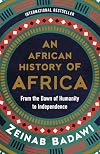
In the West, so many histories of Africa only focus on a depressing narrative that conveniently neglects many inspiring parts. Omitted are the triumphs of empires and heights of humanity shown in the African people; instead, only colonialist attitudes are amplified to disparage the Africans as an inferior continent. Many of us intuit that these negative narratives are lacking somehow, but we don't have any new information to replace it. The Oxford-educated, Sudanese-born Zeinab Badawi writes this history much like we'd expect any other history to be written: fair and balanced with highlights on cultural triumphs. And she does a spectacular job.
Badawi herself is not an erudite historian but rather a popular writer who consults historians and first-hand evidence to gather together her narrative. She covers the entire continent, not just Europeanized segments like North Africa. She doesn't just speak of recent centuries of colonization but of the entire history of tribes and non-European empires. She reminds us of all the diversity embedded within this huge, complex continent.
I particularly enjoyed hearing of the cultural triumphs and practices like the Golden Stool. I loved hearing of the dignity with which Africans faced invaders, whether from European or from fellow African nations. Stories like a queen offering her son as a sacrifice for her people to escape across a river cannot but emotionally move even the hardest soul. These stories teach us of what great stock the show more African peoples come from.
Of course, I never heard much of this, aside from some Egyptian segments, in my education in the United States. Hopefully, Badawi will turn the tide of our lack of enlightenment. As she notes, with rich deposits of rare minerals and under-tapped human potential, Africa can disproportionately benefit from the smallest of economic investments with great yields. With proper investment, just treatment, and fair reparations, cities like Nairobi and Johannesburg and countries like Rwanda might just become large contributors to the global economy, as large as other productive centers. But first, we must come to terms with our human history and our unexamined biases, and Badawi gives the reading public great access to those stories. show less
Badawi herself is not an erudite historian but rather a popular writer who consults historians and first-hand evidence to gather together her narrative. She covers the entire continent, not just Europeanized segments like North Africa. She doesn't just speak of recent centuries of colonization but of the entire history of tribes and non-European empires. She reminds us of all the diversity embedded within this huge, complex continent.
I particularly enjoyed hearing of the cultural triumphs and practices like the Golden Stool. I loved hearing of the dignity with which Africans faced invaders, whether from European or from fellow African nations. Stories like a queen offering her son as a sacrifice for her people to escape across a river cannot but emotionally move even the hardest soul. These stories teach us of what great stock the show more African peoples come from.
Of course, I never heard much of this, aside from some Egyptian segments, in my education in the United States. Hopefully, Badawi will turn the tide of our lack of enlightenment. As she notes, with rich deposits of rare minerals and under-tapped human potential, Africa can disproportionately benefit from the smallest of economic investments with great yields. With proper investment, just treatment, and fair reparations, cities like Nairobi and Johannesburg and countries like Rwanda might just become large contributors to the global economy, as large as other productive centers. But first, we must come to terms with our human history and our unexamined biases, and Badawi gives the reading public great access to those stories. show less

alala, as she is simply called, is widely known as the girl who stood up to the Taliban for girls’ education. She paid for it by being shot in the face, but amazingly survived. She spent the rest of her youth in Manchester in Britain, protected by a security detail against would-be assassins. She started an international fund called the Malala Fund to aid girls’ education in needy countries. This book does not tell that heroic story, but instead tells her coming-of-age story at Oxford and easing into a marriage of her choice. We get to know her behind the bright lights.
As a trailblazer uprooting thousands of years of tradition, she sought to exemplify how young Pakistani women can choose their own life with autonomy. Of course, she made mistakes and admits such. But like almost any other college student, she learned to break free from the confines of her family to own her life.
She tells of adventures with students at Oxford, learning to make friends and balance her fundraising work. She talks openly about her academic and mental health struggles and how she learned to overcome them. She laments the fall of Afghanistan to the Taliban and the decimation of hope for girls’ autonomy.
Of course, she also details falling in love on her own, outside of the confines of an arrangement by her family. She ended up marrying the guy, but not first without struggling with how her marriage might work, without a hampering patriarchy and tradition. Every move she makes is accompanied show more with threats and insults, especially on social media, and she learned to disregard most of them. Still, her heavy responsibility is a heavy weight that led to mental health struggles with PTSD and panic attacks. She speaks openly about her therapy, with concepts relatively new to her and to her former corner of the world.
Her tale is ingratiating and should make any warm-hearted person fall in love with her! I enjoyed hearing her own voice on the audiobook. She remains a personal case for educating the most oppressed girls in the world and giving them real choices on how to live. It’s sad that she – and what she stands for – is even controversial, but I laud her courage to simply be herself. show less
As a trailblazer uprooting thousands of years of tradition, she sought to exemplify how young Pakistani women can choose their own life with autonomy. Of course, she made mistakes and admits such. But like almost any other college student, she learned to break free from the confines of her family to own her life.
She tells of adventures with students at Oxford, learning to make friends and balance her fundraising work. She talks openly about her academic and mental health struggles and how she learned to overcome them. She laments the fall of Afghanistan to the Taliban and the decimation of hope for girls’ autonomy.
Of course, she also details falling in love on her own, outside of the confines of an arrangement by her family. She ended up marrying the guy, but not first without struggling with how her marriage might work, without a hampering patriarchy and tradition. Every move she makes is accompanied show more with threats and insults, especially on social media, and she learned to disregard most of them. Still, her heavy responsibility is a heavy weight that led to mental health struggles with PTSD and panic attacks. She speaks openly about her therapy, with concepts relatively new to her and to her former corner of the world.
Her tale is ingratiating and should make any warm-hearted person fall in love with her! I enjoyed hearing her own voice on the audiobook. She remains a personal case for educating the most oppressed girls in the world and giving them real choices on how to live. It’s sad that she – and what she stands for – is even controversial, but I laud her courage to simply be herself. show less
Leaderwired: The AI-Era Leadership Playbook for Transforming How You Think, Decide and Lead by Anna Barnhill
Change is the key challenge to any leader because there’s no great way to predict its course. New things arise, and no clear direction exists. All we can do is to prepare ourselves and our mindsets to embrace new challenges with a realistic yet positive attitude. Artificial intelligence (AI) is a key case in point. As a paradigm-shifting technology, it is changing the way workplaces operate, and those who don’t adapt well – or don’t adapt at all because they’re threatened – will be left behind. Leadership is required to guide the change, and many of those leadership traits require attitudinal work. Executive leadership coach Anna Barnhill guides us through a shift in attitude so that we can embrace our organizations’ needs to adapt and excel with AI.
Most of this book – virtually all but the last couple of chapters – does not deal with AI. Rather, it focuses on the attitudes of leaders when confronted with the challenge of AI. Anyone who has kept up with leadership literature will quickly recall the self-help themes present throughout most of the book. Those themes are spot-on for dealing with a dynamic, changing world and apply to much more than AI. They’re just not new and unique to this book.
The final section of the book then deals with how to lead an organization through the change that AI demands. Honestly, I expected the opposite when dealing with the balance of content. The title of the book made me think there’d be more about how to adapt to show more AI practically after a much smaller beginning section on the right mindset. Thus, I was a tad disappointed by the lack of AI-driven content.
I found the content that dealt with AI intriguing and worth exploring. The organizational shifts from, say, AI as an efficiency tool to AI as a generative collaborator were intriguing. However, for me, they were not explained enough, unfortunately. I understand that the author’s work as an executive coach likely deals with the attitudinal aspects primarily, but that doesn’t represent the unique aspect of her message, which should predominate an in-print book. Given the subtitle, I wanted to hear about how leadership changes in practice with the AI era, and I was left wanting. show less
Most of this book – virtually all but the last couple of chapters – does not deal with AI. Rather, it focuses on the attitudes of leaders when confronted with the challenge of AI. Anyone who has kept up with leadership literature will quickly recall the self-help themes present throughout most of the book. Those themes are spot-on for dealing with a dynamic, changing world and apply to much more than AI. They’re just not new and unique to this book.
The final section of the book then deals with how to lead an organization through the change that AI demands. Honestly, I expected the opposite when dealing with the balance of content. The title of the book made me think there’d be more about how to adapt to show more AI practically after a much smaller beginning section on the right mindset. Thus, I was a tad disappointed by the lack of AI-driven content.
I found the content that dealt with AI intriguing and worth exploring. The organizational shifts from, say, AI as an efficiency tool to AI as a generative collaborator were intriguing. However, for me, they were not explained enough, unfortunately. I understand that the author’s work as an executive coach likely deals with the attitudinal aspects primarily, but that doesn’t represent the unique aspect of her message, which should predominate an in-print book. Given the subtitle, I wanted to hear about how leadership changes in practice with the AI era, and I was left wanting. show less
Beyond Delivery: How Technical Program Managers Lead Change and Grow with Impact (Beyond the Title: Tech Leadership Series) by Johnathan Sexton
Technical Program Managers (TPMs) are a recent phenomenon, particularly in larger organizations that use a lot of IT to achieve value. They combine the technical role and a leadership role in one function to enhance technical value. However, today's literature on how to excel as a TPM is relatively sparse. Johnathan Stephen Sexton adds his experiences as a Walmart TPM to the mix in this book of homespun wisdom.
As a very experience-driven account, he describes the challenges a TPM will face. He has a lot of quotes from John Maxwell, Sam Walton, and Nick Saban. This short account provides practical insight into what thinking like a TPM looks like, all the way from starting out as a newcomer towards dealing with the executive level.
However, with its brevity, the book has some significant shortcomings. I'd like to see more people quoted and more research performed to inform the book. It seems more like an in-house account of what it means to be a TPM at Walmart than a generalizable perspective on what TPMs across the world can and should do. I'd rather he offer either a first-hand account of his career (almost a professional memoir) or a more-researched account with deeper insights, but in trying to relate insight solely through his experiences, he achieves neither.
Regardless, with scant literature available about the roles of TPMs in today's organizations, this book cannot be missed as a contributing voice. Those who aspire to excel as a TPM need all the advice they can show more receive, and Sexton certainly offers a quick set of adages helpful to achieve excellence. show less
As a very experience-driven account, he describes the challenges a TPM will face. He has a lot of quotes from John Maxwell, Sam Walton, and Nick Saban. This short account provides practical insight into what thinking like a TPM looks like, all the way from starting out as a newcomer towards dealing with the executive level.
However, with its brevity, the book has some significant shortcomings. I'd like to see more people quoted and more research performed to inform the book. It seems more like an in-house account of what it means to be a TPM at Walmart than a generalizable perspective on what TPMs across the world can and should do. I'd rather he offer either a first-hand account of his career (almost a professional memoir) or a more-researched account with deeper insights, but in trying to relate insight solely through his experiences, he achieves neither.
Regardless, with scant literature available about the roles of TPMs in today's organizations, this book cannot be missed as a contributing voice. Those who aspire to excel as a TPM need all the advice they can show more receive, and Sexton certainly offers a quick set of adages helpful to achieve excellence. show less
Ownership Unlocked: 4 Principles to Build Self-Driven Teams That Take Initiative, Innovate, and Win by Matthew F. Wilson
Employees' psychological ownership of their projects is a secret weapon to increase their productivity and effectiveness. Increasing ownership of their projects is a trait I seek to encourage among the software developers I work with. Their ownership not only keeps me from making too many tiny decisions for them, but it also tends to increase the quality of their work. It lets me know that they're gaining self-confidence and investment in their work towards mastery - all good things! I picked up this book hoping that Matthew Wilson will help me master how to develop those traits in others.
This book represents a solid take on psychological ownership and covers the bases about the concept. However, it doesn't represent a new take or a new study about the topic, unfortunately. It deepened my appreciation of the topic, but it didn't really teach me a new paradigm or a new angle that will change what I am doing.
That said, it did extend my understanding into more depth - an always welcomed trait in literature. To use research nomenclature, it's more of a review article instead of an original contribution. I'd welcome an original follow-up study on this topic to see if Wilson can move the field forward with new insight. That contribution would move this kind of book from good to great.
This book represents a solid take on psychological ownership and covers the bases about the concept. However, it doesn't represent a new take or a new study about the topic, unfortunately. It deepened my appreciation of the topic, but it didn't really teach me a new paradigm or a new angle that will change what I am doing.
That said, it did extend my understanding into more depth - an always welcomed trait in literature. To use research nomenclature, it's more of a review article instead of an original contribution. I'd welcome an original follow-up study on this topic to see if Wilson can move the field forward with new insight. That contribution would move this kind of book from good to great.
Humans are "social animals," so Aristotle said long ago. We gather together to get things done, whether those gatherings are familial, a work conference, religious, or a party. What makes a good gathering work? Are there universal rules that govern gatherings' format so that you can construct it to achieve a given goal? Yes, says Priya Parker, and this book seeks to show us how.
I help organize biannual academic conferences as a part of my responsibilities as a university employee. Understanding how meetings work and why will help me co-design our conferences better. I've never read another book about this topic before, so this book did provoke some thought about how organizing the theater of an event could better bring about intended results like networking and audience engagement.
The information about why we humans meet was not especially enlightening. Although it provided some outlandish examples for meetings, this section did not teach me a lot. What Parker did teach me pertained to the structure of gatherings. For instance, openings of gatherings are supposed to "honor and awe" the audience. This aim optimally engages an audience with the material of the gathering. I'll have to give some thought about how we can do that better in my projects.
This book is more philosophical than a book of tips. It teaches us how to understand gatherings and to learn from all sorts of gatherings rather than just how to put on the best [insert type of gathering] get-together. That show more original aspect makes this book more valuable than a generic party-planning book. I've never read a book quite like it before. If you're interested in bringing audiences along for a ride, this book will show you how to do so effectively. show less
I help organize biannual academic conferences as a part of my responsibilities as a university employee. Understanding how meetings work and why will help me co-design our conferences better. I've never read another book about this topic before, so this book did provoke some thought about how organizing the theater of an event could better bring about intended results like networking and audience engagement.
The information about why we humans meet was not especially enlightening. Although it provided some outlandish examples for meetings, this section did not teach me a lot. What Parker did teach me pertained to the structure of gatherings. For instance, openings of gatherings are supposed to "honor and awe" the audience. This aim optimally engages an audience with the material of the gathering. I'll have to give some thought about how we can do that better in my projects.
This book is more philosophical than a book of tips. It teaches us how to understand gatherings and to learn from all sorts of gatherings rather than just how to put on the best [insert type of gathering] get-together. That show more original aspect makes this book more valuable than a generic party-planning book. I've never read a book quite like it before. If you're interested in bringing audiences along for a ride, this book will show you how to do so effectively. show less
Technical Program Manager's Handbook: Unlock your TPM potential by leading technical projects successfully and elevating your career path by Joshua Alan Teter
Technical Program Management represents a hot field to work in. In today's world, many have skills to be software developers, and many know how to manage a program of projects, but few combine those skills to manage an entire program of software development projects. In an increasingly digital world, these combined skills are both marketable and valuable and define what a technical program manager (TPM) does. They are force multipliers to projects and organizations who can translate contexts between two environments. In this book, Joshua Teter outlines what it takes to become and excel as a TPM.
In one place, this book covers the program-manager's skillset, the technical skillset (centered around IT in his perspective), and the value in combining the two skillsets. Much of the role's value lies in effective risk management, communication between two groups, and translating an organization's ideas into a rapidly changing technical landscape. For those who like wearing many hats, this role might be a perfect place to show off one's hat collection.
I've read two of the three books, published as of my writing, about this career path, and this book seems to be the best of the lot. It certainly speaks well that it's in a second edition published by a major book publisher of IT books. The writing is clear, to the point, and comprehensive. It provides a lengthy job description of what a TMP should be able to achieve within an organization.
I'd recommend this book to anyone show more interested in advancing their IT-project-management knowledge into technical program management. It also identifies competencies for program managers voyaging into technology and for technologists voyaging into program management. In the book, the career paths can seem a bit rigid and corporate, but in practice, many TPMs don't fall into a fixed box of a tight job description. This book applies to both groups and can enhance all TPMs' skillsets, even those of us who are more experienced. Finally, it can address those who themselves oversee those in a TPM role to understand their competencies. For me, this book represents the best one-stop place to read about TPMs. show less
In one place, this book covers the program-manager's skillset, the technical skillset (centered around IT in his perspective), and the value in combining the two skillsets. Much of the role's value lies in effective risk management, communication between two groups, and translating an organization's ideas into a rapidly changing technical landscape. For those who like wearing many hats, this role might be a perfect place to show off one's hat collection.
I've read two of the three books, published as of my writing, about this career path, and this book seems to be the best of the lot. It certainly speaks well that it's in a second edition published by a major book publisher of IT books. The writing is clear, to the point, and comprehensive. It provides a lengthy job description of what a TMP should be able to achieve within an organization.
I'd recommend this book to anyone show more interested in advancing their IT-project-management knowledge into technical program management. It also identifies competencies for program managers voyaging into technology and for technologists voyaging into program management. In the book, the career paths can seem a bit rigid and corporate, but in practice, many TPMs don't fall into a fixed box of a tight job description. This book applies to both groups and can enhance all TPMs' skillsets, even those of us who are more experienced. Finally, it can address those who themselves oversee those in a TPM role to understand their competencies. For me, this book represents the best one-stop place to read about TPMs. show less