
Unlike all the previous books on New Zealand reptiles which have been essentially field guides, this one is a series of short chapters which read like magazine pieces, with people and stories at the centre. Stunning photos from a range of contributors. It really conveys the 50 year journey overturning the traditional view of our forgotten fauna, and has to cut off in the middle of several stories as the surveying and DNZ analysis is still pending, so feels dynamic.

Was prompted to reread this by the Meal of Thorns podcast, and only on the rereading realised what a puzzle this book is—one Wolfe is not especially interested in us solving.
Surprisingly moving for a book that's mostly physics problems, like the longest XKCD blog post ever. In fact XKCD should have illustrated it throughout with little cartoons—we can pretend that Mark Watney likes to draw stick figures. I would buy the XKCD edition in an instant.
A nice overview of the region (NZ insect books are normally very local), and some great anecdotes describing their well-refined rental-car-based collecting technique. Despite protesting that they are naming no new species, there are quite a few subious recombinations here, presented with really no evidence, "based on our species concept". Little mentions of panbiogeography sprinkled through as well.
Apr 21, 2026English (UK)
Entertaining enough but extremely small scale—the Invisible Man (thus styled, like a sad superhero) is defeated by the required nudity and the British climate, and only manages to terrorise a single village before being kicked to death by the mob . Wells tries his best to provide a scientific explanation with much talk of altering refractive indices and making haemoglobin colourless, but it's all let down by the needless detail, mentioned more than once, that whatever the Invisible Man eats stays visible "until it is assimilated".
Unfortunately, not all the food we eat is assimilated.
So taking this to its logical conclusion, the Invisible Man would be carrying around at all times a very visiblecoil of food and poo, as well as a floating bladder of wee . Science, once again, ruins everything. A nice introduction by Adam Roberts though.
Unfortunately, not all the food we eat is assimilated.
So taking this to its logical conclusion, the Invisible Man would be carrying around at all times a very visible
A moving account of someone finding themselves on a hike, but unlike Cheryl Strayed the author is not puffed up on the incredible spiritual journey she's undertaking; it's something that only sneaks up on her at the end. Also very Kiwi is the chapter in which she hopeless crush on a younger German hiker and goes hilariously to pieces. Her awful trash diet and increasing feats of endurance (and corresponding wrecking her body) are punctuated by the absolutely heartwarming accounts of the kindness of strangers who fed, drove, and took care of her—these moved me to tears.
Apr 4, 2026English (UK)
New Zealand Traditions & Folklore (More than 700 traditions, folklore, myths, popular beliefs and allusions) by Gordon Ell

A little dated, but perhaps best seen as a snapshot of NZ in the mid-90's hanging onto its story about itself after the social upheaval of the 1980s. Ell does a good job with the natural history, and does his best to grapple with an emerging Māori identity. A time capsule. Can't think what a contemporary version would look like, looking back over the last 30 years as much as Ell does over the 1960s – 1990s.
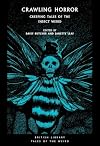
Weird tales and pulp fiction with moths and scarabs, mostly historical curiosities, interspersed with some truly terrible science fiction that mentions insects. Almost everything is over 100 years old, and the best is probably H.G. Wells' tale of rival entomologists.
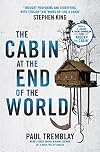
Good stuff: my first Tremblay novel. From what I hear about the movie and what they did to the ending, I suspect I was right to read the book first.
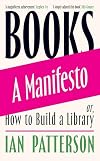
Anyone looking for actual information on how to build a library, whether shelf construction or book acquisition, will be a little disappointed. Although Patterson touches on both of those things, this is more a collection of essays on Jilly Cooper, detective fiction, modernism, poetry, or translation, and reads like a collection of pieces published in the LRB.
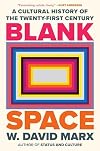
Reading a history book about things you've just lived through is an odd experience: it tidies up and gived background to events and people you absorbed in a casual and offhand way. But it makes you realise how much of what you experienced is missing from the tidy narrative (in this case, largely a cultural history of the USA and especially New York, with nary a mention of New Zealand even when we did indeed bestride the world stage). This was a good rundown of the last 25 years of world culture, and the last chapter blasts the vacuous state of art, music, and fashion (which seem to have all merged).
Starve Acre: The disturbing folk horror novel from the author of Barrowbeck by Andrew Michael Hurley
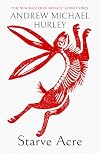
Disturbing with its matter-of-fact narrative of impossible and uncanny things.
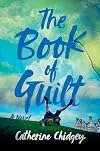
Engagingly written, if a little overexplained. The fatal flaw for me, like the Ishiguro whose plot it partly shares, is the idea that clones just obviously have no souls and people would treat them like things, not people, and happily use them for medical experiments—experimentation that would require extensive animal-ethics approval if done on rabbits, but which raises no eyebrows apparently if conducted on identical human siblings.
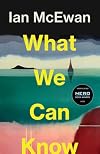
Another twist ending novel, evoking my favourite novel of McEwan's Atonement.
This is ostensibly science fiction, and I've seen a negative review of it as a piece of climate-change fiction, but honestly that's the weakest and least important part. McEwan postulates a future where a century from now Britain is shattered into an archipelago from sea level rise—but even if the polar icecaps entirely melted (which would take thousands of years, not 100) sea level would rise 70 m and Oxford would not be submerged (and the Bodleian Library wouldn't need to relocate). So I think McEwan's just made a hand-wavy poetic apocalypse as a point for his characters to be nostalgic about the early 21st century, our time of wonder and plenty.
This is ostensibly science fiction, and I've seen a negative review of it as a piece of climate-change fiction, but honestly that's the weakest and least important part. McEwan postulates a future where a century from now Britain is shattered into an archipelago from sea level rise—but even if the polar icecaps entirely melted (which would take thousands of years, not 100) sea level would rise 70 m and Oxford would not be submerged (and the Bodleian Library wouldn't need to relocate). So I think McEwan's just made a hand-wavy poetic apocalypse as a point for his characters to be nostalgic about the early 21st century, our time of wonder and plenty.
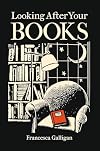
Was a little disappointed by this, expecting actual tips for book care, cataloguing, repair. ViaLibri was a good used-book recommendation site, and the bookbinding and conservation Dictionary of Terms by Etherington and Roberts (https://cool.culturalheritage.org/don/) was very interesting—but this book itself was not, and could definitely have used a few line drawings.
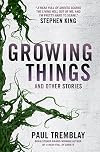
An interesting horror collection and some experimentation with form—his very good Snapshots story, and his acknowledgement, prompted me to check out the excellent story "23 Snapshots of San Francisco" by Seth Lindberg. I hadn't read any of Tremblay's novels and later realised quite a few of the stories are continuations or character-recycling from those—though they do stand alone.
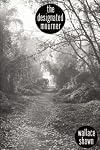
Excellent and haunting play; would love to listen to an radio production. Stumbled across it thanks to the Past Present Future podcast which devoted an episode to it.
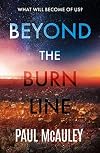
I appreciated McAuley not laying out everything neatly from the start, instead making us puzzle out what species the protagonists even were.
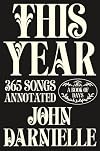
John Darnielle's life in song lyrics. Much dry humour and eloquence on the craft of songwriting.
Jan 6, 2026English (UK)
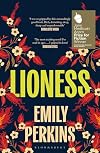
A middle-aged woman has a life crisis and self-actualises: there is surely an entire comfort-read genre that uses this plot, perhaps with a tropical escape and an affair with an exotic stranger. Well, Lioness puts the boot into the cliches by being set in non-tropical paradise of pre–COVID Wellington, though there is in fact an exotic stranger. Theresa (born Teresa), a people-pleasing trophy wife, goes on a journey (to exotic Martinborough) and the scales fall from her eyes, as she gradually learns to stand up for herself and break up with her husband's wealth and horrible family. Elegantly written and especially mean about lifestyle homeware brands with their maroon smoked glass candle holders. (Design notes: Bloomsbury has published a book set in contemporarary New Zealand, which will require macrons, but the Bembo font they've chosen doesn't have a full character set, so slightly-jarring character substitution happens in several Māori words—not very professional. Also this cover is much more insipid than the original, a shame.)
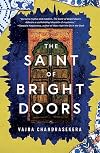
Absolutely fizzing with ideas and surprises, wildly inventive magical realism in a modern pseudo-Asian setting. I powered through it in a couple of sittings. Previously I'd read a fantasy novel by a NZ author (first of a trilogy, groan) that ticked all the boxes – it was almost a grab bag of the current tropes in edgy contemporary fantasy – but nowhere really astonished me the way this singular novel did. It was closer to Midnight's Children than most current F/SF writing.
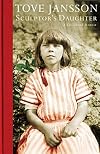
Vignettes/short stories told through a child's eyes with child logic. Little echoes of the moomin books, but very much its own thing.

An utterly delightful botanical guide laced with Hugh’s humour and hundreds of drawings. A shame this is no longer in print.
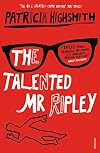
Reread after many years to check the differences between the book and the 2024 TV series—both excellent. Wondering what the reception of this utterly amoral book was in 1955; today we have cheerful psychopath heroes threaded through our culture so this isn't such a novelty. I'm taking half a star off for the terrible cover, which so misrepresents the tone of the book (mannered, precise, elegant, very concerned with beautiful things).
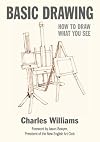
Very much the personality of a drawing teacher between two covers; an emphasis on getting up and just drawing what you see, again and again. Carefully chosen examples that were not too intimidating, lots of good plain advice.
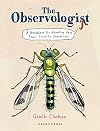
Cute, sweet intro to looking at the natural world for young kids. Encouraging the snail collecting and spider watching I spent much of my time doing as a youngster. For kids, but this trained biologist learned a few things. Illustrated copiously with Clarkson's cartoony drawings and silly jokes, very endearing.
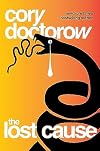
What you expect from a Cory Doctorow novel is a political manifesto where right-on characters who all sound the same deliver inspiring lectures to each other about decentralised computing or collective action, and there will also be lovingly described cooking including in this one a short recipe for shakshuka I want to try out. Normally I give up about halfway through, but this one was surprisingly moving and hammered out some optimism for a time when it seems like the global consensus is to procrastinate deaiing with (waves hands around).
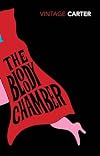
Lurid and grown-up retellings of folktale tropes, with feminist updates, by an author I'd never heard of until Backlisted.
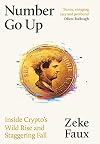
What a feast of mendacity. Hateful people who think they are Very Smart, some of whom got rich through the stupidest speculative bubble since the Tulip Mania of 1634. Faux chronicles their stupid pronouncements, their stupid parties, and their stupid downfalls. Also possibly the worst ever PR for Effective Altruism.