
Roland Barthes (1915–1980)
Author of Mythologies
About the Author
Roland Barthes (1915-1980), a French critic and intellectual, was a seminal figure in late twentieth-century literary criticism. Barthes's primary theory is that language is not simply words, but a series of indicators of a given society's assumptions. He derived his critical method from show more structuralism, which studies the rules behind language, and semiotics, which analyzes culture through signs and holds that meaning results from social conventions. Barthes believed that such techniques permit the reader to participate in the work of art under study, rather than merely react to it. Barthes's first books, Writing Degree Zero (1953), and Mythologies (1957), introduced his ideas to a European audience. During the 1960s his work began to appear in the United States in translation and became a strong influence on a generation of American literary critics and theorists. Other important works by Barthes are Elements of Semiology (1968), Critical Essays (1972), The Pleasure of the Text (1973), and The Empire of Signs (1982). The Barthes Reader (1983), edited by Susan Sontag, contains a wide selection of the critic's work in English translation. (Bowker Author Biography) show less
Series
Works by Roland Barthes
The Preparation of the Novel: Lecture Courses and Seminars at the Collège de France, 1978-1979 and 1979-1980 (2003) 96 copies
Signs and Images. Writings on Art, Cinema and Photography: Essays and Interviews, Volume 4 (The French List) (2016) 15 copies
"Masculine, Feminine, Neuter"and Other Writings on Literature: Essays and Interviews, Volume 3 (The French List) (2016) 14 copies
"The 'Scandal' of Marxism" and Other Writings on Politics: Essays and Interviews, Volume 2 (The French List) (2015) 13 copies
"A Very Fine Gift" and Other Writings on Theory: Essays and Interviews, Volume 1 (The French List) (2015) 12 copies
Public Photographic Spaces: Propaganda Exhibitions from Pressa to The Family of Man, 1928-55 (2008) 12 copies
Roland Barthes 8 copies
Structural Analysis and Biblical Exegesis: Interpretational Essays (Pittsburgh Theological Monograph Series) (1974) 7 copies
Roland Barthes, le texte et l'image, Paris, Pavillon des Arts, 7 mai-3 août 1986 (1986) 4 copies, 1 review
Story of the Eye 4 copies
Literatura y sociedad: Problemas de metodologia en sociologia de la literatura (Novocurso) (1969) 4 copies, 1 review
A crise da sociedade contemporânea 2 copies
Cy Twombly: Catalogue raisonne des oeuvres sur papier par Yvon Lambert, Volume VI, 1973-1976 2 copies
Lo verosimil 2 copies
La semiología 2 copies
L'univers de l'Encyclopédie [Les 135 plus belles planches de l'Encyclopédie de Diderot et d'Alembert (1964) 2 copies
Le Degre Zero De L'ecriture Suivi De Nouveaux Essais Critiques by Roland Barthes (2014-03-03) 1 copy
มายาคติ 1 copy
El grau zero de l'escriptura 1 copy
Những huyền thoại 1 copy
Proust: Aufsätze und Notizen | Das Dokument einer bedeutenden literarischen Wahlverwandtschaft (2022) 1 copy
Roland Barthes's Narratology 1 copy
LE DEGRE ZERO DE L'ECRITURE 1 copy
MITOLOGJITË 1 copy
DITARI I ZISË 1 copy
Romanul scriiturii 1 copy
Placerea textului 1 copy
ROLAND BARTHES 1 copy
Cómo Vivir Juntos 1 copy
ESSAIS CRITIQUES 1 copy
Roland Barthes's Novel 1 copy
Linguística e literatura 1 copy
The World of Wrestling 1 copy
Théorie du texte 1 copy
Kritiska essäer 1 copy
Válogatott írások 1 copy
TDR #37: Bertolt Brecht 1 copy
Ensayos estructuralistas 1 copy
From Work to Text 1 copy
*ANY 1 copy
Ролан Барт о Ролане Барте : [здесь все должно рассматриваться как сказанное романным персонажем] (2014) 1 copy
Ensayos críticos 1 copy
l'empire des signes de Roland Barthes édition rare / format moyen skira sentiers création [Paperback] Barthes Roland (1970) 1 copy
Mais além com... 1 copy
Bataille par... 1 copy
Associated Works
Literature: An Introduction to Fiction, Poetry, and Drama (1995) — Contributor, some editions — 1,010 copies, 7 reviews
Satanism and Witchcraft: The Classic Study of Medieval Superstition (1862) — Foreword, some editions — 575 copies, 7 reviews
Reading Aesthetics and Philosophy of Art: Selected Texts with Interactive Commentary (2005) — Contributor — 11 copies
季刊パイデイア 4号 1969年冬 特集=ヌーヴォー・ロマンの可能性 — Contributor — 1 copy
Tagged
Common Knowledge
- Canonical name
- Barthes, Roland
- Legal name
- Barthes, Roland Gerard
- Other names
- BARTHES, Roland Gerard
BARTHES, Roland - Birthdate
- 1915-11-12
- Date of death
- 1980-03-25
- Gender
- male
- Education
- University of Paris (lic.|1939|DES|1941|lic.|1943)
- Occupations
- professor
literary critic
philosopher
social critic
linguist - Organizations
- Collège de France
École Pratique des Hautes Études - Relationships
- Baudrillard, Jean (Elève)
- Cause of death
- road accident
- Nationality
- France
- Birthplace
- Cherbourg, France
- Places of residence
- Cherbourg, France (birth)
Paris, Île-de-France, France
Bayonne, France - Place of death
- Paris, Île-de-France, France
- Burial location
- Cimetière de Urt, Bayonne, Aquitaine Region, France
- Map Location
- France
- Associated Place (for map)
- France
Members
Reviews
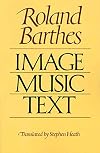
A provocative and exhilarating collection of essays, at once offering insights into structuralist semiotics and rushing in a paradoxical call for alternative ways of assessing signs, of displacing meaning. A gateway into the experimental potential of the essay, and "non-fiction" in general. Enjoyed the way in which Barthes constantly refutes and contradicts himself, sometimes in the same essay, to dilute the mythical authority of the intellectual figure and to reinforce in the reader a show more critical sensitivity. Definitely a challenging read, even more so with the references to Marxism and especially (mainly Lacanian) psychoanalysis. Really want to say that this is a life-changing book, as that is how I feel right now. I guess we'll see. show less

Well, it wouldn't be a dull, conventional memoir, would it? Writing about himself, Barthes limits the hard biographical facts to a few briefly annotated family photos from his childhood in Bayonne and a two-page CV, and in between them he gives us a couple of hundred index-card sized fragments talking about his "real" life, which of course revolves around ideas and writings rather than boring things like dates, places and people. None of the fragments is much more than a paragraph or two show more long, with the only slightly longer pieces being a catalogue of books he might have written but didn't, and a discussion (you can see where this is going...) of the pleasures of the very short form.
In between times, we get cartoons, photos, sample exam questions, and a couple of examples of Barthes's painting — my favourite was an abstract doodle in the middle of a sheet of Sorbonne notepaper, titled "Gaspillage" (wasting paper). As if that wasn't enough, we also get the sheet music for a song he composed — I haven't tried to play that. He was obviously the Richard Feynman of semiotics.
You probably need at least a little bit of tolerance for French semioticians to enjoy this, and it's obviously more of a bedside book to dip into than a book you should read in one go, but if you like that sort of thing... show less
In between times, we get cartoons, photos, sample exam questions, and a couple of examples of Barthes's painting — my favourite was an abstract doodle in the middle of a sheet of Sorbonne notepaper, titled "Gaspillage" (wasting paper). As if that wasn't enough, we also get the sheet music for a song he composed — I haven't tried to play that. He was obviously the Richard Feynman of semiotics.
You probably need at least a little bit of tolerance for French semioticians to enjoy this, and it's obviously more of a bedside book to dip into than a book you should read in one go, but if you like that sort of thing... show less
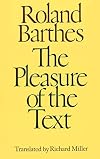
A Barthes lo de leer le causa un intenso placer, erótico de hecho, una quemadura en la entrepierna que al parecer solo sofoca escribiendo impenetrables tratados sobre lo orgásmico de la lectura. Respeto los fetiches de los intelectuales franceses, y no me voy a involucrar en un kink-shaming de algo tan inocuo como esto: hay gente que deriva inmenso gozo de explotar las burbujas de plástico de los envoltorios de paquetes frágiles, y no por ello creo que haya que considerarlos bichos show more raros. Y admiro, de hecho, la capacidad tántrica de Barthes de prolongar su clímax durante 70 páginas: de no haber sido académico podría haberse dedicado perfectamente a la mamporrería.
A lo largo del texto, Barthes habla del vínculo entre autor y lector, y ojalá realmente se estableciera esa unión tan real y física, porque si pudiera atravesar las páginas y darle un puñetazo al amigo Roland, un puñetazo metafísico pero en el cielo de la boca, lo haría. Me importa tres pimientos si pretendía que este fuera un texto de placer o de gozo. Supongo que de gozo, que él identifica con el shock, el abandono del lector como sujeto pasivo, y oh, me hace querer ser de todo menos pasivo, desde luego. Pero de ser gozo lo que pretende, ¿no sería imposible hablar de esta obra, según él? Porque yo me veo hablando, vaya si me veo. Lo que es es una jerigonza insufrible, que cuando deja vislumbrar tímidos rayos de inteligibilidad los vuelve a ocultar con alguna palabra en griego que le parecía bien utilizar en ese momento.
¿Acaso he caído en la red de Barthes? ¿Era esto lo que pretendías, provocar mi ira? Porque yendo aún por la mitad de este tratado no se me ocurre cómo vas a ser capaz de llevarme al huerto antes de la última página. Miedo me da su "Le discours amoureux" como este "Le plaisir du texte" sea representativo de sus habilidades seductoras. Si no es a mí, ¿a quién está intentando camelar? Tendrá que ser a alguien que comprenda su intrincada prosa, y no se me ocurre que pueda suceder tal cosa. Veo a Barthes, beodo, gritando al oído sus teorías literarias a algún pobre muchacho aburrido en alguna boîte: "LA SUBVERSIÓN DEBE PRODUCIR SU PROPIO CLAROSCURO, ¿SABES?", exclama, como si algo de eso tuviera algún sentido con menos de cuatro litros de alcohol en sangre, mientras su oyente reprime su instinto de reventarle una botella en la frente.
Seguramente Barthes se opondría rotundamente a la idea de que es posible comunicar este tipo de conceptos sin recurrir a la glosolalia, porque si no imagino que lo habría intentado. Me pregunto qué opinaría de esta llamémosle reseña, si le produciría placer o gozo o ninguna de las dos. En cualquier caso, dudo que le entendiera. show less
A lo largo del texto, Barthes habla del vínculo entre autor y lector, y ojalá realmente se estableciera esa unión tan real y física, porque si pudiera atravesar las páginas y darle un puñetazo al amigo Roland, un puñetazo metafísico pero en el cielo de la boca, lo haría. Me importa tres pimientos si pretendía que este fuera un texto de placer o de gozo. Supongo que de gozo, que él identifica con el shock, el abandono del lector como sujeto pasivo, y oh, me hace querer ser de todo menos pasivo, desde luego. Pero de ser gozo lo que pretende, ¿no sería imposible hablar de esta obra, según él? Porque yo me veo hablando, vaya si me veo. Lo que es es una jerigonza insufrible, que cuando deja vislumbrar tímidos rayos de inteligibilidad los vuelve a ocultar con alguna palabra en griego que le parecía bien utilizar en ese momento.
¿Acaso he caído en la red de Barthes? ¿Era esto lo que pretendías, provocar mi ira? Porque yendo aún por la mitad de este tratado no se me ocurre cómo vas a ser capaz de llevarme al huerto antes de la última página. Miedo me da su "Le discours amoureux" como este "Le plaisir du texte" sea representativo de sus habilidades seductoras. Si no es a mí, ¿a quién está intentando camelar? Tendrá que ser a alguien que comprenda su intrincada prosa, y no se me ocurre que pueda suceder tal cosa. Veo a Barthes, beodo, gritando al oído sus teorías literarias a algún pobre muchacho aburrido en alguna boîte: "LA SUBVERSIÓN DEBE PRODUCIR SU PROPIO CLAROSCURO, ¿SABES?", exclama, como si algo de eso tuviera algún sentido con menos de cuatro litros de alcohol en sangre, mientras su oyente reprime su instinto de reventarle una botella en la frente.
Seguramente Barthes se opondría rotundamente a la idea de que es posible comunicar este tipo de conceptos sin recurrir a la glosolalia, porque si no imagino que lo habría intentado. Me pregunto qué opinaría de esta llamémosle reseña, si le produciría placer o gozo o ninguna de las dos. En cualquier caso, dudo que le entendiera. show less

¿Me gustó? Por momentos. Y por momentos también es maravilloso. Y por momentos es incómodo porque habla de las concepciones más usuales del amor, que son dolorosas y neuróticas y que tal vez por eso son tan recordadas. Al fin y al cabo el fantasma explosivo de Werther es lo que conecta el libro de principio a fin, con alocuciones de Freud guiándolo con un cayado amable. Si no me dio lo que buscaba, tal vez, es porque concibo el amor más al estilo de Erich Fromm que el de los dramas show more europeos. Pero quién te dice, el equivocado no sea yo. show less
Lists
Deathreads (2)
culture (2)
Art of Reading (1)
Art Books (1)
Shaking a Leg (1)
Favourite Books (1)
1980 great books (1)
Awards


You May Also Like


Associated Authors
Statistics
- Works
- 188
- Also by
- 25
- Members
- 22,191
- Popularity
- #963
- Rating
- 4.0
- Reviews
- 172
- ISBNs
- 886
- Languages
- 30
- Favorited
- 68


