
Susan Sontag (1933–2004)
Author of On Photography
About the Author
Susan Sontag was born in New York City on January 16, 1933. She received a B.A. from the University of Chicago and did graduate work in philosophy, literature and theology at Harvard University and Saint Anne's College, Oxford University. She was the author of 17 books including four novels, a show more collection of short stories, several plays, and eight works of nonfiction. Her novels are The Benefactor, Death Kit, The Volcano Lover, and In America, which won the 2000 National Book Award for fiction. On Photography received the 1978 National Book Critics Circle Award. Her stories and essays have appeared in numerous magazines including The New Yorker, The New York Review of Books, The Times Literary Supplement, and Art in America. She also wrote and directed four feature films and stage plays in the United States and Europe. She died from leukemia on December 28, 2004 at the age of 71. (Bowker Author Biography) show less
Series
Works by Susan Sontag
As Consciousness Is Harnessed to Flesh: Journals and Notebooks, 1964-1980 (2012) 374 copies, 4 reviews
Susan Sontag: Obra imprescindible / Susan Sontag: Essential Works: Edición de David Rieff (Spanish Edition) (2022) 13 copies, 1 review
Odio sentirmi una vittima. Intervista su amore, dolore e scrittura con Jonathan Cott (2016) 5 copies, 1 review
Fascinating Fascism 2 copies
Thel Lady From The Sea 2 copies
Granta: Sobre la marcha. Tomo #7 (Granta: As [You] Go Through Life. Volume #7) (Spanish Edition) (2007) 2 copies
Bàn về nhiếp ảnh 1 copy
L'Œuvre Parle 1 copy
Death Kitt 1 copy
Alice im Bett 1 copy
Yanardağ Sevgilim 1 copy
Under the Sign of Saturn 1 copy
Om kvinner 1 copy
Boyle Yasıyoruz Artık: Solgun ve Hastalıklı ve Kırılgan, Onu Tanımlamak Icin Hep Kullanılagelmemis miydi? (2020) 1 copy
Godard 1 copy
What Have We Done? 1 copy
Holocaust 1 copy
BİLİNCİN KAPISINI ARALAMAK 1 copy
Ako knjige nestanu 1 copy
Theatre and film 1 copy
Associated Works
The Story and Its Writer: An Introduction to Short Fiction (1976) — Contributor — 1,214 copies, 3 reviews
Fierce Pajamas: An Anthology of Humor Writing from The New Yorker (2001) — Contributor — 788 copies, 5 reviews
The Scribner Anthology of Contemporary Short Fiction: Fifty North American American Stories Since 1970 (1999) — Contributor — 583 copies, 4 reviews
Writers on Writing: Collected Essays from the New York Times (2001) — Contributor — 479 copies, 5 reviews
A Barthes Reader (1982) — Editor, some editions; Introduction, some editions — 436 copies, 2 reviews
The Art of the Tale: An International Anthology of Short Stories (1986) — Contributor — 383 copies, 3 reviews
Antonin Artaud: Selected Writings (1976) — Editor, some editions; Introduction, some editions — 352 copies, 5 reviews
The Norton Anthology of American Literature, Volume 2: 1865 to Present (1979) — Contributor, some editions — 135 copies
The Glorious American Essay: One Hundred Essays from Colonial Times to the Present (2020) — Contributor — 116 copies
Wrestling with Zion: Progressive Jewish-American Responses to the Israeli-Palestinian Conflict (2003) — Contributor — 84 copies, 1 review
Who's Writing This? Notations on the Authorial I, with Self-Portraits {not Antæus} (1995) — Contributor — 76 copies
Best of The Oxford American: Ten Years from the Southern Magazine of Good Writing {anthology} (2002) — Contributor — 45 copies
Antaeus No. 64/65, Spring/Autumn 1990 - Twentieth Anniversary Issue (1990) — Contributor — 14 copies
Amerika, Amerika bloemlezing — Contributor — 8 copies
海 1972年05月号 — Contributor — 1 copy
Tagged
Common Knowledge
- Canonical name
- Sontag, Susan
- Legal name
- Rosenblatt, Susan Lee (birth)
- Birthdate
- 1933-01-16
- Date of death
- 2004-12-28
- Gender
- female
- Education
- University of California, Berkeley
University of Chicago (BA|1951)
Harvard University (MA|1954|MA|1955)
St. Anne's College, Oxford
Sorbonne - Occupations
- novelist
screenwriter
critic
teacher
essayist - Organizations
- American Academy of Arts and Letters (Literature, 1979)
- Awards and honors
- Jerusalem Prize (2001)
Premio Príncipe de Asturias (Letters, 2003)
American Academy of Arts and Letters Academy Award (Literature, 1976)
Friedenspreis des Deutschen Buchhandels (2003)
MacArthur Fellowship (1990)
Premio Malaparte (1992) (show all 10)
National Book Critics' Circle Award for Criticism (1977)
Commandeur des Arts et des Lettres (1999)
National Book Award (2000)
George Polk Award (2002) - Relationships
- Rieff, Philip (husband|divorced)
Rieff, David (son)
Leibovitz, Annie (partner)
Fornes, Maria Irene (partner)
Taubes, Susan (friend) - Cause of death
- acute myelogenous leukemia
- Nationality
- USA
- Birthplace
- New York, New York, USA
- Places of residence
- Tucson, Arizona, USA
Los Angeles, California, USA - Place of death
- New York, New York, USA
- Burial location
- Cimetière du Montparnasse, Paris, Île-de-France, France
- Associated Place (for map)
- USA
Members
Discussions
AMERICAN AUTHORS CHALLENGE--FEBRUARY 2024--SUSAN SONTAG in 75 Books Challenge for 2024 (February 2024)
Susan Sontag in Legacy Libraries (April 2018)
Novel about a melancholic couple in Name that Book (June 2012)
Reviews
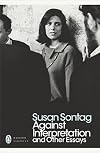
The endurance and magnificence of this essay collection lie not with their ability to persuade but their stimulating arguments and ideas. However—this is a reductive take on an otherwise complex topic—I completely agree that society's eagerness and obsession to interpret / interpretations ad nauseam may be harmful and art should be felt rather than interpreted. Also controversial in places, Sontag's take on form over content forces sceptics to reconsider, reexamine this seemingly show more insoluble debate much like the unending fights about separation between the art and the artist. I don't agree either that Bresson is a better director than Bergman or the pretentious snob Godard should be put in a pedestal as if Truffaut or Varda, the pioneer of the French New Wave, did not exist. Her essay Resnais' Muriel proposes some good points about the film's issues but admittedly, since he's one of my all time favourite directors whose works I think depict the plane of time and memory brilliantly, it is hard not to snort and take a little offence. How this includes essays about B movies under the sci-fi genre and the "high" and "low" culture prove Sontag as a compelling and admirable polymath.
"In one case, fantasy beautifies the world. In the other, it neutralizes it."
This collection of essays focuses mostly on French and American works it is difficult not to think that works from other countries which are just as deserving have been left out. Of course I do not expect Sontag to touch on everything but it is a bit limiting for me. Overall, I really liked the essays Against interpretation, The artist as exemplary sufferer, The death of tragedy, Going to theater, etc., The imagination of disaster, A note on novels and films, Notes on "Camp" and One culture and the new sensibility. Her wit and biting disapproval on Henry Miller and Eugene Ionesco's works are very amusing. There is so much to absorb from Against Interpretation and Other Essays that a reread is absolutely necessary. Even though I give this collection 3 stars it's not about my disagreement with some of Sontag's criticisms and arguments but rather my lack of knowledge on some of its subjects. Indeed my intellectual infatuation with Sontag persists and with that thick hair of hers I am as smitten as ever. show less
"In one case, fantasy beautifies the world. In the other, it neutralizes it."
This collection of essays focuses mostly on French and American works it is difficult not to think that works from other countries which are just as deserving have been left out. Of course I do not expect Sontag to touch on everything but it is a bit limiting for me. Overall, I really liked the essays Against interpretation, The artist as exemplary sufferer, The death of tragedy, Going to theater, etc., The imagination of disaster, A note on novels and films, Notes on "Camp" and One culture and the new sensibility. Her wit and biting disapproval on Henry Miller and Eugene Ionesco's works are very amusing. There is so much to absorb from Against Interpretation and Other Essays that a reread is absolutely necessary. Even though I give this collection 3 stars it's not about my disagreement with some of Sontag's criticisms and arguments but rather my lack of knowledge on some of its subjects. Indeed my intellectual infatuation with Sontag persists and with that thick hair of hers I am as smitten as ever. show less
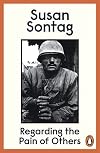
She covers the ground elegantly, in no particular order. Her style is crisp, firm, and writerly, though not without a self-conscious overlay. She has a bit of a diva's pulsating grandeur, but actually she's more like an athletic dancer, picking her spots and impeccably closing in with pleasing quick-step combinations and leaps. She's probably too irregular to be a scholar's expository ideal, but damn she puts on a fine show. Her mind cracks it along like a circus tamer's whip. You don't have show more to like her, but it's hard not to salute her. show less

O amante do vulcão, terceiro romance de Susan Sontag, incorpora contradições no mínimo instigantes. Trata-se de uma história realista, moderna em sua polifonia de vozes narrativas. Nela se agitam personagens históricos desentranhados da fase heróica do período romântico: o final do século XVIII. Sir William Hamilton, embaixador britânico no Reino das Duas Sicílias, sua segunda mulher, Emma, humilde porém belíssima cortesã inglesa guindada à posição de confidente e show more conselheira de uma rainha, e o maior herói marítimo da Inglaterra, lord Nelson, são os míticos protagonistas desta narrativa histórico-ficcional. A compulsão de redesenhá-los em escala humana, imperativo tipicamente ensaístico, só fez aumentar a voltagem dramática das peripécias em que se vêem envolvidos. Sem dúvida, temos aqui uma história apaixonante sobre pessoas apaixonadas. "É um livro de mestre, um belo espetáculo: vasto, colorido, interessante, e que faz pensar."Roberto Schwarz"Um romance de idéias passional e muitas vezes radical que proporciona todos os antigos prazeres do romance histórico tradicional."New York Times show less

In 1876, the celebrated Polish actress Maryna Załężowska and a group of her Warsaw-intellectual friends set off to live on a Fourier-inspired commune in California. As so often happens with idealistic communities, it doesn’t quite work out as they had hoped, and Maryna finds herself going back on stage to create a new career for herself in America.
Sontag uses this historical-fiction framework to explore what it might have meant to be a famous woman, successful in a high-profile show more profession, in late-19th century Europe and America, as well as picking out some of the oddities of American life and thought from a European perspective, and vice-versa, and dissecting the ways that acting on stage intersect with real (family) life and relationships. But also about the way that migration creates opportunities — and pressures — for us to adopt new personas and names. We learn quite a lot about Victorian tastes in theatre, meet some interesting real-life figures from the period, and generally get an awful lot of information thrown at us.
Sontag also has a lot of fun playing around with a range of clever — and sometimes plain theatrical — narrative techniques, most notably in the opening chapter, where the far-from-omniscient narrator finds herself watching from the sidelines of a party taking place in an era and a place far outside her own experience, and trying to piece together who these characters might be and how they fit together. The closing chapter is another tour-de-force, a monologue, with stage directions, addressed to Maryna and delivered by her fellow-actor Edwin Booth (brother of…) as he slips in and out of the roles of himself and an assortment of Shakespearean protagonists.
A demanding read, but also quite a rewarding one, with its share of fun. show less
Sontag uses this historical-fiction framework to explore what it might have meant to be a famous woman, successful in a high-profile show more profession, in late-19th century Europe and America, as well as picking out some of the oddities of American life and thought from a European perspective, and vice-versa, and dissecting the ways that acting on stage intersect with real (family) life and relationships. But also about the way that migration creates opportunities — and pressures — for us to adopt new personas and names. We learn quite a lot about Victorian tastes in theatre, meet some interesting real-life figures from the period, and generally get an awful lot of information thrown at us.
Sontag also has a lot of fun playing around with a range of clever — and sometimes plain theatrical — narrative techniques, most notably in the opening chapter, where the far-from-omniscient narrator finds herself watching from the sidelines of a party taking place in an era and a place far outside her own experience, and trying to piece together who these characters might be and how they fit together. The closing chapter is another tour-de-force, a monologue, with stage directions, addressed to Maryna and delivered by her fellow-actor Edwin Booth (brother of…) as he slips in and out of the roles of himself and an assortment of Shakespearean protagonists.
A demanding read, but also quite a rewarding one, with its share of fun. show less
Lists
Awards


You May Also Like


Associated Authors
Statistics
- Works
- 110
- Also by
- 64
- Members
- 21,250
- Popularity
- #1,021
- Rating
- 3.9
- Reviews
- 238
- ISBNs
- 724
- Languages
- 28
- Favorited
- 56

