
Pierre Bourdieu (1930–2002)
Author of Distinction: A Social Critique of the Judgement of Taste
About the Author
Pierre Bourdieu (1930-2002) was one of the most influential sociologists and anthropologists of the late twentieth century. He was Professor of Sociology at the College de France and Director of Studies at the cole des hautes tudes en sciences sociales.
Works by Pierre Bourdieu
Les usages sociaux de la science : pour une sociologie clinique du champ scientifique (1997) 67 copies
El sentido social del gusto. Elementos para una sociologia de la cultura (Spanish Edition) (2010) 23 copies
Algeria 1960 : the disenchantment of the world : the sense of honour : the Kabyle house or the world reversed : essays (1979) 22 copies, 1 review
Forms of Capital: General Sociology, Volume 3: Lectures at the Collège de France 1983 - 84 (2021) 9 copies
Curso de sociología general 1: Conceptos fundamentales (Biblioteca Clásica de Siglo Veintiuno) (Spanish Edition) (2020) 7 copies
Schriften: Band 12.1: Kunst und Kultur. Zur Ökonomie symbolischer Güter. Schriften zur Kultursoziologie 4 (suhrkamp taschenbuch wissenschaft) (2014) 3 copies
Curso de sociología general 2: El concepto de capital (Biblioteca Clásica de Siglo Veintiuno) (Spanish Edition) (2021) 2 copies
The Forms of Capital 2 copies
Der Lohn der Angst : Flexibilisierung und Kriminalisierung in der "neuen Arbeitsgesellschaft" (2001) 2 copies
Imperialisms: The International Circulation of Ideas and the Struggle for the Universal (2025) 2 copies
Schriften: Band 12.2: Kunst und Kultur. Kunst und künstlerisches Feld. Schriften zur Kultursoziologie 4 (suhrkamp taschenbuch wissenschaft) (2015) 2 copies
Le métier de sociologue - Préalables épistémologiques (EHESS POCHE) (French Edition) (2021) 2 copies
Sociologija kot politika 2 copies
Die Illusion der Chancengleichheit : Untersuchungen zur Soziologie des Bildungswesens am Beispiel Frankreichs (1971) 2 copies
MBI TELEVIZIONIN 2 copies
Actes de la recherche en sciences sociales, N° 189, Septembre 20 : L'évaluation : contextes et pratiques (2011) 1 copy
Sociologia geral vol 5 1 copy
Manet: A Symbolic Revolution 1 copy
Le Métier de sociologue 1 copy
Sociologie de l'Algérie 1 copy
El interés detrás del desinterés: El estado moderno, las pujas de poder y la definición del bien común (2024) 1 copy
Αντεπίθεση πυρών 1 copy
Economia bunurilor simbolice 1 copy
Sociologie générale vol. 1: Cours au Collège de France 1981-1983 (SCIEN HUM (H.C)) (French Edition) (1982) 1 copy
Férfiuralom 1 copy
Schwierige Interdisziplinarität : zum Verhältnis von Soziologie und Geschichtswissenschaft (2004) 1 copy
Grundlagen einer Theorie der symbolischen Gewalt - Kulturelle Reproduktion und soziale Reproduktion (1973) 1 copy
Actes de la recherche en sciences sociales, numéro 150 : Regards croisés sur l'anthropologie de pierre Bourdieu (2004) 1 copy
Anatomie du goût philosophique - Actes de la recherche en sciences sociales n°109, octobre 1995 (1995) 1 copy
Schets voor zelfanalyse 1 copy
Sociologia geral vol. 3. As formas do capital - Curso no College de France. 1983-1984 (Em Portugues do Brasil) (2019) 1 copy
Le métier de sociologue 1 copy
El Campo Político 1 copy
¿Qué significa hablar? 1 copy
Associated Works
Museums in the Material World (Leicester Readers in Museum Studies) (2007) — Contributor — 14 copies
Artistic Relations: Literature and the Visual Arts in Nineteenth-Century France (1994) — Contributor — 13 copies
Tagged
Common Knowledge
- Canonical name
- Bourdieu, Pierre
- Legal name
- Bourdieu, Pierre Felix
- Birthdate
- 1930-08-01
- Date of death
- 2002-01-23
- Gender
- male
- Education
- Ecole Normale Supérieure, Paris (philosophy)
- Occupations
- sociologist
anthropologist
public intellectual - Organizations
- Collège de France
École Pratique des Hautes Études
École des Hautes Études en Sciences Sociales
Actes de la recherche en sciences sociales
University of Paris - Awards and honors
- Golden Medal (National Centre for Scientific Research, 1993)
Goffman Prize (University of California, 1996)
Huxley Medal (Royal Anthropological Institute, 2001) - Relationships
- Canguilhem, Georges (Directeur de thèse)
Derrida, Jacques (Condisciple ENS, Ami)
Hyppolite, Jean (Professeur)
Castel, Robert (colleague) - Cause of death
- Cancer des poumons généralisé
- Nationality
- France (birth)
- Birthplace
- Denguin, France
- Places of residence
- Denguin, Pyrénées-Atlantiques, France
Pau, Pyrénées-Atlantiques, France
Paris, Île-de-France, France
Moulins, Allier, France
Algeria - Place of death
- Paris, Île-de-France, France
- Burial location
- Cimetière du Père-Lachaise, Paris, Île de France, France
- Associated Place (for map)
- France
Members
Reviews

Dense, dated, and at times unnecessarily convoluted—but also genuinely fascinating in its exploration of how taste is shaped by class, education, and social structures. I couldn’t always tell whether the writing style was simply academic or quietly gatekeeping, but the core ideas are strong enough to push through the difficulty.
As someone interested in how people construct meaning (and perhaps feeling slightly outside those structures myself), I found it particularly show more compelling—especially reading it as an American now living in England, where class operates very differently but just as persistently. It also led to some mildly unsettling self-reflection on where my own tastes sit versus where I’d place myself socially.
Not an easy read, and certainly not for everyone, but one I really enjoyed and will likely return to—if only to bring it up at dinner parties and tipsy midnight sessions. show less
As someone interested in how people construct meaning (and perhaps feeling slightly outside those structures myself), I found it particularly show more compelling—especially reading it as an American now living in England, where class operates very differently but just as persistently. It also led to some mildly unsettling self-reflection on where my own tastes sit versus where I’d place myself socially.
Not an easy read, and certainly not for everyone, but one I really enjoyed and will likely return to—if only to bring it up at dinner parties and tipsy midnight sessions. show less
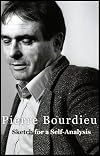
I have been captivated by the work of Pierre Bourdieu since I first struggled through Outline of a Theory of Practice in my second year of graduate school. He remains for me an intellectual touchstone because of the rigorousness of his work (a term he would undoubtedly reject). Hence, I looked forward to the translation of his "final" book with anticipation and some trepidation, for I sensed a logical but troubling divergence from the general orientation of his previous studies: an show more invocation of experience. Some inkling of this tendency appeared in earlier interviews and specifically in his Pascalian Mediations and the Science of Science and Reflexivity.
Bourdieu's Sketch for a Self-Analysis* is a curious undertaking. On the one hand, Bourdieu wishes to trump potential future biographers, who would, he seems to fear, get him wrong. On the other hand, the opportunity to self-analyse himself, an act of self-objectification he did not make available to the numerous people whom his models objectified, risks the charges of self-indulgence and, worse, self-promotion. There is a bit of both in this book, but less than might be expected from someone who did earned the right to commit the sin of intellectual egoism -- unlike the vast majority of academics who fry small fish caught in puddles and then present themselves to others as if they've harpooned the great white whale.
The book itself is interesting as a representation (to be sure a selective one) of the French intellectual field in the 1950s and 1960s, and the intersection of philosophical, institutional, and political trends: existentialism, Marxism, the rise of the social sciences; the war in Algeria and 1968. This period, according to Bourdieu, is decisive for his subsequent scholarly trajectory, drawing out his habitual contrarian disposition, which, of course, remained self-reflexive. Bourdieu presents himself as a contrarian who refuses to make a virtue of the necessity of this position-taking since -- and this is the central motif that runs throughout the book -- he was by circumstance an outsider: a child of provincial life, the product of a peasant/small bureaucrat paternal inheritance, who gravitated away from the highest form of intellectual life, philosophy, and toward the then less legitimate fields of ethnology and, eventually, sociology; never a Communist, he nonetheless fixated on issues of social reproduction and complicated Marx's basic scheme; never a structuralist, he nonetheless developed his theory of practice out of the ground of structuralism (i.e., Levi-Strauss); never a public intellectual in the mold of Sartre (his anti-model of academic life) and Foucault, he nonetheless engaged with political issues; finally, while he is viewed as a sociological auteur, he seems most proud of his effort to work within a team of empirically-oriented researchers.
And on and on. Contradictions, contraries, and contrarianness appear on each page of Sketch. Bourdieu's self-analysis is congenial, and probably will be received as such, by anyone who, in other terms, operates in a liminal space, betwixt and between two presumably incompatible binary oppositions. Bourdieu describes this as the "hidden face of a double life" (72), his cleft habitus (100) or his double distance.
"The sense of ambivalence towards the intellectual world that is rooted in these dispositions is the generative principle of a double distance of which I could give countless examples: a distance from the great game of French-style intellectual life, with its fashionable petitions, its demonstrations du jour or its prefaces for artists' catalogues, but also from the great role of professor, engaged in the circular circulation of thesis juries and examination boards, the games and stakes of power over reproduction; a distance, in politics and culture, from both elitism and populism." (107)
This ambivalence, evidenced in his account of his inaugural lecture** at the College de France, is not analyzed by Bourdieu in psychoanalytic terms: the Oedipal conflicts with various Fathers (but apparently not his biological father), his symbolic castration of these Fathers in the inaugural lecture (which shows that authority of the Father is arbitrary), his preferred immersion in empirical studies (perhaps reproducing the oceanic feeling?) and discomfort with playing the leading role of a leading French intellectual (e.g., his disdain for Sartre); in other words, he acquired the authority of the Father while refusing to play the role comfortably.
"This tension perhaps never appeared to me in a more dramatic fashion than when I gave my inaugural lecture at the College de France, in other words at the moment of entry into a role that I found hard to integrate into my own idea of myself. (...) Finally, I thought I saw a way out of the contradiction into which I was thrown by the very fact of a social consecration which assaulted my self-image: to take as the object of my lecture the idea of delivering an inaugural lecture, of performing a rite of institution, thus setting up a distance from the role in the very exercise of the role. But I had underestimated the violence of what, in the place of a simple ritual address, became a kind of 'intervention' in the artists' sense. To describe the rite while performing the rite is to commit the supreme social barbarism, that of wilfully suspending belief or, worse, calling it into question and threatening it in the very time and place where it is supposed to be celebrated and strengthened. I thus discovered in the moment of doing this, that what had become for me a psychological solution constituted a challenge to the symbolic order, an affront to the dignity of the institution which demands that one keep silent about the arbitrariness of the institutional rite that is being performed. The public reading of that text which, written outside the situation, still had to be read as it stood, withoug modification, before the assembled body of masters, Claude Levi-Strauss, Georges Dumezil, Michel Foucault and others, was a terrible ordeal. People told me later that my voice was toneless. I was on the point of breaking off and leaving the rostrum. Jean-Pierre Vernant gave me a severe look, or so it seemed: I read on to the end, for better or worse. "(108, 109-110)
Anyone who has felt compelled to objectify the arbitrariness and violence of the authority of a father can understand Bourdieu's compulsion and trauma: the need to fight all Father figures (i.e., to recreate them -- and the original Oedipal situation -- whenever ambivalence surfaces) and, nonetheless, to undermine the authority and privileges that accrues to one who successfully slays the Father (i.e., the prohibition on incest).
Beyond this, however, one can question the motif of doubleness. The self-analysis in Sketch makes it appear as if Bourdieu's singular intellectual trajectory was possible only on account of this doubleness which Sartre or Foucault (for example) lacked. Thus, Bourdieu explains his critical difference from Foucault, that Foucault always remained a "philosopher", on this basis: Foucault originated from a "well-to-do provincial bourgeois family" (79) whereas he (Bourdieu) did not. The assumption here which is unannounced in Bourdieu is this: only certain backgrounds generate doubleness, the cleft habitus. Is this really the case? Is it not the case, on the contrary, that everyone is afflicted or privileged by this disposition (e.g., ambivalence is a fundamental psychoanalytic concept)? If this is true, or at least is as plausible as an assumption as one that holds that only certain individuals have this cleft habitus, then Bourdieu's account of his singular trajectory is called into question; in other words, his propensity to epistemological breaks is not fully explicated by a habitus acquired in the family which predisposed him to recreate that habitus within the intellectual field. If everyone partakes in ambivalent relations with objects (people, ideas, things), then Bourdieu's singularity must be accounted for in a different manner.
__________________________
*Pierre Bourdieu, Sketch for a Self-Analysis (Chicago: University of Chicago Press, 2008).
**Pierre Bourdieu, "A lecture on the lecture," in In Other Words: Essays Towards a Reflexive Sociology (Stanford: Stanford University Press, 1990), 177-198. show less
Bourdieu's Sketch for a Self-Analysis* is a curious undertaking. On the one hand, Bourdieu wishes to trump potential future biographers, who would, he seems to fear, get him wrong. On the other hand, the opportunity to self-analyse himself, an act of self-objectification he did not make available to the numerous people whom his models objectified, risks the charges of self-indulgence and, worse, self-promotion. There is a bit of both in this book, but less than might be expected from someone who did earned the right to commit the sin of intellectual egoism -- unlike the vast majority of academics who fry small fish caught in puddles and then present themselves to others as if they've harpooned the great white whale.
The book itself is interesting as a representation (to be sure a selective one) of the French intellectual field in the 1950s and 1960s, and the intersection of philosophical, institutional, and political trends: existentialism, Marxism, the rise of the social sciences; the war in Algeria and 1968. This period, according to Bourdieu, is decisive for his subsequent scholarly trajectory, drawing out his habitual contrarian disposition, which, of course, remained self-reflexive. Bourdieu presents himself as a contrarian who refuses to make a virtue of the necessity of this position-taking since -- and this is the central motif that runs throughout the book -- he was by circumstance an outsider: a child of provincial life, the product of a peasant/small bureaucrat paternal inheritance, who gravitated away from the highest form of intellectual life, philosophy, and toward the then less legitimate fields of ethnology and, eventually, sociology; never a Communist, he nonetheless fixated on issues of social reproduction and complicated Marx's basic scheme; never a structuralist, he nonetheless developed his theory of practice out of the ground of structuralism (i.e., Levi-Strauss); never a public intellectual in the mold of Sartre (his anti-model of academic life) and Foucault, he nonetheless engaged with political issues; finally, while he is viewed as a sociological auteur, he seems most proud of his effort to work within a team of empirically-oriented researchers.
And on and on. Contradictions, contraries, and contrarianness appear on each page of Sketch. Bourdieu's self-analysis is congenial, and probably will be received as such, by anyone who, in other terms, operates in a liminal space, betwixt and between two presumably incompatible binary oppositions. Bourdieu describes this as the "hidden face of a double life" (72), his cleft habitus (100) or his double distance.
"The sense of ambivalence towards the intellectual world that is rooted in these dispositions is the generative principle of a double distance of which I could give countless examples: a distance from the great game of French-style intellectual life, with its fashionable petitions, its demonstrations du jour or its prefaces for artists' catalogues, but also from the great role of professor, engaged in the circular circulation of thesis juries and examination boards, the games and stakes of power over reproduction; a distance, in politics and culture, from both elitism and populism." (107)
This ambivalence, evidenced in his account of his inaugural lecture** at the College de France, is not analyzed by Bourdieu in psychoanalytic terms: the Oedipal conflicts with various Fathers (but apparently not his biological father), his symbolic castration of these Fathers in the inaugural lecture (which shows that authority of the Father is arbitrary), his preferred immersion in empirical studies (perhaps reproducing the oceanic feeling?) and discomfort with playing the leading role of a leading French intellectual (e.g., his disdain for Sartre); in other words, he acquired the authority of the Father while refusing to play the role comfortably.
"This tension perhaps never appeared to me in a more dramatic fashion than when I gave my inaugural lecture at the College de France, in other words at the moment of entry into a role that I found hard to integrate into my own idea of myself. (...) Finally, I thought I saw a way out of the contradiction into which I was thrown by the very fact of a social consecration which assaulted my self-image: to take as the object of my lecture the idea of delivering an inaugural lecture, of performing a rite of institution, thus setting up a distance from the role in the very exercise of the role. But I had underestimated the violence of what, in the place of a simple ritual address, became a kind of 'intervention' in the artists' sense. To describe the rite while performing the rite is to commit the supreme social barbarism, that of wilfully suspending belief or, worse, calling it into question and threatening it in the very time and place where it is supposed to be celebrated and strengthened. I thus discovered in the moment of doing this, that what had become for me a psychological solution constituted a challenge to the symbolic order, an affront to the dignity of the institution which demands that one keep silent about the arbitrariness of the institutional rite that is being performed. The public reading of that text which, written outside the situation, still had to be read as it stood, withoug modification, before the assembled body of masters, Claude Levi-Strauss, Georges Dumezil, Michel Foucault and others, was a terrible ordeal. People told me later that my voice was toneless. I was on the point of breaking off and leaving the rostrum. Jean-Pierre Vernant gave me a severe look, or so it seemed: I read on to the end, for better or worse. "(108, 109-110)
Anyone who has felt compelled to objectify the arbitrariness and violence of the authority of a father can understand Bourdieu's compulsion and trauma: the need to fight all Father figures (i.e., to recreate them -- and the original Oedipal situation -- whenever ambivalence surfaces) and, nonetheless, to undermine the authority and privileges that accrues to one who successfully slays the Father (i.e., the prohibition on incest).
Beyond this, however, one can question the motif of doubleness. The self-analysis in Sketch makes it appear as if Bourdieu's singular intellectual trajectory was possible only on account of this doubleness which Sartre or Foucault (for example) lacked. Thus, Bourdieu explains his critical difference from Foucault, that Foucault always remained a "philosopher", on this basis: Foucault originated from a "well-to-do provincial bourgeois family" (79) whereas he (Bourdieu) did not. The assumption here which is unannounced in Bourdieu is this: only certain backgrounds generate doubleness, the cleft habitus. Is this really the case? Is it not the case, on the contrary, that everyone is afflicted or privileged by this disposition (e.g., ambivalence is a fundamental psychoanalytic concept)? If this is true, or at least is as plausible as an assumption as one that holds that only certain individuals have this cleft habitus, then Bourdieu's account of his singular trajectory is called into question; in other words, his propensity to epistemological breaks is not fully explicated by a habitus acquired in the family which predisposed him to recreate that habitus within the intellectual field. If everyone partakes in ambivalent relations with objects (people, ideas, things), then Bourdieu's singularity must be accounted for in a different manner.
__________________________
*Pierre Bourdieu, Sketch for a Self-Analysis (Chicago: University of Chicago Press, 2008).
**Pierre Bourdieu, "A lecture on the lecture," in In Other Words: Essays Towards a Reflexive Sociology (Stanford: Stanford University Press, 1990), 177-198. show less
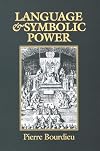
The inspirational polysemy buoying up this work is the dual meaning of "formal," both "structural" and "official" (formel/le, structural/e, officiel/le). Bourdieu is stirred to fire a salvo onto the beaches of structural linguistics by what he sees as its fear of the social, the relational, and the hegemonic. Specifically, he begins by upbraiding Saussure and Chomsky for their vision in which the system and structure of language, taken abstractly and hermetically with as little reference as show more possible to anything in the real world, are the proper study of linguists (and while he sees Chomsky as less culpable than Saussure in that for the latter, our systems imbricate us, whereas for the former, the linguistic generative capacity is important, I think if he knew a little more about how splendidly isolated and monumentally arrogant Chomsky's creative brain is, and how for Saussure in contrast the structure of langue is social and the action of parole personal, he would have a bit more sympathy for the former, but only a bit). Basically Bourdieu finds the idea that language is not a social practice nonsensical, and I say good on 'im. Then he more mildly chides the "ordinary language" crew--Searle, Austin, et al.--for the flat reductiveness of their system, where naming a boat or opening a meeting or pronouncing you man and wife are "illocutionary acts" born out of their own asshole--the power of the speech act to do things in the world deriving from other speech acts in an endless deferral, when quite evidently it is the sociological relations out of which the speech emerges that give it its oomph.
So far so good! There are banal aspects to this critique, like the way Bourdieu picks up sociolinguists like Dell Hymes and Labov and presents them as the counterhegemonic rebels waiting for the French theorist from outside the field to champion them, when in fact both were eminent and the nativist/emergentist and universalist/relativist and propositional/interactional lines in linguistics have been long drawn. (There needs to be a special word for this kind of intellectual appropriation.) But mostly it's nice to see B on the side of the angels in fights that aren't really his. And certainly the weird fecundity that comes from bringing one dude's vast knowledge to a new adjacent field can be cool--Condillac comes in for discussion, for example, not someone linguists talk about but a French Enlightenment stalwart with more to do with the emergence of their field than they know, as well as someone who means something to me. But in contrast to my view of C as the first relativist and sociolinguist, Bourdieu zeroes in on his belief in linguistic "perfectibility" as its blossomed brutally in the Revolution with its early attempts at totalitarian verbal hygiene. If language reflects culture, you can say let a thousand flowers bloom or you can look for the "right" culture as evidenced by the "right" language. Thus, weirdly, Bourdieu sees the whole linguistic relativity project--Humboldt, Whorf--as hegemonic, the imposition of official national lifeworlds.
Our man is an Occitanian, after all! And this means that his real ultimate concern isn't peoples and their thoughtworlds, but the way these things are manipulable by the Big State and the ways in which cultural capital is invested in language so as to keep the lexiconned-up aristocracy laughing and the inarticulate brutes down. This is pure bog-standard sociolectology (unlike Labov and Hymes, people like Trudgill do not come in for mention), but rather than do anything empirical Bourdieu just Frenchifies on the matter for a while, coming up with some neat thoughts. Informational efficiency as a ruling principle in language is as imaginary as the rational actor in economics--just as the money game is rotten, linguistic capital is also hoarded and invested in oneself and the status quo. The condescension of the small-town mayor speaking Occitan (or George Bush speaking Texas Cowpoke) consists in their ability to put the language of the common people down and return to the mountain. Nobody's ever impressed with a real regular guy for being a regular guy. Cf. also the hypocorrection of the haute, where at some point you stop having to adhere ever more perfectly to the prestige standard and start being able to greater and greater degrees to depart from it--that's power.
The way that plays out in academia, where saying "there are two classes" is an illocutionary--a power--act like saying "there are two classes," an act of world-creation, simultaneously descriptive and prescriptive. A weirdly out of place defence of Heidegger's academic aristocratism (these essays were not intended to be together originally, and I guess some are more shoehorned in than others), which I guess has relevance in the way B talks about the philosophical discourse, constructed such that nobody can meaningfully disagree with you except by buying into the conditions of your sensemaking--a move from error to (knight-) "errance," wandering at the limits of the system that has an acknowledged master and trying to wrench its terms around to clear a forest and build yourself a new land at the limits.
There is a large chunk of the end of this book where the particularity of language is lost and it becomes a generic argument about social capital and politics with language as an instantiation. The working class needs to tell its own story? Well that's a bit boring. Some stuff about how the party spokesman or leader is his constitutents incarnate, depending on them for his existence as they depend on him and his speaking voice for theirs--the working class only exists if it has a Fürsprecher to illocute it into being. Kind of tired and dated business at times, but the opening burst has burstiness and there are intermittent deee-lites thereafter. show less
So far so good! There are banal aspects to this critique, like the way Bourdieu picks up sociolinguists like Dell Hymes and Labov and presents them as the counterhegemonic rebels waiting for the French theorist from outside the field to champion them, when in fact both were eminent and the nativist/emergentist and universalist/relativist and propositional/interactional lines in linguistics have been long drawn. (There needs to be a special word for this kind of intellectual appropriation.) But mostly it's nice to see B on the side of the angels in fights that aren't really his. And certainly the weird fecundity that comes from bringing one dude's vast knowledge to a new adjacent field can be cool--Condillac comes in for discussion, for example, not someone linguists talk about but a French Enlightenment stalwart with more to do with the emergence of their field than they know, as well as someone who means something to me. But in contrast to my view of C as the first relativist and sociolinguist, Bourdieu zeroes in on his belief in linguistic "perfectibility" as its blossomed brutally in the Revolution with its early attempts at totalitarian verbal hygiene. If language reflects culture, you can say let a thousand flowers bloom or you can look for the "right" culture as evidenced by the "right" language. Thus, weirdly, Bourdieu sees the whole linguistic relativity project--Humboldt, Whorf--as hegemonic, the imposition of official national lifeworlds.
Our man is an Occitanian, after all! And this means that his real ultimate concern isn't peoples and their thoughtworlds, but the way these things are manipulable by the Big State and the ways in which cultural capital is invested in language so as to keep the lexiconned-up aristocracy laughing and the inarticulate brutes down. This is pure bog-standard sociolectology (unlike Labov and Hymes, people like Trudgill do not come in for mention), but rather than do anything empirical Bourdieu just Frenchifies on the matter for a while, coming up with some neat thoughts. Informational efficiency as a ruling principle in language is as imaginary as the rational actor in economics--just as the money game is rotten, linguistic capital is also hoarded and invested in oneself and the status quo. The condescension of the small-town mayor speaking Occitan (or George Bush speaking Texas Cowpoke) consists in their ability to put the language of the common people down and return to the mountain. Nobody's ever impressed with a real regular guy for being a regular guy. Cf. also the hypocorrection of the haute, where at some point you stop having to adhere ever more perfectly to the prestige standard and start being able to greater and greater degrees to depart from it--that's power.
The way that plays out in academia, where saying "there are two classes" is an illocutionary--a power--act like saying "there are two classes," an act of world-creation, simultaneously descriptive and prescriptive. A weirdly out of place defence of Heidegger's academic aristocratism (these essays were not intended to be together originally, and I guess some are more shoehorned in than others), which I guess has relevance in the way B talks about the philosophical discourse, constructed such that nobody can meaningfully disagree with you except by buying into the conditions of your sensemaking--a move from error to (knight-) "errance," wandering at the limits of the system that has an acknowledged master and trying to wrench its terms around to clear a forest and build yourself a new land at the limits.
There is a large chunk of the end of this book where the particularity of language is lost and it becomes a generic argument about social capital and politics with language as an instantiation. The working class needs to tell its own story? Well that's a bit boring. Some stuff about how the party spokesman or leader is his constitutents incarnate, depending on them for his existence as they depend on him and his speaking voice for theirs--the working class only exists if it has a Fürsprecher to illocute it into being. Kind of tired and dated business at times, but the opening burst has burstiness and there are intermittent deee-lites thereafter. show less
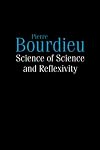
Here, in his final book, based on the last series of lectures Bourdieu delivered at the Collège de France, the distinguished sociologist warns his readers of a great danger to the scientific field: "submission to economic interests and to the seductions of the media threatens to combine with external critiques and internal denigration, most recently presented in some 'postmodern' rantings." Above all concerned with the last, Bourdieu is at pains to revive his own theoretical model of the show more scientific field, first set out in 1975, which he feels offers a far better model of what happens in the production of scientific facts than, say, the model developed by Bruno Latour, who is singled out for very rough treatment. In many ways, this valedictory piece is autobiographical, and many who were in the past moved by the moments when Bourdieu's rich theoretical reflections parted to reveal his commitment to social justice and other progressive causes will find, in addition to this short book's tart and brilliant reflections on the state of science and (far more significantly) science studies, touching moments of self revelation. show less
Lists
Awards


You May Also Like


Associated Authors
Statistics
- Works
- 233
- Also by
- 7
- Members
- 9,658
- Popularity
- #2,475
- Rating
- 3.9
- Reviews
- 60
- ISBNs
- 733
- Languages
- 27
- Favorited
- 13


