
Terry Eagleton
Author of Literary Theory: An Introduction
About the Author
Terry Eagleton received a Ph.D from Cambridge University. He is a literary critic and a writer. He has written about 50 books including Shakespeare and Society, Criticism and Ideology, The Ideology of the Aesthetic, Literary Theory, The Illusions of Postmodernism, Why Marx Was Right, The Event of show more Literature, and Across the Pond: An Englishman's View of America. He wrote a novel entitled Saints and Scholars, several plays including Saint Oscar, and a memoir entitled The Gatekeeper. He is also the chair in English literature in Lancaster University's department of English and creative writing. (Bowker Author Biography) show less
Image credit: Billlion
Works by Terry Eagleton
Rape of Clarissa: Writing, Sexuality, and Class Struggle in Samuel Richardson (1982) 55 copies, 1 review
The Unknown God: Responses to the New Atheism: Sermons Responding to the New Atheists (2013) 6 copies
Truth About Irish P 5 copies
Akıl, İnanç ve Devrim 1 copy
The Body as Language 1 copy
A fun©ʹ©Đo da cr©Ưtica 1 copy
Como ler um poema 1 copy
On the contrary: Terry Eagleton on Slavoj Žižek's The Parallax View: An article from: Artforum International (2006) 1 copy
“The Rise of English” 1 copy
"Capitalism and Form" 1 copy
"What is Literature" 1 copy
'Culture & Barbarism: metaphysics in a time of terrorism' in Commonweal, 136/6, 27 March 2009 1 copy
Ru he yue du wen xue 1 copy
Nationalism, colonialism and literature--nationalism, irony and commitment (A Field Day pamphlet) (1988) 1 copy
Kyon Sahi The Marx 1 copy
Associated Works
Literature: An Introduction to Fiction, Poetry, and Drama (1995) — Contributor, some editions — 1,010 copies, 7 reviews
Ghostly Demarcations: A Symposium on Jacques Derrida's Specters of Marx (1999) — Contributor — 134 copies
L=A=N=G=U=A=G=E, Number 9/10, (Vol. 2, No. 3 and 4) — Contributor — 1 copy
Tagged
Common Knowledge
- Legal name
- Eagleton, Terence Francis
- Birthdate
- 1943-02-22
- Gender
- male
- Education
- Trinity College, Cambridge University (BA | 1964)
Jesus College, Cambridge University (Ph.D | 1969) - Occupations
- professor
literary scholar and critic
cultural theorist
public intellectual
author - Organizations
- Lancaster University
Manchester University
National University of Ireland
Oxford University
Cambridge University - Awards and honors
- Fellow, British Academy (2002)
- Agent
- Georges Borchardt
- Nationality
- UK
- Birthplace
- Salford, Lancashire, England, UK
- Places of residence
- Dublin, Ireland
- Map Location
- England, UK
Members
Reviews

Authors from Alexis de Tocqueville and Charles Dickens to Alistair Cooke and Bill Bryson have, over the years, made “America, seen through foreign eyes” an evergreen literary subgenre. Literature scholar Terry Eagleton, a Briton who has lived and taught for years in the United States, joins their ranks with Across the Pond.
Eagleton’s subject here is not America but Americans, and (by extension) the English and the Irish rather than their respective homelands. He’s interested in show more people rather than places, and specifically in the shared habits of belief, thought, and action that makes one clump of people collectively different than other another. Done badly, this kind of thing can degenerate into crude stereotyping, but Eagleton does it well. His observations are sharp, his conclusions insightful, and his ability to weave them into a coherent picture considerable. Better yet, all this comes wrapped in humorous prose that, at its best, attains a level of comic surrealism reminiscent of Hitchhiker’s Guide to the Galaxy. Here, for example, is Eagleton on (seemingly) the most mundane of cultural differences, pronunciation: “I once rang an American colleague and reached his voicemail, which announced: ‘This is Mike and Marie. We do not reply to silly questions.’ Perhaps they had been besieged by callers asking to know how many triangular pink objects they had in the house, or how much it cost to rent a lawnmower in Kuala Lumpur. Later I realized he had said ‘survey questions.’”
The artistry with which Eagleton blends serious (if impressionistic) anthropological observation and humor becomes fully apparent in Chapter 3, which discusses Americans’ physical bodies, and attitudes toward them. There, and only there, he turns (almost) completely serious without announcing or, seemingly, realizing it. The observations are still as sharp, and the insights just as unexpected, but the absence of humor transforms the experience of reading them. Had the book been written entirely in that style, I would still have read it and counted the couple of hours invested in it as time well spent. I’m very glad, however, that I got to read this version instead. show less
Eagleton’s subject here is not America but Americans, and (by extension) the English and the Irish rather than their respective homelands. He’s interested in show more people rather than places, and specifically in the shared habits of belief, thought, and action that makes one clump of people collectively different than other another. Done badly, this kind of thing can degenerate into crude stereotyping, but Eagleton does it well. His observations are sharp, his conclusions insightful, and his ability to weave them into a coherent picture considerable. Better yet, all this comes wrapped in humorous prose that, at its best, attains a level of comic surrealism reminiscent of Hitchhiker’s Guide to the Galaxy. Here, for example, is Eagleton on (seemingly) the most mundane of cultural differences, pronunciation: “I once rang an American colleague and reached his voicemail, which announced: ‘This is Mike and Marie. We do not reply to silly questions.’ Perhaps they had been besieged by callers asking to know how many triangular pink objects they had in the house, or how much it cost to rent a lawnmower in Kuala Lumpur. Later I realized he had said ‘survey questions.’”
The artistry with which Eagleton blends serious (if impressionistic) anthropological observation and humor becomes fully apparent in Chapter 3, which discusses Americans’ physical bodies, and attitudes toward them. There, and only there, he turns (almost) completely serious without announcing or, seemingly, realizing it. The observations are still as sharp, and the insights just as unexpected, but the absence of humor transforms the experience of reading them. Had the book been written entirely in that style, I would still have read it and counted the couple of hours invested in it as time well spent. I’m very glad, however, that I got to read this version instead. show less
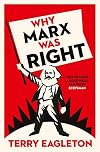
Best for:
People who are already VERY familiar with Marx’s work and are looking for an outside opinion on how to defend different aspects of it.
In a nutshell:
Author Eagleton looks at what he believes are common arguments uses against Marxism and refutes them.
Worth quoting:
“Only through others can we come into our own.”
Why I chose it:
I thought it would be an interesting and easier to read way to learn more about Marx’s thoughts and writing. (Spoiler alert: it wasn’t, at least not for show more me.)
What it left me feeling:
Skeptical
Review:
I might have been led slightly astray by the pull quotes from reviews on the cover of the copy I purchased. ‘Irresistibly Lively and Thought-Provoking.’ ‘Short, Witty, and Highly Accessible.’ I think this is probably true (except the short part - a 250 page book is not short. It’s not long, but it’s not short), but the caveat should be on there somewhere that those only apply to readers who are already very well acquainted with the writing, theory, and discussion of Marx and Marxism. This is not a book where one LEARNS about Marxism. This is a book where one thinks more about it in relation to other areas of thought.
It is an easy read, in that the author is a decent writer. However, after reading the first half of the book very carefully, I ended up just skimming the latter half because I knew what was coming, and I knew it wasn’t going to be what I was looking for. Each chapter starts with what I think is a flaw in the set-up of the book: instead of pulling real quotes at the start to highlight the arguments opposing Marxism that he’s about to refute, he just has a sort of paragraph where he paraphrases the complaints. I think I get why he made that choice, but it doesn’t work nearly as well as real-world examples. It leaves Eagleton too open to complaints of strawmen.
In the chapters I read closely, a lot of Eagleton’s arguments seemed to boil down to this: Capitalists might make a claim about Marxism, but even if the claim is true, it’s also probably true of Capitalism. Or, because Marx (notoriously) doesn’t really talk about the details of what his version of society would look like, it’s easy to impose outside opinions on it in a negative way, and that’s not fair.
But here’s the thing - these arguments all sounds fine to me, but I don’t know enough about Marx to know if Eagleton’s commentary is accurate. Now, this is going to be an issue with pretty much all non-fiction books, right? We rely on the author to be something of an expert in their field, to have thought through and researched. When I read a Mary Roach book, I don’t just accept everything at face value, but generally I assume that her interpretation of the facts is generally accurate.
But with things like political philosophy, for me it gets much murkier. What values is the author bringing into the discussion? Are they the same as my values? What have they chosen to leave out that would change the entire discussion? Without some of my own first-hand reading of the text, this type of book isn’t really going to work. When I was in grad school for philosophy, yes, I definitely needed to read articles by contemporary writers that discussed Aristotle, but I also needed to read Aristotle myself, so I could come into the discussions with some first-hand understanding. And I think that in the same way, before I (or others) read works like this, we need to read the original arguments first.
Now, is that the author’s fault? Probably not, and that’s why this is a three star and not a two star rating for me.
Recommend to a Friend / Keep / Donate it / Toss it:
Keep and maybe revisit later show less
People who are already VERY familiar with Marx’s work and are looking for an outside opinion on how to defend different aspects of it.
In a nutshell:
Author Eagleton looks at what he believes are common arguments uses against Marxism and refutes them.
Worth quoting:
“Only through others can we come into our own.”
Why I chose it:
I thought it would be an interesting and easier to read way to learn more about Marx’s thoughts and writing. (Spoiler alert: it wasn’t, at least not for show more me.)
What it left me feeling:
Skeptical
Review:
I might have been led slightly astray by the pull quotes from reviews on the cover of the copy I purchased. ‘Irresistibly Lively and Thought-Provoking.’ ‘Short, Witty, and Highly Accessible.’ I think this is probably true (except the short part - a 250 page book is not short. It’s not long, but it’s not short), but the caveat should be on there somewhere that those only apply to readers who are already very well acquainted with the writing, theory, and discussion of Marx and Marxism. This is not a book where one LEARNS about Marxism. This is a book where one thinks more about it in relation to other areas of thought.
It is an easy read, in that the author is a decent writer. However, after reading the first half of the book very carefully, I ended up just skimming the latter half because I knew what was coming, and I knew it wasn’t going to be what I was looking for. Each chapter starts with what I think is a flaw in the set-up of the book: instead of pulling real quotes at the start to highlight the arguments opposing Marxism that he’s about to refute, he just has a sort of paragraph where he paraphrases the complaints. I think I get why he made that choice, but it doesn’t work nearly as well as real-world examples. It leaves Eagleton too open to complaints of strawmen.
In the chapters I read closely, a lot of Eagleton’s arguments seemed to boil down to this: Capitalists might make a claim about Marxism, but even if the claim is true, it’s also probably true of Capitalism. Or, because Marx (notoriously) doesn’t really talk about the details of what his version of society would look like, it’s easy to impose outside opinions on it in a negative way, and that’s not fair.
But here’s the thing - these arguments all sounds fine to me, but I don’t know enough about Marx to know if Eagleton’s commentary is accurate. Now, this is going to be an issue with pretty much all non-fiction books, right? We rely on the author to be something of an expert in their field, to have thought through and researched. When I read a Mary Roach book, I don’t just accept everything at face value, but generally I assume that her interpretation of the facts is generally accurate.
But with things like political philosophy, for me it gets much murkier. What values is the author bringing into the discussion? Are they the same as my values? What have they chosen to leave out that would change the entire discussion? Without some of my own first-hand reading of the text, this type of book isn’t really going to work. When I was in grad school for philosophy, yes, I definitely needed to read articles by contemporary writers that discussed Aristotle, but I also needed to read Aristotle myself, so I could come into the discussions with some first-hand understanding. And I think that in the same way, before I (or others) read works like this, we need to read the original arguments first.
Now, is that the author’s fault? Probably not, and that’s why this is a three star and not a two star rating for me.
Recommend to a Friend / Keep / Donate it / Toss it:
Keep and maybe revisit later show less
Another European intellectual explains America! Eagleton doesn’t quite have his usual postmodern Marxist hat on for this book, he seems to be channeling Dickens, Henry James and de Tocqueville and trying to imagine how they would react to the transatlantic divide in its Obama-era incarnation. There is a lot of shameless generalisation and stereotyping of course, as there has to be in such a book — Eagleton insists on his right to do this.
In the end it seems to come down to Eagleton’s show more analysis of the strengths and weaknesses of the American idea that we can achieve anything if we really want to. Of course most of us can’t, but this approach conveniently means that anyone whose life doesn’t work out well can fairly be blamed for their own problems.
An entertaining read on the whole, with a few interesting insights, but nothing that will really change your prejudices, whether you’re a European who distrusts American self-promotion or an American fed up with European intellectuals parachuting in to make fun of your culture. show less
In the end it seems to come down to Eagleton’s show more analysis of the strengths and weaknesses of the American idea that we can achieve anything if we really want to. Of course most of us can’t, but this approach conveniently means that anyone whose life doesn’t work out well can fairly be blamed for their own problems.
An entertaining read on the whole, with a few interesting insights, but nothing that will really change your prejudices, whether you’re a European who distrusts American self-promotion or an American fed up with European intellectuals parachuting in to make fun of your culture. show less
Oops, you think I'm in love, that I'm sent from above /
I'm not that innocent (Not that innocent, babe)
— Britney Spears, Oops!…I Did It Again, 2000
Oops! . . . I Didn't Again
As you recall, Britney Spears was once “the biggest pop star in the world;” the "cathected object" at the center of the erstwhile "entertainment industry." Though she looks so [happy] in photographs, she was nonetheless a complete unknown. If we're to believe her media portrayal, Britney was a "Criminal" guilty of show more perverting American pop culture and yet non compos mentis not in possession of her "Prerogative." This wasn't the only contradiction of terms in what was, in retrospect, a textbook case of a paranoid (Othello) complex. Circa 2008, people were saying things about Britney you couldn't otherwise hear in polite company. Her contemporary depiction in South Park ("Britney's New Look" S12E2 March 19, 2008 — incidentally one of the few pellucid pop culture portrayals in a series so often off-the-mark), is an adaptation of Shirley Jackson's The Lottery (1948) in which she survives a botched suicide attempt — merely exacerbating the media feeding-frenzy — and is subsequently sacrificed in a stoning-by-paparazzi.
The termination of Britney's conservatorship in 2021 would mark the end to more than a decade of collective mass hysteria — what some would call a specimen case for an investigation of the problem of evil. Why did so many despise Britney Spears for reasons that even a cursory examination would show to be false, or rather, how does it come to pass that, "Boys throw stones in jest, but [pop stars] die in earnest. . ."
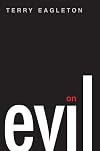
Ostensibly, On Evil (2010) commences with the case relevant these interests: "Fifteen years ago two ten-year-old boys tortured and killed a toddler in the north of England" (7). Although, "a police officer involved in the case declared that the moment he clapped eyes on one of the culprits, he knew that he was evil" (7), Eagleton assures us what has taken place is merely a manifestation of "wickedness" — Let's not get ahead of ourselves. We forgive the boys — as, perhaps, we should — After all, they are only little-wicked (as in a short candlestick).
The concept of "wickedness" in this text is a product of Mary Midgley (Wickedness (1984)), Thomas Aquinas, and a little of Eagleton's own devising. Briefly, Eagleton accepts Aquinas's definition, "to think of wickedness [. . .] as a general kind of failure to live as we are capable of living," which he broadens to include every peccadillo short of Evil itself. Evil, then, is "the desire for this nothingness [annihilation . . .] An expression [. . .] of the Freudian death drive" (26). To appreciate the problems this presents (other than that we suddenly wish we were reading On Wickedness (2010) instead) would require some sort of investigation-of-terms.
As the music of Satanic Surfers (1989) demonstrates, an old problem for "wickedness" is that the wicked has always lain somewhere between the sins of indulgence (which we forgive) and the "wicked" skateboard trick. In short, it has never been intense enough. The new problem for "wickedness," as Eagleton defines it, is that it has become a "rum category," or rather like a compost heap. All those who fail in their "thrownness" (read: shot-put) to reach Evil itself end up here, alongside the fruits of their efforts. Is there any use for a term upon which we pile up poorly-cooked pie-crusts, the cardboard centers of wasted toilet paper rolls, carrot ends for a salad aspirationally-prepared-but-alas-not-eaten, alongside such controversial figures as Adolf Eichmann and the woman who purchases a celebrity gossip magazine at the grocery store — an impulse buy — though she knows she shouldn't. Again, "wickedness" is a term which urgently demands further investigation — for example, we might at least rescue those carrot ends — and we are still holding our breath.
The way "Evil" becomes a minor character in its own text, displacing itself in the creation of "the problem of wickedness," could be called "modernist" or even "postmodern" (if Eagleton were not so frequently using that term as a pejorative). Though I would argue this structure is likely an inadvertent construct of Eagleton's ideology rather than an intentional "postmodern" project. I will run through it once: Per Eagleton, Evil is the "Freudian Death Drive" bent on destruction, since "destruction is really the only way to trump [sic] God's act of creation [. . .] It loathes creation because, as Thomas Aquinas claims, being is itself a kind of good [. . .] Given the intolerable fact that things do exist, however, the best evil can do is try to annihilate them" (45). Readers of Freud should find this amusing — and for reasons other than the fact that this definition appears to have a Catholic carve-out to condemn contraception. (For Catholicism, the way the condom prevents "creation" — and therefore destroys it — you would think it was intended to be applied, suffocatingly, over the head that does the thinking.) But we return to Freud, who defined the Death Drive as, "[aspiring] to an old state, a primordial state from which it once departed, and to which via all the circuitous byways of development it strives to return" (Beyond the Pleasure Principle, 1920), and which is, therefore, a universal phenomenon of equivocal moral significance. In practice, a Freudian might find the (unconscious) Death Drive behind all those actions which don't bring us pleasure — and which we do anyway — as one does when browsing celebrity gossip in the doom scroll. (Indeed, in Late Freud the Death Drive is the deep background of negative space in which the minor constellations of the Pleasure Principle are stationed.)
This reading of the Death Drive — intrinsic, unconscious — sound not unlike Original Sin, although Eagleton appears to deny the connection. Pertinently, the author is aware of the Catholic dogma that Christ's sacrifice (and the sacrament of Baptism) solved this problem for good. We would have to return to "wickedness" to see the death drive addressed as a problem which might implicate the reader, rather than the "Evil" which Eagleton reserves for the exceptional individual. Other forms of "destruction" are also rejected, probably for this Catholic reason. Eagleton would refute, by omission, the argument that every person is implicated, to varying degrees, in the destruction of "God's creation" due to workaday actions against humans (as is the case when maximal charity is not given), animals consumed, climate contributions, and the action of the body's metabolism on the finite energy of the cosmos, and so on. The way On Evil lets us off so easy, it appears to share a project with Karl Jaspers's The Question of German Guilt (1946), which defines an exclusive class of "criminally guilty" Nazi soldiers to be sacrificed in order to spare the merely-outspoken-national-socialist civilian who, after military defeat, remains more or less emboldened. This, in contrast to Adorno's Marxist mainstay, Minima Moralia (1949), with its call to action implicit in the injunction that "wrong life cannot be lived rightly."
What matters to Eagleton, then, is the pure mens rea the destructive consciousness desiring destruction for destruction's sake. Under what circumstances has such a thing ever existed, or rather, "Was it ever thus? We cannot know" (Gayatri Spivak, Terror: A Speech After 9/11, 2004). Eagleton therefore spares objective perpetrators of mass-killing such as Adolf Eichmann, whom he dubs merely "wicked. This analysis is notable for also extending to Joseph Stalin: "The crimes of Stalin are not necessarily less abominable than those of Hitler. They are just in a different category" (68). It seems Stalin is getting off easy with "wickedness" given, at the very least, the "excesses" of the NKVD under his direction. The difference between Stalin and Hitler appears to be what Eagleton perceives as an excess of enjoyment, "The death drive is sadistic [. . .] There is a diabolical delight to be reaped from the notion of absolute destruction" (70). I think Eagleton is too hasty here. Given the exclusivity of his definition of "Evil," frankly I don't think even Hitler makes the cut. It would only need to be demonstrated that the Holocaust served an expedient political purpose, similar to the sadistic extrajudicial executions of the NKVD which Eagleton pardons, or that Hitler had frequent resort to the Nazi psychological salve which Goebbels devised for the Einsatzgruppen: "What horrible things I was made to witness in my service for the good of the Third Reich." The kicker: in Eagleton's Catholic framework, the only people we can definitively claim to be rejoicing in the destruction of a human being are those fornicators who, despite their ordained marriage, are practicing safe-sex.
The text of On Evil is dedicated, "To Henry Kissinger" (5), in what initially appears to be a dig at the former American secretary of state. This is sharp when we read it the first time, but more bizarre once we've finished the text. Kissinger, who orchestrated the illegal bombing of Cambodia, was known for many things, but a pleasure seeker was not one of them. "He’s a consummate diplomat. / Girls think he’s lukewarm / when he’s hot." (Alice Goodman, Nixon in China, 1987). We note that the criminal acts for which Kissinger is responsible were perpetrated with Jewish sang-froid. In retrospect, he was only doing what was then called realpolitik through the distorted lens of right-wing Cold War paranoia. (An Othello complex?) Though Kissinger may have been a "destroyer without a cause", based on the criteria Eagleton establishes for himself, he can't call him "Evil." Reading Eagleton's text for other sites of "humor", we find more lapses: "Even if good can come from evil, what are we to make of someone [i.e., God] who organises evils so that goods might arise from them? Couldn't he have found some more agreeable way of testing our mettle than dengue fever, tarantulas, or Britney Spears?" (95) This is what Freud in his Joke Book might call a "displacement joke." An object in a series is replaced with the unexpected. Libidinal energy is released when the ills of mankind, such as dengue fever which we hate only in abstraction, are followed by an object that we hate in earnest, releasing the energy we would have spent on abstraction. (Substitute "your mother-in-law" for "Britney Spears" in the original version of this classic misogynist dig.) The kicker: just as the sentence argues mankind would be better off without dengue fever, it also endorses the sacrifice of Britney Spears for the sake of a better society — again, releasing the libidinal energy you would have spent suppressing this thought in polite company.
And so, having read the whole text front to back, I have discovered, not without a hint of irony, only two cases that could fit Terry Eagleton's stringent definition of "Evil": First, the case of those so-called "wicked" boys — torturers of toddlers — who, after the attention-grabbing introduction (and an anemic defense in which the author theorizes they may be victims of circumstance), are never heard from again. And last, the more troubling case of an author-who-should-know-better who — surely a victim of circumstance! — can't resist a joke rejoicing at the destruction of Britney Spears . . . Oops! show less
Lists
Awards


You May Also Like


Associated Authors
Statistics
- Works
- 110
- Also by
- 13
- Members
- 11,945
- Popularity
- #1,963
- Rating
- 4.0
- Reviews
- 135
- ISBNs
- 489
- Languages
- 20
- Favorited
- 14