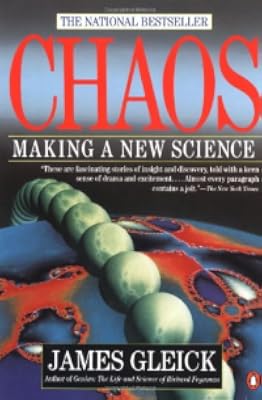
Chaos: Making a New Science
by James Gleick
On This Page
Description
The "highly entertaining" New York Times bestseller, which explains chaos theory and the butterfly effect, from the author of The Information (Chicago Tribune).For centuries, scientific thought was focused on bringing order to the natural world. But even as relativity and quantum mechanics undermined that rigid certainty in the first half of the twentieth century, the scientific community clung to the idea that any system, no matter how complex, could be reduced to a simple pattern. In the show more 1960s, a small group of radical thinkers began to take that notion apart, placing new importance on the tiny experimental irregularities that scientists had long learned to ignore. Miniscule differences in data, they said, would eventually produce massive ones—and complex systems like the weather, economics, and human behavior suddenly became clearer and more beautiful than they had ever been before.
In this seminal work of scientific writing, James Gleick lays out a cutting edge field of science with enough grace and precision that any reader will be able to grasp the science behind the beautiful complexity of the world around us. With more than a million copies sold, Chaos is "a groundbreaking book about what seems to be the future of physics" by a writer who has been a finalist for both the Pulitzer Prize and the National Book Award, the author of Time Travel: A History and Genius: The Life and Science of Richard Feynman (Publishers Weekly). show less
Tags
Recommendations






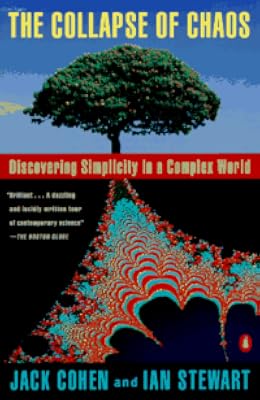

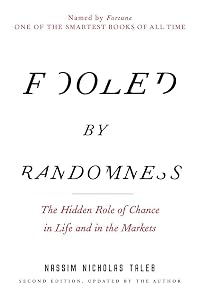
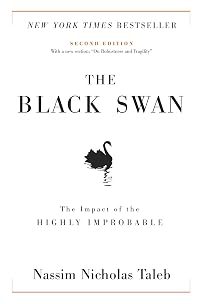
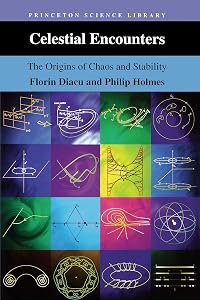
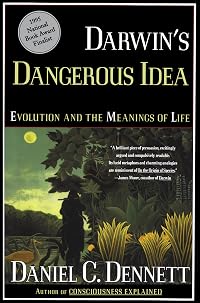
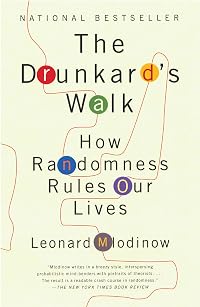
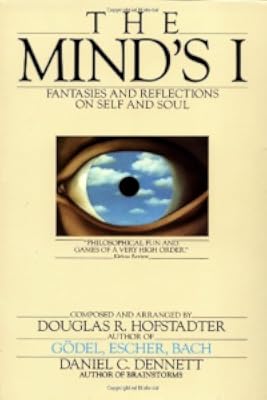
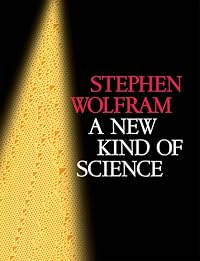


Member Recommendations
Sylak I purchased these two books as companion reads. Others may find this a useful pairing too.
Member Reviews
I'm totally in love with this book. Like, totally.
Why? Because it GETS ME, MAN.
Just kidding. I'm not anthropomorphizing a breakthrough in science. Although, if I was, I'd DEFINITELY be cuddling with this stream of seemingly random information that keeps repeating in regular ways, forming order from seeming chaos.
Give me a seed and I will make you a universe. Or one hell of a trippy fractal.
I think I'll leave butterflies out of this.
Small changes affect great extrapolations.
Our physics generators in video games relies on this. So do aeronautical research, weather forecasts, stock market prediction, presidential elections and the resulting public outrage, and the fluid dynamics of my creamer swirling in my coffee. Not to mention galaxy show more formation, fingerprints, shells, coastlines, or the thing that made the little dinos get the upper hand in those movies. :)
Truly, though, this book does a great job at explaining and giving us the unusual history of the science that brought pure mathematics out of the clouds and back into the real world, dealing with our observable reality. Newton was okay for some things but all these new equations describe just HOW little uncertainties can create huge chaotic messes... and still be reduced back to first causes. :)
Neat, huh? I'm totally stoked by these bad boys. Of course, we're all, yeah, we use those equations all the time now and it's old hat, but not so long ago, they were totally in left field and none of the big boys wanted to play with them.
So, yeah, it's like a total paradigm shift, man. I'm FEEL'N it. show less
Why? Because it GETS ME, MAN.
Just kidding. I'm not anthropomorphizing a breakthrough in science. Although, if I was, I'd DEFINITELY be cuddling with this stream of seemingly random information that keeps repeating in regular ways, forming order from seeming chaos.
Give me a seed and I will make you a universe. Or one hell of a trippy fractal.
I think I'll leave butterflies out of this.
Small changes affect great extrapolations.
Our physics generators in video games relies on this. So do aeronautical research, weather forecasts, stock market prediction, presidential elections and the resulting public outrage, and the fluid dynamics of my creamer swirling in my coffee. Not to mention galaxy show more formation, fingerprints, shells, coastlines, or the thing that made the little dinos get the upper hand in those movies. :)
Truly, though, this book does a great job at explaining and giving us the unusual history of the science that brought pure mathematics out of the clouds and back into the real world, dealing with our observable reality. Newton was okay for some things but all these new equations describe just HOW little uncertainties can create huge chaotic messes... and still be reduced back to first causes. :)
Neat, huh? I'm totally stoked by these bad boys. Of course, we're all, yeah, we use those equations all the time now and it's old hat, but not so long ago, they were totally in left field and none of the big boys wanted to play with them.
So, yeah, it's like a total paradigm shift, man. I'm FEEL'N it. show less
A very intuitive and expressive way of explaining "The Butterfly Effect" - is what impressed me first about this book, while the detailing on the Logistic Map is the close second.
If you miss understanding what a "fractal" is, you might find the rest of the book quite boring - happened to me over a couple of chapters, so I had to track back where I "lost it" and reread from there.
Chaos Theory is mind-numbing and yet charmingly elegant. It'd be very frustrating to NOT know what actually cause something OR how some outcome can't be reproducible - but the world is filled with such events.
If you miss understanding what a "fractal" is, you might find the rest of the book quite boring - happened to me over a couple of chapters, so I had to track back where I "lost it" and reread from there.
Chaos Theory is mind-numbing and yet charmingly elegant. It'd be very frustrating to NOT know what actually cause something OR how some outcome can't be reproducible - but the world is filled with such events.
First, a couple of caveats: "Chaos: Making a New Science" was written almost twenty-five years ago, so I don't know how up-to-date it is. Also, sadly enough, I can't say I know too much about any sort of science, so I'm the "general reader" that this book is probably aimed at. Even so, I think that "Chaos" is high-quality science writing and very recommendable. Gleick approaches his subject from a number of angles: he discusses nonlinear equations and mathematical oddities, chance discoveries, computer simulations and real-world applications like turbulence and the rise and fall of animal populations, and his multifaceted approach gives the reader a remarkably complete portrait of what chaos is and how it might change our thinking about show more a number of well-established scientific imponderables. I'm pretty much a math illiterate and barely managed a B- in pre-calc in senior year, but Gleick's a top-shelf nonfiction writer: he's able to lay out his ideas in a way that makes them comprehensible while also preserving their uncanny beauty. The author basically squares the popular science writing circle by making the head-bendingly complex seem both important and eminently graspable. Chaos is also a new enough science that Gleick can also examine the more human side of chaos research: he seems to have personally interviewed many of this new science's major figures, describes their academic backgrounds and mindsets in detail, and is adept at capturing the excitement they must have felt when making their discoveries and transmitting it to his readers. I'm sure real-deal science students will want to start elsewhere, but I'd wager that this book has provided a good deal of inspiration and reflection among even non-scientists. From the way that scientists in widely differing fields came to ask the same sort of questions about dissimilar phenomena to the very idea that there might be some underlying structure to disorder itself, there's a lot to consider here. I'm looking forward to picking up more titles from this author. show less
Like Entangled Life, it took me a while to finish this because it encompasses so many different fields that I'd stop all the time to check references. This is not a criticism of the book, though: James Gleick describes how scientists in areas as disparate as meteorology and the study of cardiac arrhythmia were able to make an impact by showing simple chaotic models that reproduce features of very real systems which were previously thought to be too random to understand. I find that pretty amazing.
While I'd have preferred a slightly more technical book, I've found that Gleick is really good at making layman explanations without being condescending. He also interviewed a lot of people and out of it he made a really compelling story of how show more the field developed. I particularly liked how he highlights the massive resistance the first people who studied chaos encountered. Nonlinear systems have historically been (and still are to this day) something of a footnote because analytic treatment of them is impossible, which makes theoretical scientists unenthusiastic. And the more practical scientists are also unlikely to be receptive because incorporating a dynamic systems approach to their study requires interdisciplinary work. show less
While I'd have preferred a slightly more technical book, I've found that Gleick is really good at making layman explanations without being condescending. He also interviewed a lot of people and out of it he made a really compelling story of how show more the field developed. I particularly liked how he highlights the massive resistance the first people who studied chaos encountered. Nonlinear systems have historically been (and still are to this day) something of a footnote because analytic treatment of them is impossible, which makes theoretical scientists unenthusiastic. And the more practical scientists are also unlikely to be receptive because incorporating a dynamic systems approach to their study requires interdisciplinary work. show less
Apparently some say that scientifically, the 20th century will be known for three things: relativity, quantum theory and chaos theory. It didn’t make this book any less revelatory, to me at least, that it was written almost thirty years ago. Gleick’s tour through the discovery of the principles of chaos theory was as exciting to read as if it had happened yesterday. It was an astounding discovery: that even the most basic dynamic system – from water flow to a heartbeat to the orbit of a star - is never simple, no matter how orderly it seems. It is always a complex mixture of order and chaos continually arising from one another - and therefore its predictability has sharp limits. But I was ultimately left with a sense of dismay, show more thinking about where we are now. I’d thought the main lesson of the discovery was humility: in spite of how far science had come down the millennia, nature was still far ahead – building in redundancy and a functionally incalculable amount of complexity was the best way to make systems that worked beautifully and efficiently, that were both dynamic and durable. And we might spend generations contemplating and respectfully trying to mimic or reciprocate with them. But the anti-reductionist paradigm that found the dance of chaos and order in all systems, biological, physical and chemical, large and small, has not really changed the way science is done very much. We all know about fractals now, and the butterfly effect, but chaos theory’s real world, human scale applications seem to have been mostly in trivial stuff like creating cool computer graphics for movies – or in helping develop more sophisticated oil drilling techniques. Two examples from the book were particularly disheartening: a psychologist talking about how what chaos theory meant to the study of the brain is how wrong-headed drug therapy was for mental disorders – how it could never solve the problem. But since then drugs have been relentlessly promoted for an exploding array of disorders. Another scientist says “we’ve learned that God does play dice, but they are loaded dice… Now, how can we make them work for our own ends?” We are so clever, but still not very wise. show less
This book, over two decades old now, is one of the great classics of science popularization. It was a blockbuster bestseller at the time, and it's still well worth reading, a fascinating, enjoyable introduction to one of the most important scientific developments of our time--the birth of chaos theory.
One of the compelling features of the chaos story is that this scientific breakthrough wasn't a physics, mathematics, chemistry, astronomy, or biology breakthrough; it was all of them. A mathematician turned meteorologist, Edward Lorenz, builds a "toy weather" on what's still a fairly early computer in the early 1960s, and in working with the parameters, concludes that long-term weather forecasting is doomed--a simple deterministic system show more is producing unpredictable results. Mitchell Feigenbaum, a theoretical physicist at Los Alamos in the early seventies, and two other scientists working together independently of him, are working on the problem of turbulence and.discover that it doesn't, as anticipated, build up gradually in an orderly manner. Reach the tipping point, and there it is.
Beloit Mandelbrot, an IBM mathematician working with an equation that produces fractals, arrives to give a presentation to an economics class and finds "his" equation already on the board; the patterns he's found in pure path also apply in economics, the reproductive rates and numbers of animal populations, and countless other places.
In each field, also, the initial work was most often either resisted or ignored. Precisely because chaos was popping up all over, with just a few people in each of many different scientific fields, it was easy for scientists in any field to notice a paper or presentation, note the fact that is was completely different from the methods, logic, math that had relevance for their own work, that much of the work was in fact being done in other fields--and dismiss it. For new doctoral students, there were no mentors in chaos theory, no jobs, no journals devoted to chaos theory. It completely upended ideas about how the natural world worked. It was heady, exciting--and much harder to explain than to demonstrate. Much of what the first generation of chaos scientists did is incredibly easy to demonstrate with a laptop computer today--but most of these chaos pioneers were working with handheld calculators, mainframe computers with dump terminals and limited and unreliable access for something so peripheral to the institution's perceived mission, computers whose only output device was a plotter.
Gleick very effectively conveys the science, the excitement the early scientists working on it felt, and the challenges that faced them.
Highly recommended. show less
One of the compelling features of the chaos story is that this scientific breakthrough wasn't a physics, mathematics, chemistry, astronomy, or biology breakthrough; it was all of them. A mathematician turned meteorologist, Edward Lorenz, builds a "toy weather" on what's still a fairly early computer in the early 1960s, and in working with the parameters, concludes that long-term weather forecasting is doomed--a simple deterministic system show more is producing unpredictable results. Mitchell Feigenbaum, a theoretical physicist at Los Alamos in the early seventies, and two other scientists working together independently of him, are working on the problem of turbulence and.discover that it doesn't, as anticipated, build up gradually in an orderly manner. Reach the tipping point, and there it is.
Beloit Mandelbrot, an IBM mathematician working with an equation that produces fractals, arrives to give a presentation to an economics class and finds "his" equation already on the board; the patterns he's found in pure path also apply in economics, the reproductive rates and numbers of animal populations, and countless other places.
In each field, also, the initial work was most often either resisted or ignored. Precisely because chaos was popping up all over, with just a few people in each of many different scientific fields, it was easy for scientists in any field to notice a paper or presentation, note the fact that is was completely different from the methods, logic, math that had relevance for their own work, that much of the work was in fact being done in other fields--and dismiss it. For new doctoral students, there were no mentors in chaos theory, no jobs, no journals devoted to chaos theory. It completely upended ideas about how the natural world worked. It was heady, exciting--and much harder to explain than to demonstrate. Much of what the first generation of chaos scientists did is incredibly easy to demonstrate with a laptop computer today--but most of these chaos pioneers were working with handheld calculators, mainframe computers with dump terminals and limited and unreliable access for something so peripheral to the institution's perceived mission, computers whose only output device was a plotter.
Gleick very effectively conveys the science, the excitement the early scientists working on it felt, and the challenges that faced them.
Highly recommended. show less
I think I would have enjoyed this book more if I had read it 30 years ago, closer to when it was written. For one thing, I am 30 years older and my brain that much slower; for another, Gleick's book functions best as a history and it is disappointing that the story ended 33 years ago. Actually, i know the story didn't end, but I read the 1987 edition and I know there have been more developments in all the areas Gleick covered back then.
Members
- Recently Added By
Lists

Top Five Books of 2014
1,064 works; 398 members

Books That Changed Me
3 works; 2 members

Books to Recommend to My Niece/Nephew (The late teenage years)
29 works; 3 members

Unread books
1,063 works; 82 members

Blue Pyramid 1,276 Best Books of All Time
1,248 works; 32 members

HS Mathematics class library
79 works; 6 members

The Great Courses: Meteorology
21 works; 1 member

The r/AskScience Reading List
159 works; 3 members

The Well-Educated Mind, Susan Wise Bauer, 2016
179 works; 3 members

Books Read in 2024
4,623 works; 126 members

The Venus Project Recommended Books - Contemporary sources
53 works; 2 members
Author Information

19+ Works 19,701 Members
He wrote the worldwide bestseller Chaos, which was nominated for the National Book Award. He was the 1990 McGraw Distinguished Lecturer at Princeton University. (Publisher Provided) James Gleick was born in New York City on August 1, 1954. He received a degree in English and linguistics from Harvard College in 1976. He helped found Metropolis, an show more alternative weekly newspaper in Minneapolis. After the newspaper folded, he worked for ten years as an editor and reporter for The New York Times. In 1989-1990, he was the McGraw Distinguished Lecturer at Princeton University. He has written several books including Chaos: Making a New Science, Genius: The Life and Science of Richard Feynman, Faster: The Acceleration of Just About Everything, What Just Happened: A Chronicle from the Information Frontier, and The Information: A History, a Theory, a Flood. (Bowker Author Biography) show less
Some Editions
Awards and Honors
Awards
Distinctions
Notable Lists
Series
Belongs to Publisher Series
Work Relationships
Is contained in
Common Knowledge
- Canonical title*
- Chaos
- Original title
- Chaos: Making a New Science
- Alternate titles*
- Chaos : de derde wetenschappelijke revolutie
- Original publication date
- 1987-10-29
- People/Characters
- Benoit Mandelbrot; Edward Lorenz; Mitchell Feigenbaum
- Epigraph
- human was the music,
natural was the static...
--John Updike - Dedication
- To Cynthia
- First words
- The police in the small town of Los Alamos, New Mexico, worried briefly in 1984 about a man seen prowling in the dark, night after night, the red glow of his cigarette floating along the back streets.
- Last words
- (Click to show. Warning: May contain spoilers.)He could not work the old way anymore.
- Blurbers
- Thomas, Lewis ; Hofstadter, Douglas ; Lopez, Barry ; Adams, Douglas
- Original language
- English
- Canonical DDC/MDS
- 003.857
- Canonical LCC
- Q172.5.C45
*Some information comes from Common Knowledge in other languages. Click "Edit" for more information.
Classifications
- Genres
- Science & Nature, General Nonfiction, Nonfiction, History
- DDC/MDS
- 003.857 — Computer science, information & general works Computer science, knowledge & systems Systems Systems distinguished in relation to time Dynamic systems Chaotic systems
- LCC
- Q172.5 .C45 — Science Science (General) General
- BISAC
Statistics
- Members
- 7,672
- Popularity
- 1,478
- Reviews
- 73
- Rating
- (3.91)
- Languages
- 22 — Chinese, Czech, Danish, Dutch, English, Finnish, French, German, Greek, Hebrew, Hungarian, Italian, Japanese, Korean, Polish, Portuguese, Russian, Serbian, Slovenian, Spanish, Swedish, Turkish
- Media
- Paper, Audiobook, Ebook
- ISBNs
- 57
- ASINs
- 27