
Walter Benjamin (1892–1940)
Author of Illuminations: Essays and Reflections
About the Author
Walter Benjamin (1892-1940) was a German-Jewish Marxist literary critic, essayist, translator and philosopher associated with the Frankfurt School of critical theory.
Series
Works by Walter Benjamin
The Work of Art in the Age of Its Technological Reproducibility, and Other Writings on Media (2008) 459 copies, 4 reviews
As Obras Escolhidas. Magia E Técnica, Arte E Política - Volume I (Em Portuguese do Brasil) (1996) 69 copies, 1 review
Maar een storm waait uit het paradijs filosofische essays over taal en geschiedenis (1996) 17 copies
Textos escolhidos 12 copies
La obra de arte en la era de su reproductibilidad técnica: y otros ensayos sobre arte, técnica y masas (2021) 8 copies
OCTOBER 35: ART/ THEORY/ CRITICISM/ POLITICS - WINTER 1985: MOSCOW DIARY BY WALTER BENJAMIN (1986) 7 copies
Walter Benjamin: 100 Notes, 100 Thoughts: Documenta Series 045 (100 Notes - 100 Thoughts/100 Notizen - 100 Gedanken) (2012) 6 copies
Gesammelte Schriften; BD.2 6 copies
Wahlverwandtschaften: Aufsätze und Reflexionen über deutschsprachige Literatur (suhrkamp taschenbuch wissenschaft) (2007) 5 copies
Obras Escolhidas, 3 Vols. 4 copies
Erzählen: Schriften zur Theorie der Narration und zur literarischen Prosa (suhrkamp taschenbuch wissenschaft) (2007) 4 copies
Sonhos 3 copies
Walter Benjamin. Obras Escolhidas (2: Rua de mão única; In`^ancia em Berlin; Imagens do pensamento) 3 copies
Das Passagen-Werk 1 3 copies
Über Walter Benjamin 3 copies
Werke und Nachlaß. Kritische Gesamtausgabe: Band 11: Berliner Chronik / Berliner Kindheit um neunzehnhundert (2019) 3 copies
Werke und Nachlaß. Kritische Gesamtausgabe: Band 7: Charles Baudelaire, Tableaux Parisiens (2017) 3 copies
Strada a senso unico 3 copies
מבחר כתבים : כרך א : המשוטט: 3 copies
Passagen, Durchgänge, Übergänge. Eine Auswahl: [Was bedeutet das alles?] (Reclams Universal-Bibliothek) (2020) 2 copies
Werke und Nachlaß. Kritische Gesamtausgabe: Band 14: Texte über Städte, Berichte, Feuilletons (2021) 2 copies
Walter Benjamin: Lesezeichen - Schriften zur deutschsprachigen Literatur — Author — 2 copies
Estetički ogledi 2 copies
Kleinere Übersetzungen : Tristan Tzara, D'Annunzio, Aragon, Proust, Léon Bloy, Adrienne Monnier, Saint-John Perse, Balzac, Jouhandeau (1999) 2 copies
Oeuvres II Poesie et Revolution 2 copies
Correspondência (1933-1940) 2 copies
Das Passagen-Werk. 2 Teilbände — Author — 2 copies
Interkulturalität und Transkulturalität in Drama, Theater und Film : Literaturwissenschaftliche und -didaktische Perspektiven (2015) 2 copies
מבחר כתבים : כרך ב : הרהורים 2 copies
Gesammelte Schriften; BD.2/1-3 2 copies
Rastelli raconte 2 copies
Über Sprache überhaupt und über die Sprache des Menschen - Aufsatz: Zweite Auflage (German Edition) (2012) 1 copy
Maskavas dienasgrāmatas 1 copy
Paris a capital do seculo XIX e outros escritos sobre cidades (Em Portugues do Brasil) (2019) 1 copy
Erfahrung 1 copy
The Task of the Translator 1 copy
Os Pensadores 1 copy
Για μια κριτική της βίας 1 copy
Sur le haschich 1 copy
El Berlín demónico 1 copy
Sull' haschisch 1 copy
PARILTILAR 1 copy
Gesamelte Schriften bind 1-6 1 copy
Le coeur froid 1 copy
Uprant (Sahityik Nibandh) 1 copy
OBRAS ESCOLHIDAS 1 copy
Dramma barocco 1 copy
KAFKA SENZA CHIAVI 1 copy
"Rigorous Study of Art. On the first Volume of the Kunstwissenschaftliche Forschungen" (1933). 1 copy
單向街(One-Way Street) 1 copy
The Return of the flâneur 1 copy
Stories From Bible Lands 1 copy
On the Mimetic Faculty 1 copy
Dílo a jeho zdroj 1 copy
Raster 13 1 copy
A copy is a Meta-Original 1 copy
Christian Brückner liest Walter Benjamin, Das Kunstwerk im Zeitalter seiner technischen Reproduzierbarkeit (2007) 1 copy
On the Mimetic Faculty 1 copy
Briefe 2 [...] 1 copy
Teoría (s) de Ibiza 1 copy
Doctrine of the Similar 1 copy
Eseji 1 copy
A MODERNIDADE E OSMODERNOS 1 copy
Obras escolhidas vol. 3 1 copy
Oeuvres choisies 1 copy
زیبایی شناسی انتقادی 1 copy
L'opera d'arte nell'epoca della sua riproducibilità: arte e società di massa (nuova edizione) 1 copy
Stradă cu sens unic 1 copy
Limbaj și istorie 1 copy
WALTER BENJAMIN OBRAS ESCOLHIDAS VOLUME III CHARLES BAUDELAIRE UM LÍRICO NO AUGE DO CAPITALISMO 1 copy
Direccion única 1 copy
RELATOS DE IBIZA 1 copy
Passagens - volume I 1 copy
Passagens - volume II 1 copy
Passagens - volume III 1 copy
Gesammelte Radiogeschichten für Kinder: 28 spannende Geschichten und Anekdoten für Kinder und Erwachsene (2019) 1 copy
Κείμενα 1934-1940 ΕΠΙΛΟΓΗ 1 copy
Twórca jako wytwórca 1 copy
Parıltılar 1 copy
*ANY 1 copy
Tilbakeblikk p Chaplin 1 copy
Walter Benjamin Werkausgabe. Band 1 bis 12 - Gesammelte Schriften. Leinenbroschureinbände (1980) — Author — 1 copy
Briefe Bd. 1. 1 copy
Briefe Bd. 2. 1 copy
Crítica de la violencia 1 copy
Associated Works
Packing My Library: An Elegy and Ten Digressions (2017) — Contributor, some editions — 624 copies, 23 reviews
Walking in Berlin: A Flaneur in the Capital (1929) — Introduction, some editions — 155 copies, 1 review
Tagged
Common Knowledge
- Canonical name
- Benjamin, Walter
- Other names
- Benjamin, Walter Bendix Schoenflies
בנימין, ולטר - Birthdate
- 1892-07-15
- Date of death
- 1940-09-27
- Gender
- male
- Education
- Humboldt University of Berlin
University of Freiburg
Ludwig Maximilian University of Munich
University of Bern (Ph.D|1919) - Occupations
- philosopher
literary critic
art critic
translator - Organizations
- Institute for Social Research, Frankfurt
- Relationships
- Kolmar, Gertrud (cousin)
Scholem, Gershom (friend)
Brecht, Bertolt (friend)
Koestler, Arthur (colleague) - Short biography
- Walter Benjamin was born to a Jewish family in Berlin, the eldest of three children. His parents were Pauline (Schönflies) and Emil Benjamin, a banker and businessman. Walter attended a progressive co-educational boarding school in Haubinda, and the universities of Freiburg, Berlin, Munich, and Bern. He married Dora Sophie Pollak, with whom he had a son. In 1919, Benjamin earned his PhD summa cum laude at the University of Bern with a dissertation called Der Begriff der Kunstkritik in der deutschen Romantik (The Concept of Art Criticism in German Romanticism). He returned to Berlin and worked as a literary critic and translator. His celebrated 1924 essay on Goethe's novella, The Elective Affinities, put into practice his ideas of art criticism. His book The Origins of German Tragic Drama, published in 1928, quickly received favorable attention from leading critics in Germany and abroad. Benjamin made plans for publishing a left-wing periodical to be entitled Crisis and Critique while eking out a living as a translator and freelance writer. In 1933, he left Nazi Germany, following Bertolt Brecht and many other Jewish friends into an exile he divided between Paris, Ibiza, San Remo, and Brecht's house in Denmark. With the outbreak of World War II in 1939, Benjamin was temporarily interned in French camps for German citizens. On his release, he returned to Paris and continued his work in the Bibliothèque Nationale before being forced to flee the invading German army in the summer of 1940. He found refuge with the Emergency Rescue Committee in Marseille led by Varian Fry. He joined a guided party that crossed the Pyrenees on foot and tried to enter Spain, but they were turned back by customs officials. In despair, and thinking he was going to be turned over to the Nazis, he committed suicide in the small Spanish border town of Portbou. The posthumous publication of his prolific writings significantly increased his renown in the later 20th century.
- Cause of death
- suicide
- Nationality
- Germany
- Birthplace
- Berlin, Germany
- Places of residence
- Berlin, Germany
Munich, Bavaria, Germany
Bern, Switzerland
Ibiza, Spain
Paris, France - Place of death
- Portbou, Spain
- Burial location
- Portbou, Spain
Members
Discussions
for the whoevers - what does the word "urbanism" awakes in your mind? in Philosophy and Theory (November 2016)
zenomax: the small hidden door in Club Read 2011 (July 2011)
Anyone reading Walter Benjamin? in Philosophy and Theory (July 2008)
Reviews
Hegel, Napolyon’u atının sırtında görünce onu Geist zannetmişti. Marx ise proleteryada aynı şeyi gördü. İşte tam buna Benjamin mesih diyordu, mesihçi düşünce diyordu. Belki de Batı mesihçi düşünce diyordu. Belki de Batı düşüncesi başından beri hep aynı şeyin peşindeydi. Ortaçağdan modernliğe geçerken bu düşünce ana eksenini değiştirmedi, sadece hedefe varmak için kullandığı araçları değiştirdi. Görev tanrıdan insana devredilmişti. Teolojik show more içerik laik bir dile tercüme edilmişti. Kurtuluş motifi Batı düşüncesinin ciğeridir. Bunu bir mesih, bir peygamber, bir tarihsel kahraman ya da bir toplumsal sınıf başaracaktır. Bunlar aynı soruya yönelik farklı yanıtlardır. Soru hiç değişmemiştir. Aslında proleterya-mesih terminolojisini ilk kullanan Lukacs’dır. Lukacs, 1918’de yazdığı "Ahlaki Bir Sorun Olarak Bolşevizm" başlıklı yazıda proleteryayı "dünya tarihinin mesih-sınıfı" olarak nitelemiştir. İşte Benjamin’in Tarih Tezleri sadece bunu anlatır. "Bizler bu dünyada bekleniyorduk." Benjamin sanki aydınlanmanın yaptığının tersini yapmaya çalışır. Weber demişti ya: dünyanın büyüsünün bozulması. O, dünyayı tekrar büyüsüne kavuşturmaya çalışır. Onun düşüncesinde ilerlemenin, gelişmenin, evrimin zerresine rastlanmaz. Tarihi akışına bırakmak, onu egemenlerin oyuncağı kılmaktır. Onun amacı tarihi tersine işletmektir sanki. Tarihi tersine taramak. Evet bunun adı devrimdir. show less
Although he wrote these essays when he was young, in his first thirteen years of writing, they belie his youth and ooze confidence while displaying a vast range of reading. His perspective on tragedy suggests studying both history and art in the quest to find significance in the terrible. The analysis of critique of German romanticism looks deeply into the inspiration behind the criticism as well as the ideas of intellectuals like Schelling and Fichte.
Benjamin consistently offers insights show more that continue to be relevant more than a century later, whether he is discussing the nature of translation or explaining how we use language. His reflections on the nature of being, along with the prerequisites for writing and the appropriate format for expressing ideas, most inspired me.
The writings by Walter Benjamin collected here offer opinions on a wide range of subjects, including language, translation, criticism, tragedy, and writing. Their superior writing and thoughtfulness are the only things they have in common. There is a message that emanates from a curious mind and permeates the pages of this anthology, regardless of how basic or flippant it may appear. His Arcades project is complemented by three volumes of essays, the first of which is this one. It is a good place to start exploring this writer who challenges you to think seriously about ideas. show less
Benjamin consistently offers insights show more that continue to be relevant more than a century later, whether he is discussing the nature of translation or explaining how we use language. His reflections on the nature of being, along with the prerequisites for writing and the appropriate format for expressing ideas, most inspired me.
The writings by Walter Benjamin collected here offer opinions on a wide range of subjects, including language, translation, criticism, tragedy, and writing. Their superior writing and thoughtfulness are the only things they have in common. There is a message that emanates from a curious mind and permeates the pages of this anthology, regardless of how basic or flippant it may appear. His Arcades project is complemented by three volumes of essays, the first of which is this one. It is a good place to start exploring this writer who challenges you to think seriously about ideas. show less
A deeply weird little volume. It would be hallucinatory if it wasn't so intensely engaged with lived reality.
An elegy for a way of life never actually lived, a collection of surprising metaphors, and much more...
An elegy for a way of life never actually lived, a collection of surprising metaphors, and much more...
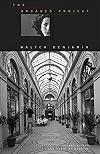
"To great writers," Walter Benjamin once wrote, "finished works weigh lighter than those fragments on which they labor their entire lives." Conceived in Paris in 1927 and still in progress when Benjamin fled the Occupation in 1940, The Arcades Project (in German, Das Passagen-Werk) is a monumental ruin, meticulously constructed over the course of thirteen years--"the theater," as Benjamin called it, "of all my struggles and all my ideas." Focusing on the arcades of nineteenth-century show more Paris-glass-roofed rows of shops that were early centers of consumerism--Benjamin presents a montage of quotations from, and reflections on, hundreds of published sources, arranging them in thirty-six categories with descriptive rubrics such as "Fashion," "Boredom," "Dream City," "Photography," "Catacombs," "Advertising," "Prostitution," "Baudelaire," and "Theory of Progress." His central preoccupation is what he calls the commodification of things--a process in which he locates the decisive shift to the modern age. The Arcades Project is Benjamin's effort to represent and to critique the bourgeois experience of nineteenth-century history, and, in so doing, to liberate the suppressed "true history" that underlay the ideological mask. In the bustling, cluttered arcades, street and interior merge and historical time is broken up into kaleidoscopic distractions and displays of ephemera. Here, at a distance from what is normally meant by "progress," Benjamin finds the lost time(s) embedded... show less
Lists
Awards


You May Also Like


Associated Authors
Statistics
- Works
- 517
- Also by
- 21
- Members
- 16,222
- Popularity
- #1,400
- Rating
- 4.0
- Reviews
- 116
- ISBNs
- 949
- Languages
- 27
- Favorited
- 72
