
E. Nesbit (1858–1924)
Author of The Railway Children
About the Author
E. Nesbit (1858-1924) wrote her first highly successful work for children, The Story of the Treasure Seekers, in 1899. Her many books for young readers, including The Magic City, Wet Magic, The Railway Children, Five Children and It, and The Enchanted Castle, gained her a popularity that has lasted show more for more than a century Peter Glassman is the owner of Books of Wonder, the New York City bookstore and publisher specializing in both new and old imaginative books for children show less
Image credit: Edith Nesbit
Series
Works by E. Nesbit
The Wouldbegoods: Being the Further Adventures of the Treasure Seekers (1901) 978 copies, 11 reviews
Five Children and It / The Phoenix and the Carpet / The Story of the Amulet (2014) 259 copies, 3 reviews
The Enchanted Castle/Five Children and It/The Phoenix and the Carpet/The Railway Children/The Story of the Amulet/The Story of the Treasure-Seekers/The Would-be-Goods (2004) 59 copies, 1 review
Edith Nesbit Ultimate Collection: 20 Novels & 200 Short Stories, Tales for Children & Poems (2016) 16 copies
The Children's Shakespeare: As You Like It, Hamlet, King Lear, a Midsummer Night's Dream, Pericles, Romeo & Juliet, (2002) 6 copies
Juanillo y las habichuelas magicas / Jack and the Beanstalk (Pinata) (Spanish Edition) (2015) 3 copies
The Golden Apple and Other Stories — Contributor — 3 copies
Tales from The Book of Dragons: The Book of Beasts and The Dragon Tamers (PlainTales Classics) (2009) 3 copies
Number 17 3 copies
Morning: Songs and Stetches 2 copies
Roses and May: Songs and Sketches 2 copies
En Jan I La Mongetera Magica . Material Auxiliar (Col.lecció Pinyata) (Catalan Edition) (2008) 2 copies
A MISSA DOS MORTOS — Author — 2 copies
The House of Silence 2 copies
The Haunted House 2 copies
Childrens Stories from Shakespeare by E. Nesbit and When Shakespeare Was a Boy by the Late Dr F. J. Furnivall (1912) 2 copies
Rosy Cheeks and Golden Ringlets 2 copies
The Railway Children 2 copies
Collected Works of Edith Nesbit 2 copies
The Enchanted Castle and The Story of the Treasure Seekers: Two wonderful books at the price of one (2017) 1 copy
The Railway Children - Foxton Readers Level 4 - 1300 Headwords (B1/B2) Graded ELT / ESL / EAL Readers (2018) 1 copy
The Collected Edith Nesbit: Book of Dragons, Grim Tales, & Fantasy Stories (Tenebray Press Classics) (2020) 1 copy
CINCO CRINÇAS E UM SEGREDO 1 copy
King Lear 1 copy
Five Children and It, mit 1 Audio-CD: Helbling Readers Red Series / Level 1 (A1) [Lingua inglese] (2017) 1 copy
A Cidade Mágica 1 copy
Star Of Bethlehem 1 copy
The Rainbow Queen 1 copy
Pilot, The 1 copy
Hurst of Hurstcote 1 copy
By Land and Sea 1 copy
In the spring time 1 copy
For Somebody's Darling 1 copy
In the Dark [short story] 1 copy
Rose Royal 1 copy
Pug Peter King of Mouseland. Marquis of Barkshire D.O.G. P.C. 1906 Knight of Order of the Golden Dog Collar... (1905) 1 copy
Books 1 copy
Accidental Magic 1 copy
Cat Tales 1 copy
The Pavilion 1 copy
Sweet Lavender 1 copy
Buyulu Dunya 1 copy
Tysiacha vernykh kopii 1 copy
Atlantis 1 copy
The Three Mothers 1 copy
Pug Peter: King of Mouseland 1 copy
Five Children and It 1 copy
Associated Works
The Haunted Looking Glass: Ghost Stories Chosen by Edward Gorey (1959) — Contributor — 748 copies, 7 reviews
Poems Bewitched and Haunted (Everyman's Library Pocket Poets Series) (2005) — Contributor — 231 copies
Enchanting Stories for Young Readers (Usborne Illustrated Classics) (1999) — Contributor — 177 copies
The Mammoth Book of Victorian and Edwardian Ghost Stories (1995) — Contributor — 174 copies, 4 reviews
Queens of the Abyss: Lost Stories from the Women of the Weird (2020) — Contributor — 153 copies, 4 reviews
Forbidden Journeys: Fairy Tales and Fantasies by Victorian Women Writers (1992) — Contributor — 141 copies
Tales Before Narnia: The Roots of Modern Fantasy and Science Fiction (2008) — Contributor — 126 copies, 3 reviews
Weird Women: Classic Supernatural Fiction by Groundbreaking Female Writers: 1852-1923 (2020) — Contributor — 107 copies, 2 reviews
Poems Between Women: Four Centuries of Love, Romantic Friendship, and Desire (1997) — Contributor — 96 copies, 1 review
Women's Weird: Strange Stories by Women, 1890-1940 (Handheld Classics) (2019) — Contributor — 87 copies, 2 reviews
Frankenstein Dreams: A Connoisseur's Collection of Victorian Science Fiction (2017) — Contributor — 75 copies, 5 reviews
The Darker Sex: Tales of the Supernatural and Macabre by Victorian Women Writers (2009) — Contributor — 55 copies, 2 reviews
Ladies of Fantasy: Two Centuries of Sinister Stories by the Gentle Sex (1975) — Contributor — 52 copies, 1 review
The Lifted Veil: The Book of Fantastic Literature by Women 1800-World War II (1806) — Contributor — 45 copies
The Feminine Future: Early Science Fiction by Women Writers (Dover Thrift Editions) (2015) — Contributor — 43 copies, 3 reviews
Alternative Alices: Visions and Revisions of Lewis Carroll's Alice Books : An Anthology (1997) — Contributor — 43 copies, 1 review
More Deadly than the Male: Masterpieces from the Queens of Horror (2019) — Cover designer — 39 copies
Mistresses of Mystery: Two Centuries of Suspense Stories by the Gentle Sex (1973) — Contributor — 34 copies, 1 review
Ladies of Horror: Two Centuries of Supernatural Stories by the Gentle Sex (1971) — Contributor — 28 copies
The Best of Both Worlds: An Anthology of Stories for All Ages (1968) — Contributor — 25 copies, 1 review
Homefront Horrors: Frights Away from the Front Lines, 1914-1918 (2016) — Contributor — 16 copies, 1 review
The Afterlife of Frankenstein: A Century of Mad Science, Automata, and Monsters Inspired by Mary Shelley, 1818-1918 (Clockwork Editions) (2023) — Contributor — 12 copies
Geschichten, Geschichten, Geschichten. ( Ab 8 J.). Zum Vorlesen und zum Selberlesen. (1988) — Contributor — 11 copies
Flora Curiosa: Cryptobotany, Mysterious Fungi, Sentient Trees, and Deadly Plants in Classic Science Fiction and Fantasy (2008) — Contributor — 7 copies
Enchanted Ideologies: A Collection of Rediscovered Nineteenth-Century English Moral Fairy Tales (2010) — Contributor — 6 copies
The Lady Chillers: Classic Ghost and Horror Stories by Women Authors (2014) — Contributor — 4 copies
The Wimbourne Book of Victorian Ghost Stories (Annotated): Volume 10 (2018) — Contributor — 3 copies
The Midnight Inkwell: Sinister Short Stories by Classic Women Writers (2023) — Contributor — 3 copies
Tagged
Common Knowledge
- Canonical name
- Nesbit, E.
- Legal name
- Tucker, Edith Nesbit Bland
- Other names
- Bland, Edith (maried name)
Bland, E. (pseudonym)
Bland, Fabian (pseudonym)
Bland, Edith (married name)
Tucker, Edith (married name) - Birthdate
- 1858-08-15
- Date of death
- 1924-05-04
- Gender
- female
- Education
- French convent
- Occupations
- novelist
poet
short story writer
children's book author
playwright - Organizations
- Fabian Society (co-founder)
- Short biography
- Edith Nesbit was born in London, England. She was educated at home and also attended a boarding school in France. In 1880, at age 19, she married Hubert Bland, a journalist and economist, with whom she had five children. The couple were both socialists and became co-founders of the Fabian Society in 1884. They published a couple of works together as Fabian Bland. After Bland's death, Edith remarried in 1917 to Thomas Terry Tucker, a marine engineer. Under the name E. Nesbit, she wrote and collaborated on more than 60 books of children's literature, including novels, collections of short stories, plays, poetry, and picture books. Among her best-known books are The Railway Children (1906), which has been adaptated into films several times; The Story of the Treasure Seekers (1898); and The Wouldbegoods (1899).
- Nationality
- UK
- Birthplace
- Kennington, Surrey, England, UK
- Places of residence
- Well Hall, Eltham, London, Middlesex, England, UK (1899-1921)
London, Middlesex, England, UK
New Romney, Kent, England, UK
France
Germany
Spain (show all 11)
Halstead, Kent, England, UK
Lewisham, London, Middlesex, England, UK
Lee, London, Middlesex, England, UK
Grove Park, London, Middlesex, England, UK
St. Mary's Bay, Dymchurch, Kent, UK - Place of death
- New Romney, Kent, England, UK
- Burial location
- St. Mary's in the Marsh, Kent, England, UK (churchyard)
- Associated Place (for map)
- England, UK
Members
Discussions
Folio Archives 456: The Adventures of the Five Children by E. Nesbit 2009 in Folio Society Devotees (November 2025)
Folio Archives 334: The Railway Children by E. Nesbit 1999 in Folio Society Devotees (August 2023)
Found: Book about girl, statue, ring and secret garden in Name that Book (June 2023)
THE DEEP ONES: "Man-Size in Marble" by E. Nesbit in The Weird Tradition (July 2022)
153. The Railway Children by E. Nesbit in Backlisted Book Club (March 2022)
Reviews

Edred and Elfrida Arden discover that Edred is the next Lord Arden and that they are to live in run-down old Arden Castle in this 1908 children's fantasy novel from the pen of E. Nesbit, the celebrated Edwardian author of such classics as The Enchanted Castle and The Five Children and It. Learning the story of the lost Arden treasure, and the tale of how the Mouldiwarp—the magical white mole who is also the emblem of the House of Arden—can be summoned to help them, the brother and sister show more embark on a quest through time, traveling to various periods of English history in search of the treasure. From Napoleonic times to the reign of Queen Anne, the days of the Gunpowder Plot to the Tudor period, they travel through time, having exciting adventures and meeting a number of fascinating characters, from Cousin Dick to the witch, Betty Lovell. Eventually they do find treasure, although perhaps not the one they were thinking of...
Although I have read and enjoyed a number of E. Nesbit's books, including The Enchanted Castle and her Psammead Trilogy, this was my first time reading The House of Arden, which I enjoyed immensely. Nesbit is an accomplished storyteller, and her prose is often amusing and invariably involving, making you care about her characters and their adventures. Edred and Elfrida are realistic children, and I appreciated their occasional quarrels, as well as their essentially loving bond. The time travel was fun, and I enjoyed each adventure, from Elfrida's experience with the highwayman to both children's time in the Tower of London. The magic of the Mouldiwarp was interesting, and I thought the use of the time-travel clocks was a nice touch. That being said, the concluding adventure of the book, in which Edred and Elfrida, spurred on by Cousin Dick,rescue their father and Uncle Jim from the lost South American civilization where they are being held captive , felt oddly out of place. We go from traveling to different periods in English history to traveling to a different region of the world during the same time period , and somehow it didn't quite work for me. I would have preferred for the children to find the actual treasure they sought, and for that concluding adventure to be a sequel, more fully fleshed out. As it was, not only did it feel incongruous, when tacked on to the end, but it also felt rather rushed and incompletely developed. Leaving that aside, I still enjoyed this one a great deal, and look forward both to the sequel, Harding's Luck, as well as to reading Edward Eager's The Time Garden, which was apparently inspired by this. show less
Although I have read and enjoyed a number of E. Nesbit's books, including The Enchanted Castle and her Psammead Trilogy, this was my first time reading The House of Arden, which I enjoyed immensely. Nesbit is an accomplished storyteller, and her prose is often amusing and invariably involving, making you care about her characters and their adventures. Edred and Elfrida are realistic children, and I appreciated their occasional quarrels, as well as their essentially loving bond. The time travel was fun, and I enjoyed each adventure, from Elfrida's experience with the highwayman to both children's time in the Tower of London. The magic of the Mouldiwarp was interesting, and I thought the use of the time-travel clocks was a nice touch. That being said, the concluding adventure of the book, in which Edred and Elfrida, spurred on by Cousin Dick,
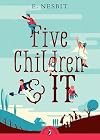
I wasn't actually expecting to like this book as much as I did. I wrongly presumed, since it was published over a hundred years ago, that it would be stuffy and rigid, or worse quaint and cute. The name E. Nesbit conjures images of very neat children in starched pinnies and hokey 1960s Disney adaptations. Anyway, I was wrong.
Nesbit has a large, quick and playful wit that is riddled throughout the story, with many humorous asides to the audience that absolutely must have inspired many of the show more children's writers who came after her, right into the modern day. The children often also act surprisingly like you would expect real children to act, and not at all like you would expect little Edwardians to behave. Well, obviously they do a bit, but still, it's all very enjoyable.
The only particularly bum note is the Red Indian chapter, which can't help but feel racist today. However, in its defence, when the wishes come true it is as the children would imagine it rather than true to life, so the fact that these Indians scalp people is just because that's what the children mistakenly believe, as they would in 1902 with their only knowledge coming from picture books.
One other possible weakness in the story is that despite there being five children, they do not have very defined personalities. Anthea is the most thoughtful, and Robert is the nastiest, but otherwise they are fairly interchangeable in each scene. It's also really weird that Nesbit refers to the children in plural as 'it' rather than 'they'. It just feels dehumanising. The reader might also get frustrated by how poorly every single one of their wishes turns out. Nesbit herself encourages the audience at one point to consider how you would have handled the situation better, because she knows that's exactly what you are doing each time. But it is a shame that they never get to have any fun throughout the entire book! It might have been nice to have had more of a finale, but I guess it wasn't that kind of story.
Anyway, it's an enjoyable, funny little fantasy adventure story for children and I would be interested to read more by E. Nesbit now that I know her writing style is so engaging. show less
Nesbit has a large, quick and playful wit that is riddled throughout the story, with many humorous asides to the audience that absolutely must have inspired many of the show more children's writers who came after her, right into the modern day. The children often also act surprisingly like you would expect real children to act, and not at all like you would expect little Edwardians to behave. Well, obviously they do a bit, but still, it's all very enjoyable.
The only particularly bum note is the Red Indian chapter, which can't help but feel racist today. However, in its defence, when the wishes come true it is as the children would imagine it rather than true to life, so the fact that these Indians scalp people is just because that's what the children mistakenly believe, as they would in 1902 with their only knowledge coming from picture books.
One other possible weakness in the story is that despite there being five children, they do not have very defined personalities. Anthea is the most thoughtful, and Robert is the nastiest, but otherwise they are fairly interchangeable in each scene. It's also really weird that Nesbit refers to the children in plural as 'it' rather than 'they'. It just feels dehumanising. The reader might also get frustrated by how poorly every single one of their wishes turns out. Nesbit herself encourages the audience at one point to consider how you would have handled the situation better, because she knows that's exactly what you are doing each time. But it is a shame that they never get to have any fun throughout the entire book! It might have been nice to have had more of a finale, but I guess it wasn't that kind of story.
Anyway, it's an enjoyable, funny little fantasy adventure story for children and I would be interested to read more by E. Nesbit now that I know her writing style is so engaging. show less

Determined to have some sort of Christmas celebration, the first year after their mother's death, the Bastable children get into quite a pickle in this hilarious holiday tale. With their father called away on a business matter, and maid/cook Matilda ignoring them for the most part, they are free to pursue their idea of making a real Christmas pudding. Their well-meaning but highly unusual methods make for a pudding that tastes of soap and hair oil. Then a terrible discovery is made: H.O. show more (Horace Octavius) misrepresented the situation to the wealthy neighbors from whom he obtained the money for the ingredients, making them believe they were giving charity to poor children. Convinced that the honor of the house of Bastable is at stake, Oswald insists that they must make sure the pudding goes to the intended recipient: the children of the poor. But will their "conscience pudding" be so uneasy to unload...?
I'm afraid that I covered myself in disgrace today, at the splendid Rose Reading Room of the New York Public Library, where I go to read those titles that cannot be taken out of the library, but must be perused on the premises. Reading E. Nesbit's The Conscience Pudding, a chapter from her novel The New Treasure Seekers, which is the third of her stories about the adventures of the Bastable children, I found myself continually reduced to helpless, hastily stifled giggling. I'm sure I must have appeared quite maniacal to some of my table mates, as I attempted to swallow my hilarity (to no avail), but I simply couldn't help myself. The scenes in which the children make the pudding! The one in which Oswald waxes poetic about family honor! Most of all, the one in which they inflict a slice of pudding on a hapless beggar, only to meet with an angry response - all of these had me snickering, chortling, laughing out loud. A delightful book, humorous and heartwarming, with a true child's perspective, this reminded me of everything I love about E. Nesbit's work! It's been many years since I read the Treasure Seekers series, and I don't recall them as vividly as some of the author's others, but based on this slim short story sample, I will have to revisit them.
It's worth noting that, in addition to its other splendid qualities, this title is illustrated by the marvelous Erik Blegvad, whose artwork is simply delightful. As the original novel from which the story is taken was illustrated by H.R. Millar (I believe), that makes hunting down this individual chapter worthwhile, if for no other reason than to peruse Blegvad's illustrations. Recommended to Blegvad fans, Nesbit fans, and anyone who enjoys humorous children's fiction. show less
I'm afraid that I covered myself in disgrace today, at the splendid Rose Reading Room of the New York Public Library, where I go to read those titles that cannot be taken out of the library, but must be perused on the premises. Reading E. Nesbit's The Conscience Pudding, a chapter from her novel The New Treasure Seekers, which is the third of her stories about the adventures of the Bastable children, I found myself continually reduced to helpless, hastily stifled giggling. I'm sure I must have appeared quite maniacal to some of my table mates, as I attempted to swallow my hilarity (to no avail), but I simply couldn't help myself. The scenes in which the children make the pudding! The one in which Oswald waxes poetic about family honor! Most of all, the one in which they inflict a slice of pudding on a hapless beggar, only to meet with an angry response - all of these had me snickering, chortling, laughing out loud. A delightful book, humorous and heartwarming, with a true child's perspective, this reminded me of everything I love about E. Nesbit's work! It's been many years since I read the Treasure Seekers series, and I don't recall them as vividly as some of the author's others, but based on this slim short story sample, I will have to revisit them.
It's worth noting that, in addition to its other splendid qualities, this title is illustrated by the marvelous Erik Blegvad, whose artwork is simply delightful. As the original novel from which the story is taken was illustrated by H.R. Millar (I believe), that makes hunting down this individual chapter worthwhile, if for no other reason than to peruse Blegvad's illustrations. Recommended to Blegvad fans, Nesbit fans, and anyone who enjoys humorous children's fiction. show less

Young Dickie Harding, an orphaned cripple living with an abusive aunt in the New Cross area of Edwardian London, falls in with the wandering burglar Mr. Beale in this engaging time-slip adventure from the celebrated E. Nesbit. Becoming fond of this adoptive father figure, he is unprepared when he himself is pressed into service in the robbing of a great house. Eventually finding his way back to London after this incident, he is carried back in time by magic, and finds himself in the shoes of show more Richard Arden, a son of wealth and privilege in the days of King James I. Although thoroughly enjoying his time in the past, especially the fact that he has the full use of both legs in this period, Dickie ends up traveling back and forth between times, always returning to the present in order to help Mr. Beale start a new life. Eventually he meets up with Elfrida and Edred Arden, two other young time travelers whose adventures were told in The House of Arden, and discovers that he has a connection to them, in both past and present. But where and when, in the end, does Dickie himself truly belong...?
Having greatly enjoyed The House of Arden, in which Dickie figures as a secondary character, I was excited to pick up Harding's Luck, and find out more about his back story. On the whole I was not disappointed, enjoying Dickie's adventures in both present and past. I thought the whole sub-plot with Mr. Beale, although highly unlikely—would a young boy have been able to guide and reform someone so many years his elder?—was actually quite moving. Nesbit was a member of the Fabian Society, which advocated democratic socialism, and her concern for the working class and poor is very evident in this part of the book. I also enjoyed encountering more of the magic moles of the Arden family—the Mouldiwarp (first encountered in the previous book), the Mouldierwarp and the Mouldiestwarp—and I thought the magic whereby Dickie got to the past, with its use of the moon seeds, was very interesting. I derived great satisfaction from the fact that thelost treasure of Arden was finally found—something that bothered me about the first book was the lack of resolution of this issue—and I was happy (although not surprised) to discover Dickie's relationship to Elfrida and Edred. All this being said, I wasn't entirely happy with the conclusion here, and felt it was something of a cop-out, so that Lord Arden didn't really have to surrender his position . I also found myself wondering about the fate of the real Richard Arden on King James I's time. Would the fact that Dickie decided to live in the past permanently mean that his life had been entirely stolen? Where and when would he be, while Dickie was living his life ? Leaving this critique aside, I still enjoyed this one, and would recommend it to anyone who had read and enjoyed The House of Arden. show less
Having greatly enjoyed The House of Arden, in which Dickie figures as a secondary character, I was excited to pick up Harding's Luck, and find out more about his back story. On the whole I was not disappointed, enjoying Dickie's adventures in both present and past. I thought the whole sub-plot with Mr. Beale, although highly unlikely—would a young boy have been able to guide and reform someone so many years his elder?—was actually quite moving. Nesbit was a member of the Fabian Society, which advocated democratic socialism, and her concern for the working class and poor is very evident in this part of the book. I also enjoyed encountering more of the magic moles of the Arden family—the Mouldiwarp (first encountered in the previous book), the Mouldierwarp and the Mouldiestwarp—and I thought the magic whereby Dickie got to the past, with its use of the moon seeds, was very interesting. I derived great satisfaction from the fact that the
Lists
Ambleside Books (9)
Put a Bird On It (1)
Unread books (1)
Five star books (1)
A Novel Cure (1)
Comfort Reads (1)
Overdue Podcast (1)
Books with Twins (1)
Folio Society (2)
Ambleside Year 8 (2)
Ambleside Year 5 (2)
4th Grade Books (3)
Out of Copyright (3)
Princess Tales (1)
Which house? (2)
Favorite Series (2)
Female Author (2)
Ambleside Y2 (2)
Awards


You May Also Like


Associated Authors
Statistics
- Works
- 295
- Also by
- 162
- Members
- 31,804
- Popularity
- #622
- Rating
- 3.9
- Reviews
- 492
- ISBNs
- 2,191
- Languages
- 27
- Favorited
- 91