
Eleanor H. Porter (1868–1920)
Author of Pollyanna
About the Author
Author Eleanor H. Porter was born in Littleton, New Hampshire on December 19, 1868. Before becoming a writer, she trained as a singer at the New England Conservatory of Music in Boston. She wrote numerous short stories, children's literature, and adult novels including Miss Billy; Miss Billy's show more Decision; Miss Billy - Married; Pollyanna; Pollyanna Grows Up; Just David; Dawn; and Little Pardner. She died on May 21, 1920. (Bowker Author Biography) show less
Series
Works by Eleanor H. Porter
Pollyanna : illustrated Abridged Children Classics English Novel with Review Questions (Illustrated Classics) (2021) 7 copies
Eleanor H. Porter’s Collected Works: Pollyanna, Pollyanna Grows Up, Miss Billy, Just David, Dawn, and More!(12 Novels and 20 Shorts Stories ) (2013) 2 copies
Pollyanna (Abridged) 2 copies
Polly Anna 1 copy
Rakkaus ratkaisee 1 copy
Works of Eleanor H. Porter 1 copy
The fortunate Mary 1 copy
POLLYANA MOÇA 1 copy
Associated Works
American Classics for Children: Little Women / Pollyanna / Rebecca of Sunnybrook Farm (2003) 9 copies
The Childrens Classics Collection (6 Full Cast Audio Dramas) (2012) — Author, some editions — 1 copy
Tagged
Common Knowledge
- Canonical name
- Porter, Eleanor H.
- Legal name
- Porter, Eleanor Emily Hodgman
- Other names
- Портер, Элинор
- Birthdate
- 1868-12-19
- Date of death
- 1920-05-21
- Gender
- female
- Education
- New England Conservatory of Music
- Occupations
- novelist
children's book author
short story writer
singer - Organizations
- Authors' League of America
Boston Authors Club
Brookline Morning Club - Short biography
- Eleanor H. Porter, née Hodgman, was born in Littleton, New Hampshire. She trained as a singer at the New England Conservatory of Music for several years. In 1892, she married John L. Porter, a businessman, and moved to Massachusetts. She continued as a singer in concerts and church choirs but by 1901, had given it up to become a writer. Her short stories began appearing in magazines and newspapers. Her debut novel, Cross Currents, was published in 1907. Her most famous work was Pollyanna (1913), a bestseller that was followed by a sequel, Pollyanna Grows Up (1915).
Pollyanna was adapted into a Broadway play in 1916 and then into a 1920 silent film starring Mary Pickford; another film version was released in 1960. It also launched a vast industry of related books and products.
Mrs. Porter's other bestsellers were Just David (1916), The Road to Understanding (1917), Oh, Money! Money! (1918), Dawn (1919), and Mary-Marie (1920). - Nationality
- USA
- Birthplace
- Littleton, New Hampshire, USA
- Places of residence
- Chattanooga, Tennessee, USA
Littleton, New Hampshire, USA
Cambridge, Massachusetts, USA - Place of death
- Cambridge, Massachusetts, USA
- Burial location
- Mount Auburn Cemetery, Cambridge, Massachusetts, USA
- Map Location
- New Hampshire, USA
Members
Reviews

Have you ever read a book you loved in childhood, but the details had grown fuzzy to time, and discovered what may be a linchpin of your worldview?
I have just had that experience with Pollyanna. To be fair, my optimism and silver-lining searches weren't so much part of how i approached the world as a young adult, but it was always a sign that my mental health medication was working: i couldn't help but find something to be glad about, even when times were dire. I suppose, too, it's about show more hope and perseverance. And it's so much easier to appreciate little things now that I'm so sick and disabled: the pleasure of a good meal, the sound of birds calling, the way sunlight falls through the trees. Like Pollyanna, I discovered the joy of prisms in my sickroom, and the ephemeral flames of rainbows cast about.
As a child, I didn't understand why the people of the town always cried when they learned of Pollyanna's game. I didn't understand the digs at the Ladies' Aiders who were more concerned with being seen as doing good than with actually helping the needy in the community. It's a wonder that the tearful folks didn't make the connection with her story and their town's poor.
I can't but compare Pollyanna's Glad Game to the advice Cousin Helen gives Katy in What Katy Did when, like Pollyanna, that girl became paralyzed in an accident. Both have a lot more meaning and relevance to my life now that I'm disabled and bed-tethered, whereas maybe they seemed a bit flippant or minimizing of disability before. Of course, both were written and first popular in times when disabled people were hidden away, before curb cuts and motorized wheelchairs. But when viewed in that context, and acknowledging that there is grief of what is lost when one becomes disabled—the stories and the advice are comforting and helpful. show less
I have just had that experience with Pollyanna. To be fair, my optimism and silver-lining searches weren't so much part of how i approached the world as a young adult, but it was always a sign that my mental health medication was working: i couldn't help but find something to be glad about, even when times were dire. I suppose, too, it's about show more hope and perseverance. And it's so much easier to appreciate little things now that I'm so sick and disabled: the pleasure of a good meal, the sound of birds calling, the way sunlight falls through the trees. Like Pollyanna, I discovered the joy of prisms in my sickroom, and the ephemeral flames of rainbows cast about.
As a child, I didn't understand why the people of the town always cried when they learned of Pollyanna's game. I didn't understand the digs at the Ladies' Aiders who were more concerned with being seen as doing good than with actually helping the needy in the community. It's a wonder that the tearful folks didn't make the connection with her story and their town's poor.
I can't but compare Pollyanna's Glad Game to the advice Cousin Helen gives Katy in What Katy Did when, like Pollyanna, that girl became paralyzed in an accident. Both have a lot more meaning and relevance to my life now that I'm disabled and bed-tethered, whereas maybe they seemed a bit flippant or minimizing of disability before. Of course, both were written and first popular in times when disabled people were hidden away, before curb cuts and motorized wheelchairs. But when viewed in that context, and acknowledging that there is grief of what is lost when one becomes disabled—the stories and the advice are comforting and helpful. show less
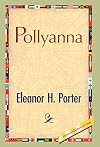
In fairness, Pollyanna was published in 1913 when cheery orphans were all the rage. It’s easy to see how some might scowl at this most cock-eyed of all optimists, 11-year-old Pollyanna Whittier, with her ridiculous Glad Game and previous life of poverty that depended on the Ladies’ Aid to keep her dressed and supplied. I’m sure that author Eleanor Porter thought of her classic children’s novel as “an improving book.”
But what if we instead imagine Pollyanna as a sly, manipulative show more (if still good-hearted) girl who knows just what to say to get back at her hard-hearted, snobbish Aunt Polly Harrington? Recasting punishments as benevolences really put Aunt Polly on the back foot. What point is banishing a child to the kitchen to dine on bread and milk with hired girl Nancy as a punishment, for instance, when Pollyanna makes it plain that she enjoys the company of the lower classes and prefers dining in the kitchen to silent, tedious dinners in the dining room with taciturn Aunt Polly? Or if she works on wealthy John Pendleton knowing that someday his riches can help someone in need? Once we look at the book in that light, it really turns into a fun romp. Nothing like dealing with “improving” through satire and wiles.
Even without that outlook, Pollyanna is much less saccharine than I would have expected. I’m optimistic and cheery by nature, so it might just be me. At the same time, Porter frequently points the hypocrisy of so-called Christians who, even at the turn of the 20th century, cared more about appearances and their own comfort than about what Jesus would want. That’s why I’m interested in reading the sequel, Pollyanna Grows Up. show less
But what if we instead imagine Pollyanna as a sly, manipulative show more (if still good-hearted) girl who knows just what to say to get back at her hard-hearted, snobbish Aunt Polly Harrington? Recasting punishments as benevolences really put Aunt Polly on the back foot. What point is banishing a child to the kitchen to dine on bread and milk with hired girl Nancy as a punishment, for instance, when Pollyanna makes it plain that she enjoys the company of the lower classes and prefers dining in the kitchen to silent, tedious dinners in the dining room with taciturn Aunt Polly? Or if she works on wealthy John Pendleton knowing that someday his riches can help someone in need? Once we look at the book in that light, it really turns into a fun romp. Nothing like dealing with “improving” through satire and wiles.
Even without that outlook, Pollyanna is much less saccharine than I would have expected. I’m optimistic and cheery by nature, so it might just be me. At the same time, Porter frequently points the hypocrisy of so-called Christians who, even at the turn of the 20th century, cared more about appearances and their own comfort than about what Jesus would want. That’s why I’m interested in reading the sequel, Pollyanna Grows Up. show less

The name Pollyanna has become synonymous with an overly-cheerful person, but the original story isn't nearly as irksome as the name's co notations suggest. I was completely charmed by this book. A few years ago I read Heidi and the main character came across as saccharine sweet and far too optimistic. So despite growing up with two separate film versions of Pollyanna (including the famous Hayley Mills version) I was worried that this one would be all sugar and no substance. It wasn't that show more way at all!
Pollyanna's joy is sincere and she's been through a hard life already at the tender age of 12. She moves in with her strict aunt after becoming an orphan. Her minister father taught her to find something to be glad about even in the most dire circumstance. Her "glad game" is not pretentious, it's just her way of dealing with life and it's her earnestness that sells the spirit of the book.
Every person she meets is touched by her unbridled enthusiasm. What a beautiful way to live your life. No matter what their circumstances, each person who crossed her path found that their world was a little brighter because of her presence. How many of us can say that?
BOTTOM LINE: A sweet gem that I can't wait to share with my own daughter one day. We could all learn a little something from Pollyanna.
“What men and women need is encouragement. Their natural resisting powers should be strengthened, not weakened ... Instead of always harping on a man's faults, tell him of his virtues. Try to pull him out of his rut ... Hold up to him his better self, his real self that can dare and do and win out! ... People radiate what is in their minds and in their hearts.” show less
Pollyanna's joy is sincere and she's been through a hard life already at the tender age of 12. She moves in with her strict aunt after becoming an orphan. Her minister father taught her to find something to be glad about even in the most dire circumstance. Her "glad game" is not pretentious, it's just her way of dealing with life and it's her earnestness that sells the spirit of the book.
Every person she meets is touched by her unbridled enthusiasm. What a beautiful way to live your life. No matter what their circumstances, each person who crossed her path found that their world was a little brighter because of her presence. How many of us can say that?
BOTTOM LINE: A sweet gem that I can't wait to share with my own daughter one day. We could all learn a little something from Pollyanna.
“What men and women need is encouragement. Their natural resisting powers should be strengthened, not weakened ... Instead of always harping on a man's faults, tell him of his virtues. Try to pull him out of his rut ... Hold up to him his better self, his real self that can dare and do and win out! ... People radiate what is in their minds and in their hearts.” show less

Originally published in 1913, this tale of a young orphan girl who comes to live with her aunt in a small Vermont town, transforming everyone she meets with her "glad game," is one of those classic stories featuring a hero or heroine whose name has become a byword for a particular quality or idea. Just as we speak of someone who refuses to act maturely as having a "Peter Pan complex," or describe a rags-to-riches transformation as a "Cinderella story," so too do we refer to someone with a show more tendency toward optimism as a "Pollyanna." Before we had an entire industry of self-help gurus advising us of the power of positive thinking, we had Eleanor H. Porter's Pollyanna, which follows the story of the eponymous Pollyanna Whittier, and her "overwhelming, unquenchable gladness for everything that has ever happened or is going to happen."
Arriving in Beldingsville, Vermont from the western prairie, where her missionary father has just recently died, Pollyanna eagerly anticipates living with her Aunt Polly Harrington, for whom she is (partially) named. Although her reception is far from ideal - stern Aunt Polly looks upon her young niece as a duty, rather than a joyful addition to her well-to-do household - she perseveres in looking on the bright side of matters, viewing punishments as rewards, and laughing off many of the cold rebuffs she receives. Finding friendship elsewhere, Pollyanna teaches everyone in town, from the Harrington housemaid, Nancy, to reclusive neighbor John Pendleton, how to play the "game" - in which the player looks for something to be glad about in every occurrence in their lives - taught to her by her father as a young girl. When Pollyanna is struck by an automobile, and loses the use of her legs, the "glad girl" suddenly finds that she can no longer play the game, and that it is she who needs a little cheering up.
Chosen as our February selection over in The L.M. Montgomery Book Club to which I belong, where we sometimes like to read book that are "in the spirit" of L.M. Montgomery, Pollyanna is one of those classics of which I have long been aware, but which I have never happened to pick up. Being familiar with the general story, I have always associated it in my mind with the kind of orphan narrative to be found in books like Anne of Green Gables, or Rebecca of Sunnybrook Farm. I'm very glad it was chosen by the club, as this has given me the push I needed to finally read it, thereby confirming my impression of it as being akin to L.M. Montgomery and Kate Douglas Wiggin's work. That said, although I found it readable enough (I got through most of it in one sitting), it wasn't quite as appealing as I'd expected it to be, and I thought that the charm sometimes wore a little thin. I appreciate the message of trying to find the good around us, but discovered that Pollyanna was just a little too positive for my taste - so positive that I started to become irritated with her. There was a point, midway through the book, when I felt that if I had to read one more scene involving Pollyanna laughing off something nasty, I would tear my hair out!
I vacillated quite a bit between a two and three star rating with this one, trying to balance my irritation with the heroine, and my overall engagement in the story. I can't deny that I enjoyed reading Pollyanna, despite my irritation, so I rounded up. Of course, I'm not sure I enjoyed it enough to hunt down the sequels any time soon. show less
Arriving in Beldingsville, Vermont from the western prairie, where her missionary father has just recently died, Pollyanna eagerly anticipates living with her Aunt Polly Harrington, for whom she is (partially) named. Although her reception is far from ideal - stern Aunt Polly looks upon her young niece as a duty, rather than a joyful addition to her well-to-do household - she perseveres in looking on the bright side of matters, viewing punishments as rewards, and laughing off many of the cold rebuffs she receives. Finding friendship elsewhere, Pollyanna teaches everyone in town, from the Harrington housemaid, Nancy, to reclusive neighbor John Pendleton, how to play the "game" - in which the player looks for something to be glad about in every occurrence in their lives - taught to her by her father as a young girl. When Pollyanna is struck by an automobile, and loses the use of her legs, the "glad girl" suddenly finds that she can no longer play the game, and that it is she who needs a little cheering up.
Chosen as our February selection over in The L.M. Montgomery Book Club to which I belong, where we sometimes like to read book that are "in the spirit" of L.M. Montgomery, Pollyanna is one of those classics of which I have long been aware, but which I have never happened to pick up. Being familiar with the general story, I have always associated it in my mind with the kind of orphan narrative to be found in books like Anne of Green Gables, or Rebecca of Sunnybrook Farm. I'm very glad it was chosen by the club, as this has given me the push I needed to finally read it, thereby confirming my impression of it as being akin to L.M. Montgomery and Kate Douglas Wiggin's work. That said, although I found it readable enough (I got through most of it in one sitting), it wasn't quite as appealing as I'd expected it to be, and I thought that the charm sometimes wore a little thin. I appreciate the message of trying to find the good around us, but discovered that Pollyanna was just a little too positive for my taste - so positive that I started to become irritated with her. There was a point, midway through the book, when I felt that if I had to read one more scene involving Pollyanna laughing off something nasty, I would tear my hair out!
I vacillated quite a bit between a two and three star rating with this one, trying to balance my irritation with the heroine, and my overall engagement in the story. I can't deny that I enjoyed reading Pollyanna, despite my irritation, so I rounded up. Of course, I'm not sure I enjoyed it enough to hunt down the sequels any time soon. show less
Lists
1970s (1)
Ambleside Books (1)
Awards


You May Also Like


Associated Authors
Statistics
- Works
- 51
- Also by
- 6
- Members
- 9,325
- Popularity
- #2,584
- Rating
- 3.8
- Reviews
- 129
- ISBNs
- 788
- Languages
- 25
- Favorited
- 4