
Lois Lenski (1893–1974)
Author of Indian Captive: The Story of Mary Jemison
About the Author
Lois Lenski was born in Springfield, Ohio on October 14, 1893. After graduating from Ohio State University, she moved to New York to study art. She continued her studies in London, England and illustrate children's books written by others. She returned to the United States in 1921 and became an show more author and illustrator. In 1927, she published two books about her own childhood entitled Skipping Village and A Little Girl of 1900. She wrote nearly 100 books for children and young adults during her lifetime including the Mr. Small series, Bayou Suzette, Prairie School, Boomtown Boy, Judy's Journey, and High-Rise Secret. She received a Newbery Medal in 1946 for Strawberry Girl. She died on September 11, 1974 at the age of 80. (Bowker Author Biography) show less
Series
Works by Lois Lenski
When I grow up 3 copies
Lois Lenski's Mother Goose 2 copies
PAPA PETIT, PAPA SMALL. 2 copies
Das kleine Auto 1 copy
Drei kleine schwestern 1 copy
Small - The Little Train 1 copy
Davy: Animals for Me 1 copy
Read-to Me Storybook 1 copy
Small - The Little Family 1 copy
Small - Papa Small 1 copy
Small - More Mr. Small 1 copy
I Like Snow 1 copy
Davy: A Dog Came to School 1 copy
Small - Cowboy Small 1 copy
Up to six 1 copy
Davy and Dog 1 copy
The Washington picture-book 1 copy
Florida, My Florida 1 copy
Living with Others 1 copy
Associated Works
Beat the Drum, Independence Day Has Come: Poems for the Fourth of July (1977) — Contributor — 28 copies, 1 review
Newbery Awards Library A Wrinkle in Time, The Twenty-One Balloons, Strawberry Girl, Thimble Summer, & Roller Skates (1978) 16 copies
A Hat-Tub Tale; or, On the Shores of the Bay of Fundy (1928) — Illustrator, some editions — 5 copies
Tagged
Common Knowledge
- Canonical name
- Lenski, Lois
- Legal name
- Covey, Lois Lenore Lenski
- Birthdate
- 1893-10-14
- Date of death
- 1974-09-11
- Gender
- female
- Education
- Ohio State University (BS | 1915)
Art Students League of New York
School of Industrial Art
Westminster School of Art - Occupations
- children's book author
children's book illustrator
painter
poet - Organizations
- Lois Lenski Covey Foundation
- Awards and honors
- Regina Medal (1969)
- Relationships
- Lenski, R.C.H. (father)
Covey, Arthur (husband) - Short biography
- Lois Lenski was one of five children born to a Prussian immigrant father and a teacher mother in Ohio. She grew up in a rural community west of Springfield, and many of her fondest childhood memories were of life in this small town, according to her autobiograph. Lois was skilled at drawing, often copying pictures from books and magazines.
She attended Ohio State University, intending to become a teacher. After graduation, at the urging of her art professors, she moved to New York City to study at the Art Students League.
She took courses and supported herself with jobs such as lettering and painting greeting cards and drawing for fashion ads. In 1920, she traveled to London and Italy to study and work.
In 1921, shortly after returning from her travels, Lenski married Arthur Covey, an artist. She spent much of her early career as an illustrator of children's books, and then began to write her own stories to accompany her drawings. She published her first book, Skipping Village, in 1927. Lenski won the Newbery Honor for several of her books and the Newbery Medal in 1946. She was a prolific author who produced many regional series of books as well as character-based series. - Nationality
- USA
- Birthplace
- Springfield, Ohio, USA
- Places of residence
- Springfield, Ohio, USA
Anna, Ohio, USA
Harwinton, Connecticut, USA
Tarpon Springs, Florida, USA - Place of death
- Tarpon Springs, Florida, USA
- Associated Place (for map)
- USA
Members
Reviews

I think I understand why this one may be hard to find, and suspect it wasn't one of Lenski's most popular offerings, although I loved it, mostly. It is the story of Suzette Durand, daughter of a disabled fisherman living with her extended family on Bayou Barataria, south of New Orleans. Papa Jules was shot in the back by one of the Broussards on a hunt 2 years before this story begins, and he has been laid up ever since (although Maman chides him for a lay-about, telling him it's time he got show more back out there and earned some money to feed the family). The incident initiated a feud between the Durands and the Broussards, with the usual inevitable loss of childhood friendships and a forbidden romance. Still, nothing about this story is especially predictable. An orphaned Houma Indian girl, Marteel, comes in and out of the picture, forging a friendship with Suzette that her mother and grandmother are vehemently opposed to. After a relentless spell of heavy rain, a crevasse in the levee results in widespread flooding that sends the residents of Suzette's Little Village to the only high ground there is---an ancient Indian burial mound. (I suspect this is a reference to the great Mississippi flood of 1927, the same one Faulkner used in his "Old Man".) Gently, without hitting us over the head, Lenski shows how prejudice exists at all levels, how loyalty is supposed to work, how pre-existing notions about "the other" are usually wrong, and how they can be overcome. My biggest reservation lies in the ending. Despite showing us repeatedly that she respects the culture and lifestyle of the Houma Indians who are Marteel's people and bringing her characters around to do the same, Lenski eventually has Marteel happily declaring that she is a "white girl now" as she is finally adopted wholeheartedly into the Durand family. As Walker Percy has said, "it is hardly proper to judge a (wo)man's views of the issues of (her) day" by the ideological standards of another time. For 1943, when this book was written, Lenski's treatment of Marteel, her habits and her beliefs, must surely be counted as liberal. Nevertheless, that ending sets it firmly in its time when it was presumed that everyone would prefer to be white. The story has tender moments, excitement, suspense, humor and wisdom woven in well. I'm afraid it makes little allowance for what I would assume would have been the average young reader's total lack of experience with the Cajun dialect. Any dialect is difficult to render on the page, but if the reader has a frame of reference, a decent effort will make the language work. Having lived in Louisiana, and been immersed in local culture, I can hear this unique patois in my head; Ah kin talk it putty good, too, me. But for anyone who can't, this book, I'm afraid, would be a real chore to read, although Lenski's effort is better than decent. Young readers, even today, I'm sure, would find it fairly baffling. And that's a shame. I'm thrilled to have added this to my Louisiana collection. I think it's a treasure, albeit one that may not be fully appreciated by its target audience. show less
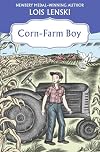
I'm a small-scale farmer reading this book in 2023, so I am reading with a very different lens than the young readers of the 1950s and 60s for whom this book was written. I gave the book three stars because I understood it to be an honest and direct description of the ups and downs on a 1950s Midwestern farm. It is episodic with an engaging pace. However, it was a harrowing read! There were numerous farm accidents and near-misses, several of which involved small children. This was the era show more when tractors and tractor-powered implements were still relatively new on many farms and basic concepts of farm and tractor safety were still being developed. Although the protagonist loves and tries to help and doctor animals, there were also several descriptions of casual mistreatment of animals (pets, livestock and wild animals) and attempts to hold wild animals briefly as pets. The book portrays traditional gender and family roles of the time but mentions that the mother and older sister have interests and abilities outside the farmhouse. There's an interesting side plot about tension between the protagonist's father and uncle (and neighboring farmers) about farm management practices and styles. As can be expected for a book written in this era, there are no non-white characters in the book (there is a brief mention of farmers from an Indian reservation selling their livestock in Sioux City) and no acknowledgement that white settlers displaced American Indians from Iowa less than 100 years prior.
I opted not to pass this book on to my middle-grade kids, but I think I will seek out other books in Lois Lenski's regional series to further explore her well-researched snapshots of mid-century American life from the perspective of children. show less
I opted not to pass this book on to my middle-grade kids, but I think I will seek out other books in Lois Lenski's regional series to further explore her well-researched snapshots of mid-century American life from the perspective of children. show less

Twelve-year-old Mary Jemison took her peaceful days on her family's farm in eastern Pennsylvania for granted. But on a spring day in 1758, something happened that changed her life forever. A band of warriors invaded the house and took the Jemison family captive. Mary was separated from her parents and brothers and sister. She traveled with the Indians to southern Ohio and later to a Seneca village on the Genesee River in what is now western New York.
Mary's new life was not easy. She missed show more her family terribly, and she was unaccustomed to Seneca ways. Several times she even tried to run away. But the Indians were kind to her and taught her many things about the earth, its plants, and its creatures. She became a sister to animals and to all growing things. Then Mary was finally given the chance to return to the world of white men. But she had also become a sister to the Indians. How could she leave them?
Based on a true story, here is the unforgettable tale of the legendary "White Woman of the Genesee." show less
Mary's new life was not easy. She missed show more her family terribly, and she was unaccustomed to Seneca ways. Several times she even tried to run away. But the Indians were kind to her and taught her many things about the earth, its plants, and its creatures. She became a sister to animals and to all growing things. Then Mary was finally given the chance to return to the world of white men. But she had also become a sister to the Indians. How could she leave them?
Based on a true story, here is the unforgettable tale of the legendary "White Woman of the Genesee." show less
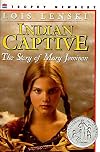
It might be easy to assume that this book is dated because of its subject and age, but except for calling the Seneca "Indians", this book has stood the test of time amazingly well. The detail about the Seneca's way of life is captivating, and I'm impressed with the depiction of Mary's struggle between the life she was born to and the life she chooses, with the Seneca. It has to be hard for people to understand since she chose to stay with the people that had killed her family, but as she show more said, "War killed her family." show less
Lists
Awards


You May Also Like


Associated Authors
Statistics
- Works
- 133
- Also by
- 26
- Members
- 15,235
- Popularity
- #1,498
- Rating
- 4.0
- Reviews
- 208
- ISBNs
- 273
- Languages
- 5
- Favorited
- 10