
About the Author
Simon Winchester was born in London, England on September 28, 1944. He read geology at St. Catherine's College, Oxford. After graduation in 1966, he joined a Canadian mining company and worked as field geologist in Uganda. The following year he decided to become a journalist. His first reporting show more job was for The Journal, Newcastle upon Tyne. In 1969, he joined The Guardian and was named Britain's Journalist of the Year in 1971. He also worked for the Daily Mail and the Sunday Times before becoming a freelancer. He is the author of numerous books including In Holy Terror, The River at the Center of the World, The Alice Behind Wonderland, The Professor and the Madman: A Tale of Murder, Insanity, the Making of the Oxford English Dictionary, and.Exactly: How Precision Engineers Created the Modern World. In 2006, he was made an Officer of the Order of the British Empire for services to journalism and literature. (Bowker Author Biography) show less
Works by Simon Winchester
The Professor and the Madman: A Tale of Murder, Insanity, and the Making of the Oxford English Dictionary (1998) 13,031 copies, 312 reviews
The Map that Changed the World: The Tale of William Smith and the Birth of a Science (2001) — Author — 4,249 copies, 89 reviews
The Meaning of Everything: The Story of the Oxford English Dictionary (2003) — Narrator, some editions — 3,233 copies, 59 reviews
A Crack in the Edge of the World: America and the Great California Earthquake of 1906 (2005) 2,478 copies, 76 reviews
The Man Who Loved China: The Fantastic Story of the Eccentric Scientist Who Unlocked the Mysteries of the Middle Kingdom (2008) 1,785 copies, 75 reviews
Atlantic: Great Sea Battles, Heroic Discoveries, Titanic Storms,and a Vast Ocean of a Million Stories (2010) 1,508 copies, 61 reviews
The Perfectionists: How Precision Engineers Created the Modern World (2018) — Author & Narrator — 1,069 copies, 21 reviews
The Men Who United the States: America's Explorers, Inventors, Eccentrics and Mavericks, and the Creation of One Nation, Indivisible (2013) 982 copies, 28 reviews
The River at the Center of the World: A Journey Up the Yangtze, and Back in Chinese Time (1996) 805 copies, 16 reviews
Pacific: Silicon Chips and Surfboards, Coral Reefs and Atom Bombs, Brutal Dictators, Fading Empires, and the Coming Collision of the World's Superpowers (2015) 795 copies, 25 reviews
Knowing What We Know: The Transmission of Knowledge: From Ancient Wisdom to Modern Magic (2023) 577 copies, 10 reviews
When the Sky Breaks: Hurricanes, Tornadoes, and the Worst Weather in the World (Smithsonian) (2017) 51 copies, 4 reviews
The River at the Centre of the World; The Surgeon of Crowthorne; The Map That Changed the World (2004) 24 copies
Aerial Hong Kong 2 copies
The Fatal Equation 2 copies
The Classic Age 1 copy
"Word Imperfect" 1 copy
Zimbabwe 1 copy
Associated Works
My Bookstore: Writers Celebrate Their Favorite Places to Browse, Read, and Shop (2012) — Contributor — 617 copies, 16 reviews
The Condé Nast Traveler Book of Unforgettable Journeys: Great Writers on Great Places (2007) — Contributor — 283 copies, 5 reviews
Cascadia's Fault: The Coming Earthquake and Tsunami that Could Devastate North America (2011) — Introduction — 160 copies, 11 reviews
Worlds to Explore: Classic Tales of Travel and Adventure from National Geographic (2006) — Introduction, some editions — 118 copies, 1 review
The Dylan Companion: A Collection of Essential Writing About Bob Dylan (1990) — Contributor, some editions — 103 copies
Unsavory Elements: Stories of Foreigners on the Loose in China (2013) — Contributor — 31 copies, 1 review
MHQ: The Quarterly Journal of Military History — Autumn 1994 (1994) — Author "Eternal Argument" and "Two Centuries of the IRA" — 15 copies
MHQ: The Quarterly Journal of Military History — Autumn 1996 (1996) — Author "The Escape of the Amethyst" — 13 copies
Tagged
Common Knowledge
- Canonical name
- Winchester, Simon
- Birthdate
- 1944-09-28
- Gender
- male
- Education
- St. Catherine's College, Oxford University (BA|1966)
- Occupations
- journalist
author
broadcaster
geologist - Organizations
- The Guardian
Condé Nast Traveler
National Geographic
Smithsonian - Awards and honors
- Order of the British Empire (Officer, 2006)
Lawrence J. Burpee Medal (2016)
Royal Canadian Geological Society (Fellow) - Agent
- Bill Hamilton
Peter Matson
Jennifer Hengen - Relationships
- Sato, Setsuko (wife)
- Nationality
- UK
USA (naturalised 2011) - Birthplace
- London, Middlesex, England, UK
- Places of residence
- Berkshire Hills, Massachusetts, USA
Scotland, UK
Uganda
India
New York, New York, USA - Map Location
- USA
Members
Discussions
The Man Who Loved China group read in 75 Books Challenge for 2014 (December 2014)
Reviews
The Men Who United the States: America's Explorers, Inventors, Eccentrics and Mavericks, and the Creation of One Nation, Indivisible by Simon Winchester
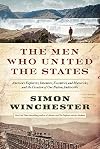
This sets out to tell the story of the eccentric/cunning/courageous explorers, inventors and capitalists that physically connected the original settlements of the East Coast to the “new world” of America’s west coast, in the process (or so Winchester contends) laying the foundation for a cohesive national identity. And while I'm not sure he manages to pull the last bit off (building a cohesive national identity requires more than geographic proximity and physical interaction), this show more lapse in no way detracts from what Winchester *has* managed to accomplish here: a breezy, relatable historical survey full of fascinating people, interesting anecdotes, and dozens of those "Wow, I never knew that!" moments that make you reconsider stuff you thought you knew.
The first section focuses on the folks who were the first to explore and map the western territories. Not without reason, this section is dominated by the Lewis & Clark expedition, but there's also a wealth of interesting content about how our Founding Fathers promoted the novel concept of "selling land" to raise the money required to fund their new nation's many financial needs. (Ever wonder where that $15M we paid to France for the Louisiana Purchase came from?)
The next section focuses on the scientists who mapped the geography of the U.S. territories. After a fascinating intro in which he correlates the location of various major east coast cities with the location of a major fault line (early explorers would move upstream until, thwarted by rapids caused by the fault line, they would stop and build their settlement), the narrative moves west, focusing on the barriers that geography placed in the way of settlers, before ending in an absorbing account of the quirky individuals (including John Wesley Powell) who led the four great geological surveys that mapped the vast expanses of land between Yellowstone to the north and the Grand Canyon to the south.
The third section focuses on the role that rivers and canals played in uniting the U.S., not just physically and commercially, but culturally. Fascinating to learn, for instance, that when settlers started moving to the other side of the Appalachians, George Washington was so worried that they would align themselves with the French, Spanish, and Brits that dominated the area, he argued that building a canal breaching the Appalachians was required as a matter of existential urgency. Also plenty here about the Erie Canal and the surprisingly fickle Mississippi River.
The fourth section explores the genesis of roads and railroads, with special attention paid to the first transcontinental rail line and the genesis of the interstate road system, inspired by a disaster-prone transcontinental expedition that Eisenhower experienced as a young officer. But there’s also a charming bit about the maverick pilot who was the first to fly coast to coast – a trip that took 12 weeks to complete … after which he accomplished his return trip to the east coast via train in only 5 days!
The final section is devoted to exploring how the two coasts of the U.S. came to be crisscrossed by telegraphs, telephones, television, and wireless communications networks. Lots of interesting info here: how rural areas came to be electrified, the war of the currents, the first ham radios, etc.
I was one of the kids that paid attention in history class, and I've read quite a bit of history since, but the format that Winchester has adopted here - basically retelling the story of the years between 1700 and today through these five different "lenses" - allows the author to include a lot more "connective tissue" than one might find in a book focused on any one or two of these themes. Yes, most of this was content I'd encountered in bits and pieces elsewhere, but definitely felt like this helped me to appreciate the width and breadth of American innovation/curiosity/movement, as well as working as a lively and pleasurable read. show less
The first section focuses on the folks who were the first to explore and map the western territories. Not without reason, this section is dominated by the Lewis & Clark expedition, but there's also a wealth of interesting content about how our Founding Fathers promoted the novel concept of "selling land" to raise the money required to fund their new nation's many financial needs. (Ever wonder where that $15M we paid to France for the Louisiana Purchase came from?)
The next section focuses on the scientists who mapped the geography of the U.S. territories. After a fascinating intro in which he correlates the location of various major east coast cities with the location of a major fault line (early explorers would move upstream until, thwarted by rapids caused by the fault line, they would stop and build their settlement), the narrative moves west, focusing on the barriers that geography placed in the way of settlers, before ending in an absorbing account of the quirky individuals (including John Wesley Powell) who led the four great geological surveys that mapped the vast expanses of land between Yellowstone to the north and the Grand Canyon to the south.
The third section focuses on the role that rivers and canals played in uniting the U.S., not just physically and commercially, but culturally. Fascinating to learn, for instance, that when settlers started moving to the other side of the Appalachians, George Washington was so worried that they would align themselves with the French, Spanish, and Brits that dominated the area, he argued that building a canal breaching the Appalachians was required as a matter of existential urgency. Also plenty here about the Erie Canal and the surprisingly fickle Mississippi River.
The fourth section explores the genesis of roads and railroads, with special attention paid to the first transcontinental rail line and the genesis of the interstate road system, inspired by a disaster-prone transcontinental expedition that Eisenhower experienced as a young officer. But there’s also a charming bit about the maverick pilot who was the first to fly coast to coast – a trip that took 12 weeks to complete … after which he accomplished his return trip to the east coast via train in only 5 days!
The final section is devoted to exploring how the two coasts of the U.S. came to be crisscrossed by telegraphs, telephones, television, and wireless communications networks. Lots of interesting info here: how rural areas came to be electrified, the war of the currents, the first ham radios, etc.
I was one of the kids that paid attention in history class, and I've read quite a bit of history since, but the format that Winchester has adopted here - basically retelling the story of the years between 1700 and today through these five different "lenses" - allows the author to include a lot more "connective tissue" than one might find in a book focused on any one or two of these themes. Yes, most of this was content I'd encountered in bits and pieces elsewhere, but definitely felt like this helped me to appreciate the width and breadth of American innovation/curiosity/movement, as well as working as a lively and pleasurable read. show less
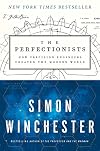
The popular image of the industrial revolution is of titanic forces unleashed by steam, of dark satanic mills and choking clouds of smog. But the machines did not spring into being, fully formed. Behind our modern age lies an obsession with precision, with exactitude in measurement and cutting that a medieval master craftsman would find extremely odd, and which we find extremely normal.
Winchester chronicles 250 years of precision engineering, starting with John "Iron-Mad" Wilkinson, a show more cannon manufacturer who armed the fleets that won Britain 100 years of empire, and who's technology, adopted in partnership with James Watt, created the first useful steam engine. Wilkinson's bores erred by no more than 1/10th of an inch, and in a few generations this would seem to be incredibly imprecise, as various engineers chased ever finer exactitude in manufacturing and measurement in the service of more reliable machines, economies of mass production, and eventually the atomic level precision of computer chips, GPS satellites, and LIGO, the gravity wave detecting observatory.
Winchester blends a love of precision equipment, such as Rolls-Royce cars, his father's Jo blocks, mechanical watches, and Leica camera lenses, with an a charming professionalism as a writer, leaping through centuries, biographical sketches, and ever finer tolerances. This is as good as popular history of technology gets! show less
Winchester chronicles 250 years of precision engineering, starting with John "Iron-Mad" Wilkinson, a show more cannon manufacturer who armed the fleets that won Britain 100 years of empire, and who's technology, adopted in partnership with James Watt, created the first useful steam engine. Wilkinson's bores erred by no more than 1/10th of an inch, and in a few generations this would seem to be incredibly imprecise, as various engineers chased ever finer exactitude in manufacturing and measurement in the service of more reliable machines, economies of mass production, and eventually the atomic level precision of computer chips, GPS satellites, and LIGO, the gravity wave detecting observatory.
Winchester blends a love of precision equipment, such as Rolls-Royce cars, his father's Jo blocks, mechanical watches, and Leica camera lenses, with an a charming professionalism as a writer, leaping through centuries, biographical sketches, and ever finer tolerances. This is as good as popular history of technology gets! show less
A Crack in the Edge of the World: America and the Great California Earthquake of 1906 (P.S.) by Simon Winchester
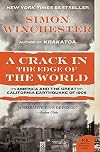
You really need to know what you'll be getting when you choose to read a Simon Winchester book. With the correct expectations, you should really love this book.
I believe a good portion of the lower reviews here are from readers who chose this book seeking a succinct history of the San Francisco Earthquake of 1906. Simon Winchester is one of the best storytellers I've come across, and for this reason his books are not as straightforward as some may desire. In 'A Crack in the Edge of the show more World', Simon spends time discussing the earthquake, complete with interviews and stories from those who were there, but it is couched by a plethora of other topics as well: a fascinating section on the planet's geographical history, smatterings of the author's own travels to western North American locations relevant to this earthquake, a history of not only San Francisco but California as a whole, among other loosely-related topics.
This is, in other words, a book that is focused on the San Francisco earthquake, but like a spider web extends well beyond that focal point and involves much more than just the event itself.
I find this to be a terrific way to write a book. I love to learn while reading, and Simon Winchester's writing style is one in which you'll end up learning a lot more than you ever expected to, about topics you may never have thought would be related to the earthquake. This books reads like a finely woven story, truly bringing life and color to the event (as opposed to a more sterile discussion of the event).
You'll like this book if you want to learn about the 1906 earthquake, but also want to learn about secondary topics (i.e. the history of geology itself, the geologic history of the planet, the best and worst towns in the Yukon while on a road trip) while you read. You won't like this book if you just want a narrow, focused look at the earthquake.
Five stars for a book that is almost entrancing in the way it discusses the 1906 earthquake and a whole gamut of other, related subjects. You just need to be prepared for the kind of author Simon Winchester is before diving into his books. show less
I believe a good portion of the lower reviews here are from readers who chose this book seeking a succinct history of the San Francisco Earthquake of 1906. Simon Winchester is one of the best storytellers I've come across, and for this reason his books are not as straightforward as some may desire. In 'A Crack in the Edge of the show more World', Simon spends time discussing the earthquake, complete with interviews and stories from those who were there, but it is couched by a plethora of other topics as well: a fascinating section on the planet's geographical history, smatterings of the author's own travels to western North American locations relevant to this earthquake, a history of not only San Francisco but California as a whole, among other loosely-related topics.
This is, in other words, a book that is focused on the San Francisco earthquake, but like a spider web extends well beyond that focal point and involves much more than just the event itself.
I find this to be a terrific way to write a book. I love to learn while reading, and Simon Winchester's writing style is one in which you'll end up learning a lot more than you ever expected to, about topics you may never have thought would be related to the earthquake. This books reads like a finely woven story, truly bringing life and color to the event (as opposed to a more sterile discussion of the event).
You'll like this book if you want to learn about the 1906 earthquake, but also want to learn about secondary topics (i.e. the history of geology itself, the geologic history of the planet, the best and worst towns in the Yukon while on a road trip) while you read. You won't like this book if you just want a narrow, focused look at the earthquake.
Five stars for a book that is almost entrancing in the way it discusses the 1906 earthquake and a whole gamut of other, related subjects. You just need to be prepared for the kind of author Simon Winchester is before diving into his books. show less
The Men Who United the States: America's Explorers, Inventors, Eccentrics and Mavericks, and the Creation of One Nation, Indivisible by Simon Winchester
This ambitious undertaking is Simon Winchester’s attempt to show how the America came together into one nation. It is structured in a logical way, considering the vastness of the topic, in five categories: wood, earth, water, fire, and metal. The author covers a wide swath of American history, highlighting many familiar names as well as unsung heroes, providing the reader enough information to get a sense of their personalities and eccentricities. He covers such diverse undertakings as show more exploration, geological surveys, pioneering, canals, railroads, mines, highways, electricity, telegraphy, radio, telephones, television, and the internet.
Simon Winchester, born in the UK, became an American citizen in 2011, and this book clearly shows his affection for his adopted country. Winchester is a skilled storyteller. He employs an elegant style sprinkled with dry humor. He weaves in personal stories of his many travels to these regions, connecting more current endeavors to those of the past. This book is engaging and wonderfully written. The audio book is well-read by the author. Listening to this book is like being immersed in a well-researched documentary. I enjoyed it tremendously. show less
Simon Winchester, born in the UK, became an American citizen in 2011, and this book clearly shows his affection for his adopted country. Winchester is a skilled storyteller. He employs an elegant style sprinkled with dry humor. He weaves in personal stories of his many travels to these regions, connecting more current endeavors to those of the past. This book is engaging and wonderfully written. The audio book is well-read by the author. Listening to this book is like being immersed in a well-researched documentary. I enjoyed it tremendously. show less
Lists
True Crime (1)
Summer Reading (1)
Best Biographies (1)
Career (1)
Check Library (1)
Europe (1)
For Science! (3)
Etymology (2)
Unread books (3)
My List (2)
Disaster Books (2)
Test (1)
read in 2026 (1)
Folio Society (1)
Science: Earth (1)
Awards


You May Also Like


Associated Authors
Statistics
- Works
- 53
- Also by
- 25
- Members
- 38,556
- Popularity
- #468
- Rating
- 3.8
- Reviews
- 997
- ISBNs
- 439
- Languages
- 17
- Favorited
- 130

