
Budge Wilson (1927–2021)
Author of Before Green Gables
About the Author
Budge Wilson was a Canadian writer known for her children's books but wrote for all ages. She was born on May 2, 1927 in Halifax, Nova Scotia, Canada. She was a graduate of Dalhousie University with a Bachelor of Arts degree (1949). She did postgraduate studies at the University of Toronto from show more 1949-1951. In 1953, she received a Diploma of Education, and a certificate in physical education. Before becoming a writer, most of her work was in teaching. In 1978, she began to write full time. She published her first book in 1984 at the age of 56 entitled, The Best/Worst Christmas Present. She wrote over 30 books which included The Leaving (1990), Lorinda's Diary and Thirteen Never Changes (1989), Izzie (2002) and Friendships (2006). She wrote a prequel to the Anne of Green Gables series by L.M. Montgomery entitled, Before Green Gables (2008). It was a featured book at the 2008 Biennial Conference, 100 Year of Anne. Wilson won numerous awards and honors which include 23 Canadian Children's Book Centre "Our Choice" selections, a Marianna Dempster Award, 2 Ann Connor Brimer Awards, a Canadian Authors Association Lilla Stirling Award, a National IODE Violet Downey Award, an Atlantic Independent Booksellers Award and an IBBY Honor Award. In 2004, she was appointed a Member of the Order of Canada. In 2011, she received the Order of Nova Scotia. She received honorary degrees from Dalhousie University in 2010 and Mount Saint Vincent University in 2012. Budge Wilson, pioneer for Canadian children's writers, died on March 19, 2021 in Halifax, Nova Scotia, Canada. She was 93. (Bowker Author Biography) show less
Image credit: Budge Wilson
Series
Works by Budge Wilson
Associated Works
This Land : A Cross-Country Anthology of Canadian Fiction for Young Readers (1998) — Contributor — 39 copies, 1 review
Tagged
Common Knowledge
- Birthdate
- 1927-05-02
- Date of death
- 2021-03-19
- Gender
- female
- Education
- University of Toronto (English)
Dalhousie University (Philosophy, Psychology, Education, Physical Education) - Occupations
- illustrator
editor
freelance commercial artist
child photographer
fitness instructor
author - Awards and honors
- Municipality of Halifax Mayor’s Award for Cultural Achievement in Literature (1999)
Distinguished Alumni Award, Armbrae Academy, Halifax (2003)
Order of Canada (Member, 2004) - Short biography
- She has been writing juvenile and adult fiction since 1978, with her first book published in 1984. Her work has been published in ten countries and in seven languages.
After living in Ontario for over twenty-five years, Budge returned to Nova Scotia in 1989, and live in a small fishing village on the South Shore of the province. - Nationality
- Canada
- Birthplace
- Halifax, Nova Scotia, Canada
- Places of residence
- Halifax, Nova Scotia, Canada
Ontario, Canada
Hubbards, Nova Scotia, Canada - Associated Place (for map)
- Nova Scotia, Canada
Members
Reviews
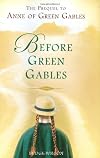
Anyone who knows me knows of my love for Anne. I know, as an adult, the things Anne may have suffered as a child. I’m not ready to read the horrors my mind can conjure up. But I did want to know more of Anne before. I admit I wanted a watered down version of events that my mind know could have occurred. This book took me there.
There were times that I forgot the ages and would be startled to realize how young Anne was. For those who say oh she couldn’t do this, that or the other by the show more age in the book, perhaps you are forgetting this is fiction. Anything can and does happen in fiction. I know, I have a difficult time myself with remembering that Anne is a fictional character. But she is. I would like to pose the question, too, who are you to say what is or isn’t possible anyway? I taught myself reading when I was 3 using magnetic letters and picture cards. I took it upon myself to learn Spanish at 5 listening to records that my parents had purchased but not used. To say oh she couldn’t know this word or that one is an insult to everyone. You are capable of learning, and are learning, from conception on. I’m not special and I believe any child could learn as I did. I think many have and I hope many will continue to do so. Aside from this, in the Anne books one of her endearing qualities was her speech. She had a love for, and frequently used, big words. She was using them on the ride to Green Gables when speaking to Matthew. Do you believe she suddenly developed advanced language skills on the train ride? No she learned them, like any child, from the people around her. I believe Anne had a love for language which gave her an ear for hearing remarkable words and a brain for storing those words. We all knew the harshness of Anne’s early life. It was hinted at over and over in Green Gables. We were told how early she was put in charge of infants and younger children. This too is nothing new. Look how many siblings are put in charge, some before they are truly ready. Look at slavery. Look at different cultures. Look at the pilgrims and pioneers. Life is often harsh. This book could have been a lot harsher. The pregnancy problems, domestic violence, alcoholism all were hinted at in Anne of Green Gables. Not one of those issues is a new one. Maybe they weren’t talked about until recently or given a name back then, but they existed. To say that men were given a pass in this book with domestic violence and excuses perhaps is a hard truth. Do I think the author should have it about them another way? No. This will probably not make me popular but men were given a pass with excuses for many, many years. To attempt to change history destroys the lessons we have learned. As a survivor of domestic violence, I heard those excuses when I called police, when I dared to say how I was injured, even when I spoke of them to family and friends. To say we must rewrite history so that men don’t have these excuses makes me feel as though I should be ashamed. Once again, I am the problem. I need to hide my experience because I, obviously, wasn’t strong enough or smart enough, or good enough to slay those excuses when they were repeatedly being given to me by everyone. Domestic violence was accepted in the time Anne lived. Excuses were made. Blame was placed. Women, and many men, fought a hard fight for years and years to change things for domestic violence victims. Let us not forget what we have learned. Let us not hide the truth. Because in changing history we open the door to repeating history.
Before Green Gables is Anne’s early life. In it we are taken through events that made her the 11 year old who showed up with unstoppable dreams of a better future. Isn’t this what we all want for any child, or any adult? The unshakable belief that if we keep focused on our dreams of a better tomorrow and we work tirelessly towards fulfilling them, we will achieve them. That is what I learned from Anne in Lucy L Montegomery’s books and it is the message I found in Budge Wilson’s book. show less
There were times that I forgot the ages and would be startled to realize how young Anne was. For those who say oh she couldn’t do this, that or the other by the show more age in the book, perhaps you are forgetting this is fiction. Anything can and does happen in fiction. I know, I have a difficult time myself with remembering that Anne is a fictional character. But she is. I would like to pose the question, too, who are you to say what is or isn’t possible anyway? I taught myself reading when I was 3 using magnetic letters and picture cards. I took it upon myself to learn Spanish at 5 listening to records that my parents had purchased but not used. To say oh she couldn’t know this word or that one is an insult to everyone. You are capable of learning, and are learning, from conception on. I’m not special and I believe any child could learn as I did. I think many have and I hope many will continue to do so. Aside from this, in the Anne books one of her endearing qualities was her speech. She had a love for, and frequently used, big words. She was using them on the ride to Green Gables when speaking to Matthew. Do you believe she suddenly developed advanced language skills on the train ride? No she learned them, like any child, from the people around her. I believe Anne had a love for language which gave her an ear for hearing remarkable words and a brain for storing those words. We all knew the harshness of Anne’s early life. It was hinted at over and over in Green Gables. We were told how early she was put in charge of infants and younger children. This too is nothing new. Look how many siblings are put in charge, some before they are truly ready. Look at slavery. Look at different cultures. Look at the pilgrims and pioneers. Life is often harsh. This book could have been a lot harsher. The pregnancy problems, domestic violence, alcoholism all were hinted at in Anne of Green Gables. Not one of those issues is a new one. Maybe they weren’t talked about until recently or given a name back then, but they existed. To say that men were given a pass in this book with domestic violence and excuses perhaps is a hard truth. Do I think the author should have it about them another way? No. This will probably not make me popular but men were given a pass with excuses for many, many years. To attempt to change history destroys the lessons we have learned. As a survivor of domestic violence, I heard those excuses when I called police, when I dared to say how I was injured, even when I spoke of them to family and friends. To say we must rewrite history so that men don’t have these excuses makes me feel as though I should be ashamed. Once again, I am the problem. I need to hide my experience because I, obviously, wasn’t strong enough or smart enough, or good enough to slay those excuses when they were repeatedly being given to me by everyone. Domestic violence was accepted in the time Anne lived. Excuses were made. Blame was placed. Women, and many men, fought a hard fight for years and years to change things for domestic violence victims. Let us not forget what we have learned. Let us not hide the truth. Because in changing history we open the door to repeating history.
Before Green Gables is Anne’s early life. In it we are taken through events that made her the 11 year old who showed up with unstoppable dreams of a better future. Isn’t this what we all want for any child, or any adult? The unshakable belief that if we keep focused on our dreams of a better tomorrow and we work tirelessly towards fulfilling them, we will achieve them. That is what I learned from Anne in Lucy L Montegomery’s books and it is the message I found in Budge Wilson’s book. show less

What a tear-jerker! We all know the story told by Lucy Maud Montgomery of the orphan girl Anne Shirley who arrives at the age of eleven on Prince Edward Island to make her home with Matthew and Marilla Cuthbert. This prequel was written to celebrate the book's centennial. It gives the story of Anne's life prior to her arrival on PEI. It's been awhile since I've read the Anne series so I'm a bit foggy on whether all the aspects of the story correspond to the hints provided in Montgomery's show more books, but this one does make for some interesting reading. Just be sure to have a box of tissues handy! I actually listened to this via an Overdrive download. I thought the narrator did an excellent job. show less
Most of us already know the story of Anne Shirley. She is the titular character in the novels Anne of Green Gables, Anne of Avonlea, Anne of the Island, Anne of Windy Poplars, Anne's House of Dreams, and Anne of Ingleside. I read the Anne books when I was about 9 or 10 years old. Published earlier this year, the centennial anniversary of Anne of Green Gables, Before Green Gables by Budge Wilson, the story of Anne's life before she came to beautiful Prince Edward Island to live at Green show more Gables with Marilla and Matthew Cuthbert.
Before Green Gables begins shortly after the marriage of Walter and Bertha Shirley, Anne's loving parents. This was one of the best parts of the story for me. Anne's parents were deeply in love and devoted to each other, and that love spilled over to Anne when she was born. She had a very happy life for the three months she spent with her parents in their little yellow house, before Walter and Bertha succumbed to a powerful infectious fever sweeping their town.
After the death of her parents, Anne is taken in by Joanna Thomas, a woman hired to help Bertha around the house when she was pregnant and after Anne was born. Mrs. Thomas took Anne into her already crowded home partly out of respect for Bertha Shirley, and partly because she was hoping to receive some of the Shirley's furniture. Mrs. Thomas' eldest daughter Eliza was thrilled to have Anne, and treated her much like her own daughter. Things were nice for Anne as long as Eliza was there, but when she is 5 years old, Eliza goes to marry Roger, leaving Anne all alone in the loud, angry house.
Anne spends the next few years working harder than any little girl should have to work - scrubbing floors, washing dishes, making meals, washing diapers, taking care of the younger children - all the while, living in an uncertain and explosive environment. The only bright spots in her life are going to school, meeting Mr. Johnson - "the Egg man"/"Word man", and Katie Maurice, Anne's imaginary friend.
When tragedy strikes the Thomas family, a 9 year old Anne is again uprooted and sent to live with the Hammonds. Though Mrs. Hammond is kinder to Anne than Mrs. Thomas ever was, the work is just as hard, and Anne finds herself again in a very busy household. Mrs. Hammond has six children - 2 sets of twins among them - all under the age of 4, and another due in May! She's able to go to school and quickly looses herself in her teacher's stories of Prince Edward Island. Mr. McDougall was born and raised on P.E.I. and has lots of pictures to show the class. Anne also finds a new imaginary friend in the hills surrounding old Miss. Haggerty's house. Her name is Violetta, and she answers Anne with her echos.
Less than two years later, Anne is packed off to the Hopetown orphanage after Mr. Hammond dies. In the asylum, Anne is simply miserable. Though she is no stranger to hard work, she practically shuts down her every emotion, afraid to let anyone or anything in. After four months however, her luck begins to change, and she is sent to P.E.I. with Mrs. Spencer to live with the Cuthberts. The book ends with Anne's arrival at the Bright River station.
I really enjoyed this book, but if you don't like reading and crying at the same time, I can't recommend it for you. It was such an emotional experience for me in fact, that after the first night, I discovered I couldn't read it just before going to bed. The story and characters kept me up at night thinking and imagining so much that I had to change my reading schedule around and read just in the mornings and afternoons.
Despite the harshness of Anne's early life, she touched everyone she came in contact with in profound ways. She was the only person in the Thomas household who Bert Thomas liked, and therefore the only one who could really get through to him. She also brought love into Mr. Johnson's life in the form of Miss. Harrisson, her first teacher. She even made old Miss. Haggerty - a woman who never wanted or even liked children - love her. Anne's spirit is a truly amazing and almost indestructible thing. Anne is incredibly precocious and I don't see how anyone could possibly help falling in love with her.
I adore the way Anne finds a sense of wonder about everything in the natural world around her. Her unbelievable thirst for knowledge and her hope and dreams for her future completely sustain her through the hard times in her life.
As for my criticism of the book, there's not much to say. One thing I found tedious especially toward the end of the book, was Anne's recounting of all the wrongs in her life. By the end I was so ready for things to get better for Anne, that I just wanted to forget all the bad stuff.
I love a story that can make me feel so much for the characters that bawl like a baby, so the fact that this book can be pretty depressing at times is not really a negative in my book. I mean, we knew her life was pretty bleak before she came to P.E.I. - there's not really any surprise there.
The writing is really quite good and gutsy (to take on a character as beloved and well-known as Anne.) Wilson is not L.M. Montgomery, and it's important to remember that when you pick up Before Green Gables, but in my opinion she does an amazing job with her subject. show less
Before Green Gables begins shortly after the marriage of Walter and Bertha Shirley, Anne's loving parents. This was one of the best parts of the story for me. Anne's parents were deeply in love and devoted to each other, and that love spilled over to Anne when she was born. She had a very happy life for the three months she spent with her parents in their little yellow house, before Walter and Bertha succumbed to a powerful infectious fever sweeping their town.
After the death of her parents, Anne is taken in by Joanna Thomas, a woman hired to help Bertha around the house when she was pregnant and after Anne was born. Mrs. Thomas took Anne into her already crowded home partly out of respect for Bertha Shirley, and partly because she was hoping to receive some of the Shirley's furniture. Mrs. Thomas' eldest daughter Eliza was thrilled to have Anne, and treated her much like her own daughter. Things were nice for Anne as long as Eliza was there, but when she is 5 years old, Eliza goes to marry Roger, leaving Anne all alone in the loud, angry house.
Anne spends the next few years working harder than any little girl should have to work - scrubbing floors, washing dishes, making meals, washing diapers, taking care of the younger children - all the while, living in an uncertain and explosive environment. The only bright spots in her life are going to school, meeting Mr. Johnson - "the Egg man"/"Word man", and Katie Maurice, Anne's imaginary friend.
When tragedy strikes the Thomas family, a 9 year old Anne is again uprooted and sent to live with the Hammonds. Though Mrs. Hammond is kinder to Anne than Mrs. Thomas ever was, the work is just as hard, and Anne finds herself again in a very busy household. Mrs. Hammond has six children - 2 sets of twins among them - all under the age of 4, and another due in May! She's able to go to school and quickly looses herself in her teacher's stories of Prince Edward Island. Mr. McDougall was born and raised on P.E.I. and has lots of pictures to show the class. Anne also finds a new imaginary friend in the hills surrounding old Miss. Haggerty's house. Her name is Violetta, and she answers Anne with her echos.
Less than two years later, Anne is packed off to the Hopetown orphanage after Mr. Hammond dies. In the asylum, Anne is simply miserable. Though she is no stranger to hard work, she practically shuts down her every emotion, afraid to let anyone or anything in. After four months however, her luck begins to change, and she is sent to P.E.I. with Mrs. Spencer to live with the Cuthberts. The book ends with Anne's arrival at the Bright River station.
I really enjoyed this book, but if you don't like reading and crying at the same time, I can't recommend it for you. It was such an emotional experience for me in fact, that after the first night, I discovered I couldn't read it just before going to bed. The story and characters kept me up at night thinking and imagining so much that I had to change my reading schedule around and read just in the mornings and afternoons.
Despite the harshness of Anne's early life, she touched everyone she came in contact with in profound ways. She was the only person in the Thomas household who Bert Thomas liked, and therefore the only one who could really get through to him. She also brought love into Mr. Johnson's life in the form of Miss. Harrisson, her first teacher. She even made old Miss. Haggerty - a woman who never wanted or even liked children - love her. Anne's spirit is a truly amazing and almost indestructible thing. Anne is incredibly precocious and I don't see how anyone could possibly help falling in love with her.
I adore the way Anne finds a sense of wonder about everything in the natural world around her. Her unbelievable thirst for knowledge and her hope and dreams for her future completely sustain her through the hard times in her life.
As for my criticism of the book, there's not much to say. One thing I found tedious especially toward the end of the book, was Anne's recounting of all the wrongs in her life. By the end I was so ready for things to get better for Anne, that I just wanted to forget all the bad stuff.
I love a story that can make me feel so much for the characters that bawl like a baby, so the fact that this book can be pretty depressing at times is not really a negative in my book. I mean, we knew her life was pretty bleak before she came to P.E.I. - there's not really any surprise there.
The writing is really quite good and gutsy (to take on a character as beloved and well-known as Anne.) Wilson is not L.M. Montgomery, and it's important to remember that when you pick up Before Green Gables, but in my opinion she does an amazing job with her subject. show less
I did want to like this book... but I couldn't, much. Wilson did a good job of collecting every scrap of information about Anne's backstory and assembling it into a coherent narrative. But in order to fit all the available data into the space of a single childhood, Anne had to be depicted as preternaturally capable and verbal, and even remarkably large (for her age). This was notable from time to time during a first reading (here she goes AGAIN), but only in retrospect did the cumulative show more effect become somewhat disturbing. And how did this strange child become the ebullient Anne we later come to know?
Not even to mention the anachronistic blunders. Wilson is not sufficiently immersed in the culture of mid-19th century rural Canada to write believable historical fiction. Rereading this more than five years after I wrote the review and got rid of the book, I realize I should have given examples. What could be so egregious that I'd remember it after all this time? I can say that the entire treatment of pregnancy, birth and breastfeeding shows a late-20th century sensibility and some medical information that the characters would have had no way of knowing until decades if not generations later. show less
Not even to mention the anachronistic blunders. Wilson is not sufficiently immersed in the culture of mid-19th century rural Canada to write believable historical fiction. Rereading this more than five years after I wrote the review and got rid of the book, I realize I should have given examples. What could be so egregious that I'd remember it after all this time? I can say that the entire treatment of pregnancy, birth and breastfeeding shows a late-20th century sensibility and some medical information that the characters would have had no way of knowing until decades if not generations later. show less
Lists
Awards


You May Also Like


Associated Authors
Statistics
- Works
- 36
- Also by
- 6
- Members
- 1,327
- Popularity
- #19,380
- Rating
- 3.8
- Reviews
- 41
- ISBNs
- 87
- Languages
- 6
- Favorited
- 1
