
Louisa May Alcott (1832–1888)
Author of Little Women
About the Author
Louisa May Alcott was born in Germantown, Pennsylvania, in 1832. Two years later, she moved with her family to Boston and in 1840 to Concord, which was to remain her family home for the rest of her life. Her father, Bronson Alcott, was a transcendentalist and friend of Ralph Waldo Emerson and Henry show more David Thoreau. Alcott early realized that her father could not be counted on as sole support of his family, and so she sacrificed much of her own pleasure to earn money by sewing, teaching, and churning out potboilers. Her reputation was established with Hospital Sketches (1863), which was an account of her work as a volunteer nurse in Washington, D.C. Alcott's first works were written for children, including her best-known Little Women (1868--69) and Little Men: Life at Plumfield with Jo's Boys (1871). Moods (1864), a "passionate conflict," was written for adults. Alcott's writing eventually became the family's main source of income. Throughout her life, Alcott continued to produce highly popular and idealistic literature for children. An Old-Fashioned Girl (1870), Eight Cousins (1875), Rose in Bloom (1876), Under the Lilacs (1878), and Jack and Jill (1881) enjoyed wide popularity. At the same time, her adult fiction, such as the autobiographical novel Work: A Story of Experience (1873) and A Modern Mephistopheles (1877), a story based on the Faust legend, shows her deeper concern with such social issues as education, prison reform, and women's suffrage. She realistically depicts the problems of adolescents and working women, the difficulties of relationships between men and women, and the values of the single woman's life. (Bowker Author Biography) show less
Series
Works by Louisa May Alcott
Little Women / Little Women, Part Second {Good Wives} / Little Men / Jo's Boys (2005) 1,183 copies, 11 reviews
The Quiet Little Woman, Tilly's Christmas, Rosa's Tale: Three Enchanting Christmas Stories (1999) 965 copies, 16 reviews
The Ultimate Christmas Collection: 150+ authors & 400+ Christmas Novels, Stories, Poems, Carols & Legends (2025) 389 copies
Louisa May Alcott: An Intimate Anthology (New York Public Library Collector's Editions) (1997) 185 copies
The Abbot's Ghost; or, Maurice Treherne's Temptation: A Christmas Story (1867) 160 copies, 5 reviews
An Old-Fashioned Thanksgiving [adaptation illustrated by James Bernardin] (2005) 129 copies, 3 reviews
The Best of Louisa May Alcott: A Charming Illustrated Collection of Little Women, Little Men, and 24 Short Stories (1994) 111 copies
Little Women: The Complete Novel, Featuring the Characters' Letters and Manuscripts, Written and Folded by Hand (Classic Novels x Chronicle Books) (2021) — Author — 80 copies
The Hidden Louisa May Alcott: A Collection of Her Unknown Thrillers: Two Volumes in One (1984) 45 copies
The Girlhood Diary of Louisa May Alcott, 1843-1846: Writings of a Young Author (Diaries, Letters and Memoirs) (2001) 42 copies, 1 review
Delphi Complete Works of Louisa May Alcott (Illustrated) (Delphi Series One Book 17) (2012) 38 copies
A Louisa May Alcott Christmas Book and Charm: Selected Holiday Stories and Poems (Charming Classics) (2004) 31 copies
Little Women (Puffin in Bloom) 26 copies
Favourite Stories of Courageous Girls: inspiring heroines from classic children's books (2019) 23 copies
Louisa May Alcott Family Favorites Collection: 5-Book Boxed Set with Postcards & Journal (2021) 20 copies
LOUISA MAY ALCOTT Ultimate Collection: 16 Novels & 150 Short Stories, Plays and Poems (Illustrated): Little Women, Good Wives, Little Men, Jo's Boys, ... The Abbot's… (2015) 18 copies, 1 review
Christmas Stories: Classic Christmas Stories | Christmas Tales | Vintage Christmas Tales | For Children and Adults (2019) 15 copies
The Louisa May Alcott Hidden Gems Collection (Boxed Set): Eight Cousins; Rose in Bloom; An Old-Fashioned Girl; Under the Lilacs; Jack and Jill (2023) 12 copies
Works of Louisa May Alcott. (35 Works) Includes Little Women, Little Men, A Country Christmas and more (2007) 10 copies, 1 review
An Alcott Christmas Collection: A Christmas Dream, A Country Christmas, Excerpts from Little Women, & More (2020) 8 copies
The Complete Works of Louisa May Alcott (Illustrated): Novels, Short Stories, Plays & Poems: Little Women, Good Wives, Little Men, Jo's Boys, A Modern ... and Jill, Behind a Mask,… (2007) 8 copies, 1 review
Mujercitas para niños (Clasicos Para Ninos / Classics for Children) (Spanish Edition) (2002) 7 copies
The Dover Anthology of Classic Christmas Stories: Louisa May Alcott, Charles Dickens, Leo Tolstoy, Mark Twain And Others (2023) 6 copies
Little Women: illustrated Abridged Children Classics English Novel with Review Questions (Illustrated Classics) R2,3 (2021) 6 copies
Little Women, Good Wives, Little Men, Jo's Boys, An Old-Fashioned Girl, Eight Cousins, Rose in Bloom (2013) 6 copies
Little Women Collection: Little Women, Little Men, Eight Cousins and More (Xist Classics) (2015) 4 copies
Louisa May Alcott: Complete Collection Works with analysis and historical background (Annotated and Illustrated) (Annotated Classics) (2014) 4 copies
Little Women / The Last of the Mohicans / The Red Badge of Courage / Oliver Twist / Captains Courageous / The Call of the Wild / Moby Dick (Great Illustrated Classics, Specially… — Contributor — 3 copies
Little Women (Aladdin Classics) 3 copies
Doctor Dorn's Revenge {short story} 3 copies
A Christmas Dream & Other Christmas Stories by Louisa May Alcott: Merry Christmas, What the Bell Saw and Said, Becky's Christmas Dream, The Abbot's Ghost, Kitty's… (2017) 3 copies, 1 review
Charming Novels of Classic Heroines : Pollyanna, The Secret Garden, Little Women, Anne of Green Gables, and Rebecca of Sunnybrook Farm (2017) 3 copies
Freaks of Genius: Unknown Thrillers of Louisa May Alcott (Contributions to the Study of Popular Culture) (1991) 3 copies
Little Women Classic Reader Level 4 3 copies
Little Women, Jo's Boys, Eight Cousins, An Old-Fashioned Girl, Little Men and Rose in Bloom (1913) 3 copies
Hombrecitos para niños (Clasicos Para Ninos Classics for Children) (Spanish Edition) (2019) 2 copies
Little Men by Louisa M Alcott 2 copies
Little Women, Pygmalion, Medea, A Lincoln Album (The 100 Greatest Books Ever Written on Audio Cassette) (1972) 2 copies
Le rêve de Joe March 2 copies
Christmas Stories: Classic Christmas Stories | Christmas Tales | Vintage Christmas Tales | For Children and Adults (2021) 2 copies
The Louisa Alcott Story Book 2 copies
Little Women — Author — 2 copies
Little Women, Little Men, Eight Cousins, Jo's Boys, Jack & Jill, An Old-Fashioned Girl, Rose in Bloom (1946) 2 copies
Küçük Erkekler 1 copy
Un cuento de enfermera 1 copy
Yunye zheny 1 copy
An old fashioned girl 1 copy
Little women 1 copy
Rose in bloom 1 copy
Eight cousins 1 copy
Louisa May Alcott Vintage Collection (Little Women, Eight Cousins & Jo's Boys, Little Men, An Old-Fashioned Girl 5 Volumes) (1946) 1 copy
Juventud de los ocho primos 1 copy
Các Cậu Bé Của Jo 1 copy
SST 65 - Mutevoli umori 1 copy
Little Women 5 Hardback Book Collection Set (Little Women, Good Wives, Little Men, Jo's Boys, Eight Cousins) (2025) 1 copy
Little Women - English/Thai 1 copy
Μικρές κυρίες 1 copy
Little Men 1 copy
Een neef en vijf nichtjes 1 copy
True Friends 1 copy
Aunt Jo's scrap-bag. By: Louisa M. Alcott: A collection of stories and memories from Louisa May Alcott (2016) 1 copy
Little Women Good Wives 1 copy
Fijne Handschoenen 1 copy
Jo's Boys 1 copy
Bellas historias 1 copy
Tales of the Dark Romantics and Beyond: Tales of the Dark Romantics — Contributor — 1 copy
Ruthie Rides the Trolley 1 copy
Jack and Jill 1 copy
Good Wives/Jo's Boys 1 copy
25 Favorite Children's Books 1 copy
Alcott, Louisa May Archive 1 copy
A Strange Island 1 copy
A Song for A Christmas Tree 1 copy
Four Stories 1 copy
Mulherzinhas v.1 1 copy
Mulherzinhas v. 2 1 copy
Cousin Tribulation's Story 1 copy
Piccole Donne a fumetti 1 copy
Rainbow classics 1 copy
Rosy's Journey 1 copy
Six Volumes: 1 copy
Classic American Fiction: 22 books by Louisa May Alcott in a single file, improved 12/10/2010 (2009) 1 copy
An Hour 1 copy
Little Women [adapted - Sadler] — Author — 1 copy
The Uncollected Works of Louisa May Alcott, Volume One: Short Stories (Ironweed American Classics) (How-To Series) (2001) 1 copy
Little Women (1/2 copies) 1 copy
Chronicle of the March Family: 2 Volumes. V. I. Little Women & V.II. Little Men and Jo's Boys. 1 copy
Classic Collection - The Wizard of Oz, Little Women, Heidi, and Alice's Adventures in Wonderland (2012) 1 copy
نساء صغيرات #2 1 copy
Old-Fashoned Girl (An) 1 copy
Little women. — Author — 1 copy
Lily-Bell And Thistledown 1 copy
Little Women and Other Works 1 copy
A Christmas Song 1 copy
En ädel qvinna 1 copy
Water Cresses 1 copy
How It All Happened 1 copy
Marmee's Surprise 1 copy
Good Wives. Foulsham edition 1 copy
Louisa May Alcott - A Short Story Collection: Transcendental Wild Oats, The Brothers, My Red Cap & Lost in a London Fog (2022) 1 copy, 1 review
"Lullaby" 1 copy
Hospital Sketches 1 copy
Associated Works
The Assassin's Cloak: An Anthology of the World's Greatest Diarists (2000) — Contributor, some editions — 624 copies, 9 reviews
The Illustrated Treasury of Children's Literature, Volumes 1-2 (1955) — Contributor — 521 copies, 4 reviews
Meg, Jo, Beth, and Amy: A Modern Graphic Retelling of Little Women (Classic Graphic Remix, 1) (2019) — Original Story — 476 copies, 22 reviews
The Graphic Canon, Vol. 2: From "Kubla Khan" to the Brontë Sisters to The Picture of Dorian Gray (2012) — Contributor — 212 copies, 2 reviews
The Civil War: The Second Year Told By Those Who Lived It (2012) — Contributor — 192 copies, 1 review
Enchanting Stories for Young Readers (Usborne Illustrated Classics) (1999) — Contributor — 176 copies
Classic American Short Stories [Barnes & Noble Leatherbound Classics] (2001) — Contributor — 174 copies, 1 review
The Children's Treasury: Best Loved Stories and Poems from Around the World (1987) — Contributor — 164 copies, 2 reviews
American Antislavery Writings: Colonial Beginnings to Emancipation (2012) — Contributor — 145 copies
Weird Women: Classic Supernatural Fiction by Groundbreaking Female Writers: 1852-1923 (2020) — Contributor — 107 copies, 2 reviews
A Christmas Carol and Other Christmas Tales (Barnes & Noble Leatherbound Classic Collection) (2021) — Contributor — 91 copies
The Heath Anthology of American Literature, Concise Edition (2003) — Contributor — 72 copies, 1 review
The Greatest Christmas Stories of All Time: Timeless Classics That Celebrate the Season (2006) — Contributor — 50 copies
The Lifted Veil: The Book of Fantastic Literature by Women 1800-World War II (1806) — Contributor — 45 copies
Civil War Memories: Nineteen Stories of Battle, Bravery, Love, and Tragedy (2000) — Contributor — 38 copies, 1 review
The Female Hypnotist: Stories from the Victorian and Edwardian Eras (2025) — Contributor — 25 copies, 14 reviews
"The Man Who Thought Himself a Woman" and Other Queer Nineteenth-Century Short Stories (Q19: The Queer American Nineteenth Century) (2017) — Contributor — 20 copies
Little Women: A Story about the Value of Generosity [abridged - Chick-fil-A] (2005) — Author — 19 copies
Jane Eyre/ Wuthering Heights/ Little Women/ Adam Bede/ Emma/ Pride and Prejudice (1990) — Contributor — 18 copies
Anne of Green Gables / Sense and Sensibility / Little Women / Pride Prejudice / Jane Eyre / Emma / The Secret Garden / The Scarlet Pimpernel (2002) 12 copies
American Classics for Children: Little Women / Pollyanna / Rebecca of Sunnybrook Farm (2003) — Contributor — 9 copies
Out of the Sand: Mummies, Pyramids, and Egyptology in Classic Science Fiction and Fantasy (2008) — Contributor — 5 copies
Botanica Delira: More Stories of Strange, Undiscovered, and Murderous Vegetation (2010) — Contributor — 4 copies
Penguin Readers Library Pack Level 1: WITH David Beckham AND Barcelona Game AND Girl Meets Boy AND Run for Your Life AND (2005) 3 copies, 2 reviews
The Midnight Inkwell: Sinister Short Stories by Classic Women Writers (2023) — Contributor — 3 copies
Classic Children’s Stories 1 copy
Little Women [1958 TV movie] — Author — 1 copy
10 Classic Feminist Works You Should Read: Little Women, The Yellow Wallpaper, A Vindication Of The Rights Of Woman, Sultana's Dream... — Contributor — 1 copy
Little Men: Thanksgiving [1998 TV episode] — Author — 1 copy
Tagged
Common Knowledge
- Canonical name
- Alcott, Louisa May
- Other names
- Barnard, A. M.
- Birthdate
- 1832-11-29
- Date of death
- 1888-03-06
- Gender
- female
- Education
- homeschooled
- Occupations
- novelist
nurse
seamstress
teacher
governess - Organizations
- Transcendentalism
- Agent
- Zachary Shuster Harmsworth (estate)
- Relationships
- Alcott, Amos Bronson (father)
Alcott, Abigail May (mother) - Short biography
- Louisa May Alcott (November 29, 1832 – March 6, 1888) was an American novelist, short story writer and poet best known as the author of the novel Little Women (1868) and its sequels Little Men (1871) and Jo's Boys (1886). Raised in New England by her transcendentalist parents, Abigail May and Amos Bronson Alcott, she grew up among many of the well-known intellectuals of the day, such as Ralph Waldo Emerson, Nathaniel Hawthorne, Henry David Thoreau, and Henry Wadsworth Longfellow.
Alcott's family suffered from financial difficulties, and while she worked to help support the family from an early age, she also sought an outlet in writing. She began to receive critical success for her writing in the 1860s. Early in her career, she sometimes used the pen name A. M. Barnard, under which she wrote novels for young adults that focused on spies and revenge.
Published in 1868, Little Women is set in the Alcott family home, Orchard House, in Concord, Massachusetts, and is loosely based on Alcott's childhood experiences with her three sisters, Abigail May Alcott Nieriker, Elizabeth Sewall Alcott, and Anna Alcott Pratt. The novel was well-received at the time and is still popular today among both children and adults. It has been adapted many times to the stage, film, and television.
Alcott was an abolitionist and a feminist and remained unmarried throughout her life. All her life she was active in such reform movements as temperance and women's suffrage. She died from a stroke, two days after her father died, in Boston on March 6, 1888. - Cause of death
- stroke
- Nationality
- USA
- Birthplace
- Germantown, Pennsylvania, USA
- Places of residence
- Germantown, Pennsylvania, USA
Concord, Massachusetts, USA
Boston, Massachusetts, USA
Utopian Fruitlands Community, Harvard, Massachusetts, USA (1843-1844) - Place of death
- Boston, Massachusetts, USA
- Burial location
- Sleepy Hollow Cemetery, Concord, Massachusetts, USA (Authors' Ridge)
- Associated Place (for map)
- Massachusetts, USA
Members
Discussions
Jo in Little Women in Geeks who love the Classics (May 2024)
Found: Help me please- Name that Book in Name that Book (March 2023)
Newbie question about series editing in Book talk (June 2018)
Louisa May Alcott in Tattered but still lovely (February 2018)
Alcott favorites? in Tattered but still lovely (November 2014)
Reviews
Little Women, or Meg, Jo, Beth and Amy: Authoritative Text, Backgrounds and Contexts, Criticism by Louisa May Alcott

I spent the first several chapters of this book hoping that Meg, Jo, Beth, or Amy would die, since that would mean that something interesting would happen. But then I realized that if one of them did die, they would do it in such a virtuous, praiseworthy fashion that everyone would learn a valuable life-lesson from. So from then on I kept on hoping that one of the sisters would turn up pregnant. Alas, it never happened, but one of the sisters did die-- and taught Jo a life-lesson in the show more process. And by the end of the story, everything that had made the characters even vaguely interesting at the beginning had been slowly beaten out of them by society. Jo wouldn't do her writing anymore, Laurie wasn't so adventurous so much anymore, and Amy wasn't even stupid anymore. The narrative style also got on my nerves: Jo would tell us she liked books and that she was a bookworm, and then the narrator would chime in and tell us that she was a bookworm. And that she liked books. Thanks. Not only did the narrator condescend to the audience, but she also enjoyed condescending to the characters, especially Amy, the girl so retarded that even the narrator made fun of her. By far the worst chapter was the one where Marmie taught her daughters the valuable life-lesson that you can't even take a week off of work in your entire life, because your bird will die and you'll ruin your dinner. So keep on working forever! And always be virtuous and never be afraid to lecture to your friends about what they're doing wrong in their lives. They'll love it.
added October 2010:
I didn't like this book the first time I read it, and I liked it even less the second time around. "Experiments" is one of the single worst chapters in any book I have ever read; rarely will you find anything this obnoxiously moralistic. Close behind in my non-esteem are the gross depictions of the marriage between Meg and John, and the bits about Jo's writing career, which convinces me that Alcott was filled with self-hate (or at least thought she should have been). The amazing part about the novel is that you think you have no goodwill towards the characters, then in the second half, you realize you must have, as it is all burned up and destroyed. show less
added October 2010:
I didn't like this book the first time I read it, and I liked it even less the second time around. "Experiments" is one of the single worst chapters in any book I have ever read; rarely will you find anything this obnoxiously moralistic. Close behind in my non-esteem are the gross depictions of the marriage between Meg and John, and the bits about Jo's writing career, which convinces me that Alcott was filled with self-hate (or at least thought she should have been). The amazing part about the novel is that you think you have no goodwill towards the characters, then in the second half, you realize you must have, as it is all burned up and destroyed. show less
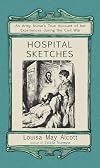
Louisa May Alcott wrote many fictionalized books and stories about her life and family, the most famous of which is [Little Women]. An abolitionist and feminist, the adventurous Alcott eagerly joined other young women in offering to be a nurse for the Union Army during the Civil War. In late 1862, Alcott was sent to the Union Hospital in Georgetown, D.C. for a three month assignment. True to her nature, she wrote long, witty letters home to her family, in which she describes her duties as an show more untrained nurse, the soldiers she meets, and the nature of the treatment available to the wounded. Unfortunately, Alcott caught typhoid fever and became very ill. Despite her protests, she was taken home after only six weeks of service. Her letters were collected and published later that year, then republished with additions in 1869.
Since the letters were written to family and never intended to be published, Alcott received some initial criticism for her sometimes comic tone. She responded beautifully with this remark in 1869:
To those who have objected to a "tone of levity" in some portions of the sketches, I desire to say that the wish to make the best of every thing, and send home cheerful reports even from the saddest of scenes, an army hospital, probably produced the impression of levity upon those who have never know the sharp contrasts of the tragic and the comic in such a life.
This ability to see these "sharp contrasts of the tragic and the comic" during times of duress elevates the letters from simple documentation to a nuanced view of the precariousness of life and the spirit of defiance required to repeatedly face death. The letters also reflect a caring yet direct young woman, who despite her enlightened education, was a product of her times. show less
Since the letters were written to family and never intended to be published, Alcott received some initial criticism for her sometimes comic tone. She responded beautifully with this remark in 1869:
To those who have objected to a "tone of levity" in some portions of the sketches, I desire to say that the wish to make the best of every thing, and send home cheerful reports even from the saddest of scenes, an army hospital, probably produced the impression of levity upon those who have never know the sharp contrasts of the tragic and the comic in such a life.
This ability to see these "sharp contrasts of the tragic and the comic" during times of duress elevates the letters from simple documentation to a nuanced view of the precariousness of life and the spirit of defiance required to repeatedly face death. The letters also reflect a caring yet direct young woman, who despite her enlightened education, was a product of her times. show less
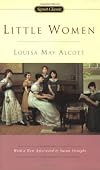
This is not the first time I have read Little Women, in fact I tried many times in my teens to read the story, but I always so loathed it because I couldn't help thinking how backwards these women were. Joe was scandalous for not being a proper lady (and sadly she was the one I related to the most). Each time I was left feeling bleh about the thing and wondering what was wrong with me for not enjoying such a classic. At about sixteen I had decided that it wasn't me who had the problem, it show more was that I could not relate to the story because I was a modern woman and let it go at that, vowing never to read the stupid thing again.
Then I got a Nook and found myself with very little money and a load of free books and went to town. Suddenly all I had left was Little Women. I figured what the heck, it was better than nothing, I was fairly sure. I was surprised how differently I felt about it this time. Now, having children, I can see the way I have tried to use some of Mrs. March's subtle techniques. Knowing other mothers, wanting a little girl, I found myself suddenly entrenched with their lives and wondering if I would have a Joe like me, or what would I do if I had an Amy! The things that seemed antiquated in my youth, now seemed nostalgic and charming. It is amazing how books change as we change! If you have read it before and weren't sure you cared for it, perhaps you should try it again! show less
Then I got a Nook and found myself with very little money and a load of free books and went to town. Suddenly all I had left was Little Women. I figured what the heck, it was better than nothing, I was fairly sure. I was surprised how differently I felt about it this time. Now, having children, I can see the way I have tried to use some of Mrs. March's subtle techniques. Knowing other mothers, wanting a little girl, I found myself suddenly entrenched with their lives and wondering if I would have a Joe like me, or what would I do if I had an Amy! The things that seemed antiquated in my youth, now seemed nostalgic and charming. It is amazing how books change as we change! If you have read it before and weren't sure you cared for it, perhaps you should try it again! show less
The Quiet Little Woman, Tilly's Christmas, Rosa's Tale: Three Enchanting Christmas Stories by Louisa May Alcott

Three Christmas stories from famed author Louisa May Alcott, originally published in the pages of a family paper, are presented in this short holiday collection. The selections include:
The Quiet Little Woman, in which orphaned Patty longs for a home, a family and a sense of belonging. A long-time resident of an orphanage, she eventually gets her chance when a farming family take her on as a servant in their home. Although the Murrays don't mistreat her physically, they also don't really show more think of her as family, and Patty's only comfort comes from Aunt Jane Murray, with whom she corresponds. Then one Christmas—the first after Patty's arrival—Aunt Jane shows the Murrays the error of their ways, and matters improve for this quiet young woman.
Tilly's Christmas, in which an impoverished young girl finds and cares for a near-frozen robin, ignoring her friends' admonishment to leave it to its fate. Her response, in which she quotes the Golden Rule, is overheard by a wealthy neighbor, who decides to anonymously grant her Christmas wishes.
Rosa's Tale, in which a proud horse relates her life story to the young woman visiting her stall on Christmas Eve. Granted the power of speech for one hour on this night alone, owing to the actions of the animals in the stable during the first Christmas, this equine narrator shares her experiences as a racing horse, a saddle horse and a war horse, asking to be kept in comfort in old age, rather than sold on to new and potentially abusive owners.
I discovered The Quiet Little Woman, Tilly's Christmas, Rosa's Tale: Three Enchanting Christmas Stories (only the first story is mentioned on the cover, but all three appear on the title page) quite by accident recently, finding it on the Christmas display in the children's room at my local public library. As someone who loves Alcott's work, I was intrigued, and immediately checked it out. I didn't realize, when doing so, that the editor, Stephen W. Hines, had also worked on The Abbot's Ghost: A Christmas Story, another obscure Alcott story brought to light and published in 2005. I'm glad I was unaware of this fact, as it happens, as I was mostly indifferent to that other story, and might not have given this collection a chance, had I known. Happily, I brought this one home, and ended up enjoying it immensely. The stories were sweet, wholesome, and poignant. The first one put me strongly in mind of similar orphan stories from L.M. Montgomery, and while I think the contemporary reader expects Patty to transcend her status as a servant, the actual resolution here felt more realistic, given the times. The second story also had a L.M. Montgomery feeling for me. Of course, I am aware that Alcott's work came first, but having read so many short stories from Montgomery, and mostly novels from Alcott, the comparison still strikes me in that way. Finally, the third story, Rosa's Tale, reminded me of Anna Sewell's Black Beauty. The latter was published in 1877, and may or may not have been an influence, as the front dust-jacket blurb here says these stories were written by Alcott in the 1870s.
As appealing as these stories were, their history, set out in Hines' introduction, is also fascinating. They were apparently written for five sisters—the Lukens—who were inspired by the March girls in Little Women, and started their own family paper, Little Things. Unlike the Marches however, the Lukens made their paper available outside the home, eventually building to a subscription of one thousand people, including influential figures like Senator Charles Sumner, Julia Ward Howe, Wendell Phillips, and John Greenleaf Whittier. It was for this paper that Alcott apparently wrote these stories. I was fascinated to read this, and would love to learn more about the Lukens and Little Things. It would be wonderful if it was digitized somewhere! I'll have to see what else I can discover about this.
In any case, leaving that aside, these three short stories make for an enjoyable Christmas read, particularly for those who enjoy old-fashioned tales in which the downtrodden but worthy get their just desserts. It is to such readers that I would recommend it. show less
The Quiet Little Woman, in which orphaned Patty longs for a home, a family and a sense of belonging. A long-time resident of an orphanage, she eventually gets her chance when a farming family take her on as a servant in their home. Although the Murrays don't mistreat her physically, they also don't really show more think of her as family, and Patty's only comfort comes from Aunt Jane Murray, with whom she corresponds. Then one Christmas—the first after Patty's arrival—Aunt Jane shows the Murrays the error of their ways, and matters improve for this quiet young woman.
Tilly's Christmas, in which an impoverished young girl finds and cares for a near-frozen robin, ignoring her friends' admonishment to leave it to its fate. Her response, in which she quotes the Golden Rule, is overheard by a wealthy neighbor, who decides to anonymously grant her Christmas wishes.
Rosa's Tale, in which a proud horse relates her life story to the young woman visiting her stall on Christmas Eve. Granted the power of speech for one hour on this night alone, owing to the actions of the animals in the stable during the first Christmas, this equine narrator shares her experiences as a racing horse, a saddle horse and a war horse, asking to be kept in comfort in old age, rather than sold on to new and potentially abusive owners.
I discovered The Quiet Little Woman, Tilly's Christmas, Rosa's Tale: Three Enchanting Christmas Stories (only the first story is mentioned on the cover, but all three appear on the title page) quite by accident recently, finding it on the Christmas display in the children's room at my local public library. As someone who loves Alcott's work, I was intrigued, and immediately checked it out. I didn't realize, when doing so, that the editor, Stephen W. Hines, had also worked on The Abbot's Ghost: A Christmas Story, another obscure Alcott story brought to light and published in 2005. I'm glad I was unaware of this fact, as it happens, as I was mostly indifferent to that other story, and might not have given this collection a chance, had I known. Happily, I brought this one home, and ended up enjoying it immensely. The stories were sweet, wholesome, and poignant. The first one put me strongly in mind of similar orphan stories from L.M. Montgomery, and while I think the contemporary reader expects Patty to transcend her status as a servant, the actual resolution here felt more realistic, given the times. The second story also had a L.M. Montgomery feeling for me. Of course, I am aware that Alcott's work came first, but having read so many short stories from Montgomery, and mostly novels from Alcott, the comparison still strikes me in that way. Finally, the third story, Rosa's Tale, reminded me of Anna Sewell's Black Beauty. The latter was published in 1877, and may or may not have been an influence, as the front dust-jacket blurb here says these stories were written by Alcott in the 1870s.
As appealing as these stories were, their history, set out in Hines' introduction, is also fascinating. They were apparently written for five sisters—the Lukens—who were inspired by the March girls in Little Women, and started their own family paper, Little Things. Unlike the Marches however, the Lukens made their paper available outside the home, eventually building to a subscription of one thousand people, including influential figures like Senator Charles Sumner, Julia Ward Howe, Wendell Phillips, and John Greenleaf Whittier. It was for this paper that Alcott apparently wrote these stories. I was fascinated to read this, and would love to learn more about the Lukens and Little Things. It would be wonderful if it was digitized somewhere! I'll have to see what else I can discover about this.
In any case, leaving that aside, these three short stories make for an enjoyable Christmas read, particularly for those who enjoy old-fashioned tales in which the downtrodden but worthy get their just desserts. It is to such readers that I would recommend it. show less
Lists
My TBR (1)
Junky Paperbacks (1)
. (1)
Best Young Adult (1)
Victorian Period (1)
BBC Top Books (1)
Classics (1)
Shelf 101 (1)
BitLife (1)
el (1)
Overdue Podcast (1)
Women's Stories (1)
A Novel Cure (1)
al.vick-series (1)
Carole's List (1)
AP Lit (1)
Five star books (1)
Ambleside Year 5 (1)
Favorite Series (1)
19th Century (1)
Favourite Books (1)
Books I've read (1)
BBC Big Read (1)
READ IN 2020 (1)
Have read (1)
grrrrrl power (1)
Books About Boys (1)
Unread books (2)
1970s (2)
Unmarried women (2)
BBC Big Read (2)
Comfort Reads (2)
Elevenses (4)
Ambleside Books (3)
Sonlight Books (3)
Female Author (3)
1860s (1)
THE WAR ROOM (1)
Christmas Books (1)
. (1)
Bildungsromans (1)
Best First Lines (1)
Didactic Fiction (1)
Ryan's Books (1)
Awards


You May Also Like


Associated Authors
Statistics
- Works
- 459
- Also by
- 123
- Members
- 108,183
- Popularity
- #80
- Rating
- 3.9
- Reviews
- 1,394
- ISBNs
- 4,942
- Languages
- 36
- Favorited
- 299


