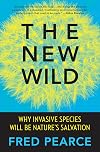
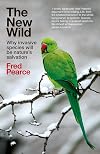
The New Wild: Why Invasive Species Will Be Nature's Salvation
by Fred Pearce
On This Page
Description
In an era of climate change and widespread ecological damage, it is absolutely crucial that we find ways to help nature regenerate. Embracing the new ecology, Pearce shows us, is our best chance. To be an environmentalist in the twenty-first century means celebrating nature's wildness and capacity for change.Tags
Recommendations





Member Reviews
“Alien” species are plants, animals (and others, including pathogens) invading an environment and either settling in among the natives fairly peacefully, or (much more rarely) running riot. It’s an entirely natural process, which would be happening routinely even if there were no humans on the planet—it’s just part of the way the natural world, and its evolution through time, happens. Since humans have been around though, transporting plants and animals by both accident and design, it’s become far more commonplace until today “…we live in a new geological era in which nothing is undisturbed and most ecosystems are a hotch-potch of native and alien species…”
The received wisdom (among conservationists at least) show more is essentially “natives good, aliens bad”; that invasive species should be rooted out again and this alien tide held back at all costs. But there’s also a newer, very different, view and long-time environmental-science journalist Fred Pearce is among those now championing it. In The New Wild he first gives us examples of invasions, from Ascension and the Hawaiian islands to Australia, San Francisco Bay, the Black Sea…all over the globe in fact: the water hyacinth, jellyfish, rabbits, algae, zebra mussels and Japanese knotweed are among the more familiar perceived offenders. Then there’s a section describing the (well-meaning) efforts of conservationists to perform what he calls “ecological cleansing”, the eradication of foreign species, and the various reasons these efforts are rarely successful. In the final part he outlines the newer attitude, what he calls “the new wild”.
A couple of examples give a taste of the sort of thing Pearce is talking about. The Black Sea was already a highly toxic and sewage-choked sump, ripe for invasion by any species (in this case a kind of jellyfish) which could stand to live in it. The invaders, in other words, are often opportunists rather than destroyers, able to thrive in an environment made suitable for them by us humans. They also commonly act as scapegoats: rabbits are blamed for the damage to Australia’s outback actually wreaked by the millions of sheep introduced there by the farmers doing the blaming.
Pearce’s claim overall is that, seen in proper perspective, there’s really no such thing as either a “native” or “alien” species and the whole idea of there being a “balance of nature”, too, is a myth; all ecosystems are in constant flux; change is, and has always been, the norm. All this, he says, has more to do with human psychology than real ecology: it may be a very human (and understandable) emotion to want to stop the clock and preserve everything the way it is right now, but a human emotion is all it is.
The book is packed with both ecological and historical facts (and Pearce drops in one or two along the way which some readers might find shocking: the stuff about the “pristine” and iconic tropical rainforests of Amazonia, Congo and even Borneo having been extensively farmed not so long ago for instance!) On the one hand, it’s worth keeping in mind that he is giving us only one side of an argument here. But on the other, whether I agree with him overall or not, this certainly did make me go back to the basics and think it all through afresh—very interesting read. show less
The received wisdom (among conservationists at least) show more is essentially “natives good, aliens bad”; that invasive species should be rooted out again and this alien tide held back at all costs. But there’s also a newer, very different, view and long-time environmental-science journalist Fred Pearce is among those now championing it. In The New Wild he first gives us examples of invasions, from Ascension and the Hawaiian islands to Australia, San Francisco Bay, the Black Sea…all over the globe in fact: the water hyacinth, jellyfish, rabbits, algae, zebra mussels and Japanese knotweed are among the more familiar perceived offenders. Then there’s a section describing the (well-meaning) efforts of conservationists to perform what he calls “ecological cleansing”, the eradication of foreign species, and the various reasons these efforts are rarely successful. In the final part he outlines the newer attitude, what he calls “the new wild”.
A couple of examples give a taste of the sort of thing Pearce is talking about. The Black Sea was already a highly toxic and sewage-choked sump, ripe for invasion by any species (in this case a kind of jellyfish) which could stand to live in it. The invaders, in other words, are often opportunists rather than destroyers, able to thrive in an environment made suitable for them by us humans. They also commonly act as scapegoats: rabbits are blamed for the damage to Australia’s outback actually wreaked by the millions of sheep introduced there by the farmers doing the blaming.
Pearce’s claim overall is that, seen in proper perspective, there’s really no such thing as either a “native” or “alien” species and the whole idea of there being a “balance of nature”, too, is a myth; all ecosystems are in constant flux; change is, and has always been, the norm. All this, he says, has more to do with human psychology than real ecology: it may be a very human (and understandable) emotion to want to stop the clock and preserve everything the way it is right now, but a human emotion is all it is.
The book is packed with both ecological and historical facts (and Pearce drops in one or two along the way which some readers might find shocking: the stuff about the “pristine” and iconic tropical rainforests of Amazonia, Congo and even Borneo having been extensively farmed not so long ago for instance!) On the one hand, it’s worth keeping in mind that he is giving us only one side of an argument here. But on the other, whether I agree with him overall or not, this certainly did make me go back to the basics and think it all through afresh—very interesting read. show less
Pearce has written a provocative book that is sure to drum up conversation among conservationists. Whenever a dominant narrative becomes entrenched, it's important to take a close look at it to find out if it's all that true to begin with. Pearce provides a valuable service by questioning the current invasive species discourse and helping us think about exotics--and systemic ecological change--in a new way.
At times the book reads like it's pushing an agenda rather than objectively reviewing the evidence, but Pearce reveals that the same could be said for those who have demonized exotic species over the years. Whether or not one ultimately agrees with his thesis, the book is well worth reading and discussing. It deserves a wide audience.
At times the book reads like it's pushing an agenda rather than objectively reviewing the evidence, but Pearce reveals that the same could be said for those who have demonized exotic species over the years. Whether or not one ultimately agrees with his thesis, the book is well worth reading and discussing. It deserves a wide audience.
 This review was written for LibraryThing Early Reviewers.
The New Wild is a book that makes a very controversial argument, primarily that nature conservationist are destroying the planet!
Okay, that's not true, but it does offer a radical take on what most people consider nature conservation, and points out the multitudes of hypocrisies among many modern nature-lovers. The issue arises with what we consider "invasive" species, something that most naturalist abhor and think must be eradicated. When a new species enters a precious environment and starts out-competing the locals, many people panic. The people who spend their lives touting the beauty and wonder of the natural world go into a murderous frenzy, demanding mass-eradication, spurring their warhorse on a path of obliteration.
I'm being show more overly-dramatic again, but the point is that it's rather odd that the same people that bemoan the destruction of nature are the first to support destroying it when it changes. Not only is this a direct contradiction in their beliefs, but it's also repudiates the very nature of, well, nature. The world doesn't stay the same, it never has, the planet-wide environment is a living, breathing thing that has constantly shifted and moved, changing constantly. The idea of preserving it as a snapshot because that's the way we believe it's supposed to be is like putting the natural world in a cage, never allowing it to move or grow ever again.
It's also ironic that the people who think the best ecosystems are the ones untouched by humans are the ones preserving said ecosystems, thus, they are manipulating the very environments they claim are un-manipulated. An ecosystem isn't "untouched by man" if you are going in and ripping out the things you disapprove of.
I've honestly never thought about it this way, and The New Wild really opened my eyes to the idea. I didn't always agree with the author, I'm not completely comfortable with the idea of species being driven to extinction, something he seems pretty okay with. There was also one chapter in particular that seemed more like an anti-conservationist rant, and probably should have been cut out entirely.
I also worry that some of the ideas in the book could be misconstrued as an argument that industrialization is okay. Even though he points out that is not his intent, the author only mentions it once, in a sentence or two. I'd have liked it if he stressed that deforestation and habitat destruction is still a bad thing. The point is that deforestation and habitat destruction at the hands of environmentalists is also not okay.
Nevertheless, I think this is a critical read for anyone interested in environmental science. Even if you don't always agree with it, in the same way that I didn't, I ultimately found the book incredibly enlightening and something I will be pondering for some time. Though I didn't buy everything that it tried to sell, it has educated me on the matter, and tremendously altered my outlook on it as well. show less
Okay, that's not true, but it does offer a radical take on what most people consider nature conservation, and points out the multitudes of hypocrisies among many modern nature-lovers. The issue arises with what we consider "invasive" species, something that most naturalist abhor and think must be eradicated. When a new species enters a precious environment and starts out-competing the locals, many people panic. The people who spend their lives touting the beauty and wonder of the natural world go into a murderous frenzy, demanding mass-eradication, spurring their warhorse on a path of obliteration.
I'm being show more overly-dramatic again, but the point is that it's rather odd that the same people that bemoan the destruction of nature are the first to support destroying it when it changes. Not only is this a direct contradiction in their beliefs, but it's also repudiates the very nature of, well, nature. The world doesn't stay the same, it never has, the planet-wide environment is a living, breathing thing that has constantly shifted and moved, changing constantly. The idea of preserving it as a snapshot because that's the way we believe it's supposed to be is like putting the natural world in a cage, never allowing it to move or grow ever again.
It's also ironic that the people who think the best ecosystems are the ones untouched by humans are the ones preserving said ecosystems, thus, they are manipulating the very environments they claim are un-manipulated. An ecosystem isn't "untouched by man" if you are going in and ripping out the things you disapprove of.
I've honestly never thought about it this way, and The New Wild really opened my eyes to the idea. I didn't always agree with the author, I'm not completely comfortable with the idea of species being driven to extinction, something he seems pretty okay with. There was also one chapter in particular that seemed more like an anti-conservationist rant, and probably should have been cut out entirely.
I also worry that some of the ideas in the book could be misconstrued as an argument that industrialization is okay. Even though he points out that is not his intent, the author only mentions it once, in a sentence or two. I'd have liked it if he stressed that deforestation and habitat destruction is still a bad thing. The point is that deforestation and habitat destruction at the hands of environmentalists is also not okay.
Nevertheless, I think this is a critical read for anyone interested in environmental science. Even if you don't always agree with it, in the same way that I didn't, I ultimately found the book incredibly enlightening and something I will be pondering for some time. Though I didn't buy everything that it tried to sell, it has educated me on the matter, and tremendously altered my outlook on it as well. show less
This review was written for LibraryThing Early Reviewers.As someone who has been interested in conservation and endangered species for as long as I can remember, studying ecology and keeping up with environmental affairs, I came to this book with a fairly skeptical view. After all, like so many others, I know the horror stories about non-native species overtaking ecosystems once they're introduced accidentally or by well-meaning humans. I know the fears about disappearing habitats, and I've seen firsthand the effects of alien species and human pollution; I've even cried over a species going extinct once word became official. So, the idea that Pearce was presenting a case for invasive species being a good thing, as opposed to something we need to worry about, seemed hard to stomach--especially show more now that I live in Southwest, Florida, where we've got all sorts of alien species wandering about.
But guess what? Pearce's argument is meticulously researched and well-balanced. And he's not ignoring the horror stories at all, though he is saying that there's a bit more to them and that we may be simplifying things far too much when we point to one species and blame it for outright destruction. Part of Pearce's point is that nature is ever-changing, and our approach (and by 'our', I mean humankind's) to conservation hasn't particularly accepted that. We see something and we want it to remain 'pristine', even if that 'pristine' status isn't at all original and actually incorporates species that Were alien at some time in the past. Pearce asks pointedly, where do we draw the line? And at what point does a species move from being alien to being native? And, perhaps even more importantly, if an invasive species seems to benefit a particular ecosystem without doing any harm, does that still mean there's any worth in keeping it out, as has so often been the practice?
Simply, Pearce addresses some hard questions, and anyone who cares about our environment and biodiversity should take a look at this book with an open mind. I don't think any reader will necessarily agree with him whole-heartedly, and I do think there's one danger here that goes unaddressed, strong as Pearce is at bringing in counterarguments. If change is embraced so much as he seems to recommend, there is a worry (to my mind) that government efforts toward conservation, little as they may be, will further decline, based off of the evidence that he presents. In fact, I think this is a real enough worry that I imagine some conservationists are inclined to ignore Pearce's best points, if only to avoid that potentially disastrous fate. But, that said, there's a lot of worth here, and readers who take in Pearce's points with an open mind may just be astounded at what they've been faultily taking for granted for so long, for better or worse. Certainly, I'm glad to have read the book, and while I don't whole-heartedly agree with every one of the author's points, I've learned a great deal, and feel like I have a much more balanced view of the environmental questions we're currently facing in terms of habitats and biodiversity.
Absolutely, I recommend this one. show less
But guess what? Pearce's argument is meticulously researched and well-balanced. And he's not ignoring the horror stories at all, though he is saying that there's a bit more to them and that we may be simplifying things far too much when we point to one species and blame it for outright destruction. Part of Pearce's point is that nature is ever-changing, and our approach (and by 'our', I mean humankind's) to conservation hasn't particularly accepted that. We see something and we want it to remain 'pristine', even if that 'pristine' status isn't at all original and actually incorporates species that Were alien at some time in the past. Pearce asks pointedly, where do we draw the line? And at what point does a species move from being alien to being native? And, perhaps even more importantly, if an invasive species seems to benefit a particular ecosystem without doing any harm, does that still mean there's any worth in keeping it out, as has so often been the practice?
Simply, Pearce addresses some hard questions, and anyone who cares about our environment and biodiversity should take a look at this book with an open mind. I don't think any reader will necessarily agree with him whole-heartedly, and I do think there's one danger here that goes unaddressed, strong as Pearce is at bringing in counterarguments. If change is embraced so much as he seems to recommend, there is a worry (to my mind) that government efforts toward conservation, little as they may be, will further decline, based off of the evidence that he presents. In fact, I think this is a real enough worry that I imagine some conservationists are inclined to ignore Pearce's best points, if only to avoid that potentially disastrous fate. But, that said, there's a lot of worth here, and readers who take in Pearce's points with an open mind may just be astounded at what they've been faultily taking for granted for so long, for better or worse. Certainly, I'm glad to have read the book, and while I don't whole-heartedly agree with every one of the author's points, I've learned a great deal, and feel like I have a much more balanced view of the environmental questions we're currently facing in terms of habitats and biodiversity.
Absolutely, I recommend this one. show less
This review was written for LibraryThing Early Reviewers.Conventional wisdom holds that “alien” or “invasive” species are harmful to nature's delicate balance of animal and plant life. Some self-styled “invasion biologists” go so far as to say that all migrant species should be eliminated from wherever they try to establish themselves, in order to protect pristine ecosystems and native life forms. In his book The New Wild, Fred Pearce argues that such thinking is bone-headed, and even dangerous. He writes that nature is in a constant state of flux. Plant and animal species regularly migrate and settle far from home either by accident or by design, and there has never been any such thing as a pure, all-native ecosystem, anyway. He notes that the arrival of alien species after an show more ecological disaster is essential to the revitalization and healing of the affected area. Even when certain species (such as kudzu or the zebra mussel) take over and make real nuisances of themselves, they should not be blamed. They are biological opportunists and their presence is the symptom, rather than the cause, of ecosystem blight. If allowed to stay, alien species may help the damaged ecosystem repair itself, and die back when their jobs are done.
I am not a biologist and cannot argue for or against Pearce's thesis; nonetheless I think that Pearce has written an eye-opening, if somewhat repetitive, book about an important topic. Anyone interested in ecology should read it. show less
I am not a biologist and cannot argue for or against Pearce's thesis; nonetheless I think that Pearce has written an eye-opening, if somewhat repetitive, book about an important topic. Anyone interested in ecology should read it. show less
This review was written for LibraryThing Early Reviewers.I seem to have unintentionally gotten into a "how should humanity address current ecological concerns" kick this year, as The New Wild continues on themes previously touched on in [b:Resurrection Science: Conservation, De-extinction and the Precarious Future of Wild Things|23848047|Resurrection Science Conservation, De-extinction and the Precarious Future of Wild Things|M.R. O'Connor|https://d.gr-assets.com/books/1430945113s/23848047.jpg|43458049] and [b:The Sixth Extinction: An Unnatural History|17910054|The Sixth Extinction An Unnatural History|Elizabeth Kolbert|https://d.gr-assets.com/books/1372677697s/17910054.jpg|25095506]. The New Wild doesn't tread the exact same paths as the other books, as Sixth Extinction depicted a rather show more morose view of the anthropocene and Resurrection Science examined ways we try to mitigate what we've caused. Instead, The New Wild considers the ecosystems we have now: a mix of native and non-native species in a constantly changing environment.
[a:Fred Pearce|5921|Fred Pearce|https://s.gr-assets.com/assets/nophoto/user/m_50x66-82093808bca726cb3249a493fbd3bd0f.png] is rather pointed about challenging the orthodoxy of typical conservation- he posits there are no 'pristine' ecosystems and what we often think of as pristine have still been shaped by humanity for thousands of years, so why try to preserve a fixed point in time when nature is constantly changing? Various examples of invasives filling in niches of native plants that were wiped out because of people are placed in context as providing habitat/food/etc. for endangered species native to the area, or how something that can be endangered in one place is considered invasive in another. Pearce bolsters his argument by pointing out how shaky some of the statistics and numbers used to vilify invasives are.
It's a persuasive argument. I'm not convinced it should be taken whole cloth (as it could easily slide to "Oh, well, nature will recover so let's go ahead and build this new farm or whatever"), but nuances are certainly needed for conservation efforts. show less
[a:Fred Pearce|5921|Fred Pearce|https://s.gr-assets.com/assets/nophoto/user/m_50x66-82093808bca726cb3249a493fbd3bd0f.png] is rather pointed about challenging the orthodoxy of typical conservation- he posits there are no 'pristine' ecosystems and what we often think of as pristine have still been shaped by humanity for thousands of years, so why try to preserve a fixed point in time when nature is constantly changing? Various examples of invasives filling in niches of native plants that were wiped out because of people are placed in context as providing habitat/food/etc. for endangered species native to the area, or how something that can be endangered in one place is considered invasive in another. Pearce bolsters his argument by pointing out how shaky some of the statistics and numbers used to vilify invasives are.
It's a persuasive argument. I'm not convinced it should be taken whole cloth (as it could easily slide to "Oh, well, nature will recover so let's go ahead and build this new farm or whatever"), but nuances are certainly needed for conservation efforts. show less
I have mixed feelings on this one. The author provides a wealth of interesting information in an attempt to encourage the reader to embrace invasive species. A lot of his arguments make sense and had already occurred to me. For instance I agree with him that invasive species are not a root problem, and that we need to be more concerned with ecological disturbance. Attempting to exterminate invasive species on a large scale is extremely difficult and often counterproductive. And certainly alien species often can fit into existing habitats and improve them. As climate change progresses, this will be more and more true. But the author seems to take a view of evolution that sounds like neoliberal economics. In his view, the "winner" species show more will survive and the "losers" will be crushed, and we should ultimately embrace that. Thanks to this approach he seems to embrace introductions willy-nilly, as it will help better to sort the "winners" from the "losers".
A lot of the information he gives is also quite suspect. For instance he likes to claim areas benefit from new introductions by citing how many more species an area gained, and how few went extinct. But the bulk of these introductions are often human food crops and decoratives-- plants that cannot take over simply because they are dependent on human intervention to survive. To claim these species "increase biodiversity" without impact is misleading. And extinction is hardly the only impact invasives can have on an ecosystem.
While Pearce's views are worth thinking about, the shortcomings in his own evidence leave a lot of room for a more balanced point of view. show less
A lot of the information he gives is also quite suspect. For instance he likes to claim areas benefit from new introductions by citing how many more species an area gained, and how few went extinct. But the bulk of these introductions are often human food crops and decoratives-- plants that cannot take over simply because they are dependent on human intervention to survive. To claim these species "increase biodiversity" without impact is misleading. And extinction is hardly the only impact invasives can have on an ecosystem.
While Pearce's views are worth thinking about, the shortcomings in his own evidence leave a lot of room for a more balanced point of view. show less
This review was written for LibraryThing Early Reviewers.Members
- Recently Added By
Lists

Recommended Nature Writing
346 works; 180 members

Books Read in 2016
4,666 works; 197 members
Talk Discussions
Past Discussions
The New Wild: Why Invasive Species will be Nature's Salvation in One Book One Thread (April 2020)
Author Information

45+ Works 1,774 Members
Fred Pearce was born and educated in the UK. He studied Geography at Cambridge University and has since reported on environment, science and development issues from 54 countries. He is a regular broadcaster on radio and TV, with interview credits from Today to Richard and Judy to the Open University. Fred is married with two children and lives in show more London. show less
Awards and Honors
Common Knowledge
- Original publication date
- 2016
- Important events
- climate change
Classifications
Statistics
- Members
- 141
- Popularity
- 231,411
- Reviews
- 26
- Rating
- (3.94)
- Languages
- English
- Media
- Paper, Ebook
- ISBNs
- 6
- ASINs
- 2