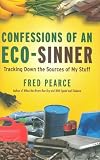
Confessions of an Eco-Sinner
by Fred Pearce
On This Page
Description
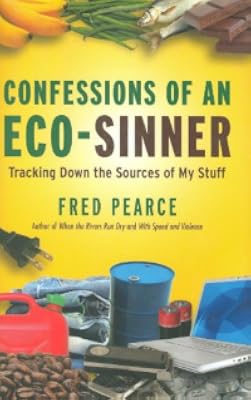
From the Publisher: A global journey to find the sources of all the stuff in one man's life-and its social and environmental footprint. Where does everything in our daily lives come from? The clothes on our backs, the computers on our desks, the cabinets in our kitchens, and the spices behind their doors? Under what conditions-environmental and social-are they harvested or manufactured? In Confessions of an Eco-Sinner, Fred Pearce shows us the hidden worlds that sustain a Western lifestyle, show more and he does it by examining the sources of everything in his own life; as an ordinary citizen of the Western world, he, like all of us, is an "eco-sinner." In conversational and convivial prose, Pearce surveys his home and then starts out on a global tour to track down, among other things, the Kenyans who grow and harvest his fair trade coffee (which isn't as fair as one might hope), the women in the Bangladeshi sweat shops who sew his jeans, and the Chinese factory cities where the world's computers are made. It's a fascinating portrait, by turns sobering and hopeful, of the effects the world's more than 6 billion inhabitants-all eating, consuming, making-have on our planet, and of the working and living conditions of the people who produce most of these goods. show lessTags
Recommendations





Member Reviews
Fred Pearce chooses some of the "things" in his life and tracks down their source, exploring the people and places affected for him to get his stuff. It's truly fascinating to learn where things from gold to shrimp to cotton come from and what it takes to get them to us. It's also truly horrifying, for the most part.
I don't know anyone who is willing to trade someone else's misery or destroyed land for the ability to buy food or clothes cheap ... but it seems that is what most of us are doing. It isn't quite that simple, of course, but my first reaction is along the lines of "Oh my god, I can never buy anything again." Interestingly, that is not the message the author is trying to communicate and is not the message many of the workers show more in foreign countries (like Bangladesh) would want us to hear. But even though making $1 sewing jeans is an improvement over making 50 cents a day farming for shrimp (which also harms the environment) doesn't mean to me that it's okay for me to buy $20 jeans and feel good about it.
A wonderful friend of mine from law school, one of the most consistent and ethical people I've ever known did not buy any new products that were made outside of the US. (She did allow herself to buy them used.) For her, workers were the priority and she was not going to contribute her money towards the poor working conditions and pay of anyone.
This book is great for going behind the store, the marketing, the assumptions, and showing (at least in these specific instances) where this stuff actually comes from and what it's costs are. I think it's a great read because it's so hard to figure this stuff out on your own. The global market is complicated, trade routes are convoluted and sometimes hidden, green-washing is rampant, cost does matter, it can be tempting to make like an ostrich and say "I can't figure it out!"
Hiding isn't going to fix anything, and it won't make me less culpable or guilty if I end up spending my money on things I wish I hadn't. I am a long, long way from perfect (just ask my husband) but I'm hoping this book and it's information will help me get a little further on the path I'm trying to follow. show less
I don't know anyone who is willing to trade someone else's misery or destroyed land for the ability to buy food or clothes cheap ... but it seems that is what most of us are doing. It isn't quite that simple, of course, but my first reaction is along the lines of "Oh my god, I can never buy anything again." Interestingly, that is not the message the author is trying to communicate and is not the message many of the workers show more in foreign countries (like Bangladesh) would want us to hear. But even though making $1 sewing jeans is an improvement over making 50 cents a day farming for shrimp (which also harms the environment) doesn't mean to me that it's okay for me to buy $20 jeans and feel good about it.
A wonderful friend of mine from law school, one of the most consistent and ethical people I've ever known did not buy any new products that were made outside of the US. (She did allow herself to buy them used.) For her, workers were the priority and she was not going to contribute her money towards the poor working conditions and pay of anyone.
This book is great for going behind the store, the marketing, the assumptions, and showing (at least in these specific instances) where this stuff actually comes from and what it's costs are. I think it's a great read because it's so hard to figure this stuff out on your own. The global market is complicated, trade routes are convoluted and sometimes hidden, green-washing is rampant, cost does matter, it can be tempting to make like an ostrich and say "I can't figure it out!"
Hiding isn't going to fix anything, and it won't make me less culpable or guilty if I end up spending my money on things I wish I hadn't. I am a long, long way from perfect (just ask my husband) but I'm hoping this book and it's information will help me get a little further on the path I'm trying to follow. show less
Another for the "everything you are doing is wrong" shelf. Pearce decided to investigate the ways his consumer goods were manufactured and disposed of. The usual suspects are on display here, and some less usual. It's always a little troublesome to see someone log tens of thousands of air miles to report on how the environment is going to hell, but it feels like his motives are pure- and points to him for acknowledging his footprint as considerably larger than average for his cohort.
There are a lot of short chapters, all are interesting. For my money, all would be more interesting if they were handled a bit more thoroughly. It's a good introduction with some light bits balancing an overall grim topic.
There are a lot of short chapters, all are interesting. For my money, all would be more interesting if they were handled a bit more thoroughly. It's a good introduction with some light bits balancing an overall grim topic.
This book goes into great detail about the lifecycles of a handful of consumer products - food, clothing, electronics, metals, etc. While very interesting, I found this book lacking in the bigger picture of what is wrong with over consumption. The author paints a picture where our problems can be solved with the right mix of biofuels and ingenuity and doesn't take on the fact that the problem is that we live in a consumerist society where people buy too much crap that they don't need because companies make a huge profit out of doing so. He doesn't cover anything like pricing products based on their total environmental impact and only briefly touches on emissions caps, which have been shown to be just another profit-making enterprise show more these days, more about money than actually cleaning up the environment.
I found particularly hastily written the penultimate chapter about demographics. The author seems to think that our problems can be solved if only more women opt to having fewer children, but doesn't really go into how that can be made possible - by getting rid of patriarchal institutions and giving women access to family planning services. He writes about how China, among other countries, has a lower-than-replacement-rate birth rate, and only briefly mentions their totalitarian one-child policy. Similarly with Latin American countries that use sterilization, he never thinks to mention if these women are sterilized against their will. Also, women who work in the so called global factory are also usually forbidden to have children, but he doesn't mention that either.
Along this vein, the author seems to think that women who work in the global factory are truly emancipated women, but doesn't stop to think that the reason that women are hired for unsafe, low paid jobs is that employers can still get away with paying women very low wages. He mentions that women have "nimble fingers," but doesn't go on to mention that the reason men don't have these jobs is because it would be unthinkable to pay them such little money. Sure, maybe factory work is better than the other options for these women, but that doesn't mean it's ethical, fair or safe.
Maybe I am asking too much from this book, but with such a huge, looming environmental crisis, I don't like the idea that we can just keep sitting back and doing what we're already doing (with just a little more recycling) and get away with it. Something has to change, and this book doesn't bring up what that change is going to be. show less
I found particularly hastily written the penultimate chapter about demographics. The author seems to think that our problems can be solved if only more women opt to having fewer children, but doesn't really go into how that can be made possible - by getting rid of patriarchal institutions and giving women access to family planning services. He writes about how China, among other countries, has a lower-than-replacement-rate birth rate, and only briefly mentions their totalitarian one-child policy. Similarly with Latin American countries that use sterilization, he never thinks to mention if these women are sterilized against their will. Also, women who work in the so called global factory are also usually forbidden to have children, but he doesn't mention that either.
Along this vein, the author seems to think that women who work in the global factory are truly emancipated women, but doesn't stop to think that the reason that women are hired for unsafe, low paid jobs is that employers can still get away with paying women very low wages. He mentions that women have "nimble fingers," but doesn't go on to mention that the reason men don't have these jobs is because it would be unthinkable to pay them such little money. Sure, maybe factory work is better than the other options for these women, but that doesn't mean it's ethical, fair or safe.
Maybe I am asking too much from this book, but with such a huge, looming environmental crisis, I don't like the idea that we can just keep sitting back and doing what we're already doing (with just a little more recycling) and get away with it. Something has to change, and this book doesn't bring up what that change is going to be. show less
I've always worried as a child that the planet would run out of resources. I never wanted to waste anything. I grew up in a world where the adults were unconcerned about sustainability. But isn't sustainability something we all should be alot more concerned about now?
Pearce has written about his travels finding the origins of all of his stuff. It reads like Environmentalism 101--overfishing, mining the earth, gas, oil. The realities of sweatshops and where we get our cheap t-shirts from. That town in China that makes just about all of our crap.
Despite my interest, by mid-point my eyes began glazing over. The writing style became so repetitous. But still, I support his cause. My sin is chocolate and coffee, and I will make more efforts show more to use higher quality products. We Americans need to change our ways of being complacent, uninformed, unaware of other countries and selfish. Demanding cheap prices is part of the problem--even Americans who can pay more, balk at it, even when it can help others! show less
Pearce has written about his travels finding the origins of all of his stuff. It reads like Environmentalism 101--overfishing, mining the earth, gas, oil. The realities of sweatshops and where we get our cheap t-shirts from. That town in China that makes just about all of our crap.
Despite my interest, by mid-point my eyes began glazing over. The writing style became so repetitous. But still, I support his cause. My sin is chocolate and coffee, and I will make more efforts show more to use higher quality products. We Americans need to change our ways of being complacent, uninformed, unaware of other countries and selfish. Demanding cheap prices is part of the problem--even Americans who can pay more, balk at it, even when it can help others! show less
This is a rather strange book. Posited as an environment tome, with the author endeavouring to find out where they things he uses come from, it ends up coming off as a bit of a 'I am a middle-class person who can afford lots of nice stuff and gee I care, hence the fact I am going to do a lot of environment-destroying flying around the world to prove my point'. Pearce gets angry at the way a lot of things are done, and does a bit of soul-searching, yet the end result seems to be he thinks that it is all a bit too hard, and we need to do our bit, as long as it doesn't curb journalists flitting around the world.
The impression I get is that the author (or his publishers) couldn't really decide on whether this was a book about 'green' show more issues, or if this was to be part of the popular non-fiction 'life of an object' genre. The end chapter about demographics, while probably the least 'dumbed down' of the chapters still doesn't seem to be thought through particularly well. All up, it smacks of a well meaning, rather knowledgeable journalist with a great idea that was not particularly well executed, with a smattering of pretentiousness thrown in for good measure. I do have another of Pearce's books on loan from the library, lets hope that one is a bit better than this one. show less
The impression I get is that the author (or his publishers) couldn't really decide on whether this was a book about 'green' show more issues, or if this was to be part of the popular non-fiction 'life of an object' genre. The end chapter about demographics, while probably the least 'dumbed down' of the chapters still doesn't seem to be thought through particularly well. All up, it smacks of a well meaning, rather knowledgeable journalist with a great idea that was not particularly well executed, with a smattering of pretentiousness thrown in for good measure. I do have another of Pearce's books on loan from the library, lets hope that one is a bit better than this one. show less
Mind opening and well written - recommend this book to everyone. Especially those who have wondered where xylophone-playing Santas come from.
Just couldn't get into it. Maybe because I'd already read [b:You Are Here The Surprising Link Between What We Do and What That Does to the Planet|2795636|You Are Here The Surprising Link Between What We Do and What That Does to the Planet|Thomas M. Kostigen|http://ecx.images-amazon.com/images/I/51EQMeoVwLL._SL75_.jpg|2821410] and loved it. Maybe I just didn't take to Pearce's writing. Don't know.
Members
- Recently Added By
Lists

Beacon Press
39 works; 1 member

Research/Inquiry - mentor texts
43 works; 2 members
Author Information

45+ Works 1,774 Members
Fred Pearce was born and educated in the UK. He studied Geography at Cambridge University and has since reported on environment, science and development issues from 54 countries. He is a regular broadcaster on radio and TV, with interview credits from Today to Richard and Judy to the Open University. Fred is married with two children and lives in show more London. show less
Awards and Honors
Common Knowledge
- Canonical title
- Confessions of an Eco-Sinner
- Original publication date
- 2008-02-28
- Epigraph
- [None]
- Dedication
- To Sarah
- First words
- We live in a charmed world.
- Last words
- (Click to show. Warning: May contain spoilers.)It would be a shame if our cleverness, forged in the long, dark night after Toba, were to be our undoing.
- Blurbers
- Gelbspan, Ross; Alexander, William; Barlow, Maude
Classifications
- Genres
- Nonfiction, Science & Nature, Economics, General Nonfiction, Travel
- DDC/MDS
- 333.72 — Society, government, & culture Economics Economics of land and energy Conservation, Alternative Energy Sources Conservation & protection
- LCC
- GE195.7 .P43 — Geography, Anthropology and Recreation Environmental Sciences Environmental sciences Environmentalism. Green movement
- BISAC
Statistics
- Members
- 196
- Popularity
- 166,591
- Reviews
- 9
- Rating
- (3.81)
- Languages
- English, French, German, Italian
- Media
- Paper, Ebook
- ISBNs
- 11
- ASINs
- 3